Internet Identity proposals aim to prepare ICP authentication for AI agent access
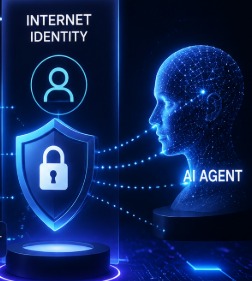
Internet Identity, the authentication system used across the Internet Computer network, is undergoing a proposed upgrade that would allow AI agents to interact with ICP applications through user-controlled identities and time-limited permissions.
Two governance proposals, 143261 and 143262, are currently open in the Network Nervous System (NNS). They cover upgrades to both the Internet Identity backend and frontend and are designed to prepare the platform for broader support of the Model Context Protocol (MCP).
The proposed changes would introduce an official DFINITY-operated MCP connector and enable AI access during the registration of new Internet Identity accounts. Existing identities would also be migrated to support the official connector.
The proposals are focused on a delegation model rather than permanent AI access. Under the proposed system, every AI session would require explicit user approval, users could disable AI access for individual identities, and permissions granted to applications through MCP would be limited to five minutes.
Additional safeguards include revocation controls that invalidate registrations already in progress, visibility into which identity an MCP connection will use, and restrictions that limit MCP delivery to certified trusted URLs. The proposals also include support for ICRC-167 URL transport, which is intended to improve redirect-based application sign-in.
Supporters argue that AI systems will increasingly require secure identity infrastructure rather than relying on usernames, passwords or long-lived API credentials. They say cryptographically controlled delegation could provide a more secure way for AI agents to act on behalf of users.
As of the latest voting figures, Proposal 143261 had received more than 5.4 million voting power in favour and about 423,000 against, while Proposal 143262 had received more than 5.5 million in favour and about 420,000 against. Both proposals remain open and require at least 3 per cent of total voting power to vote in favour before they can be adopted.
If approved, the upgrades would expand Internet Identity’s authentication capabilities while keeping user approval, short-lived permissions and revocation controls at the centre of AI-related access.