Nasdaq 100 and S&P 500 face sharpest market swings in months
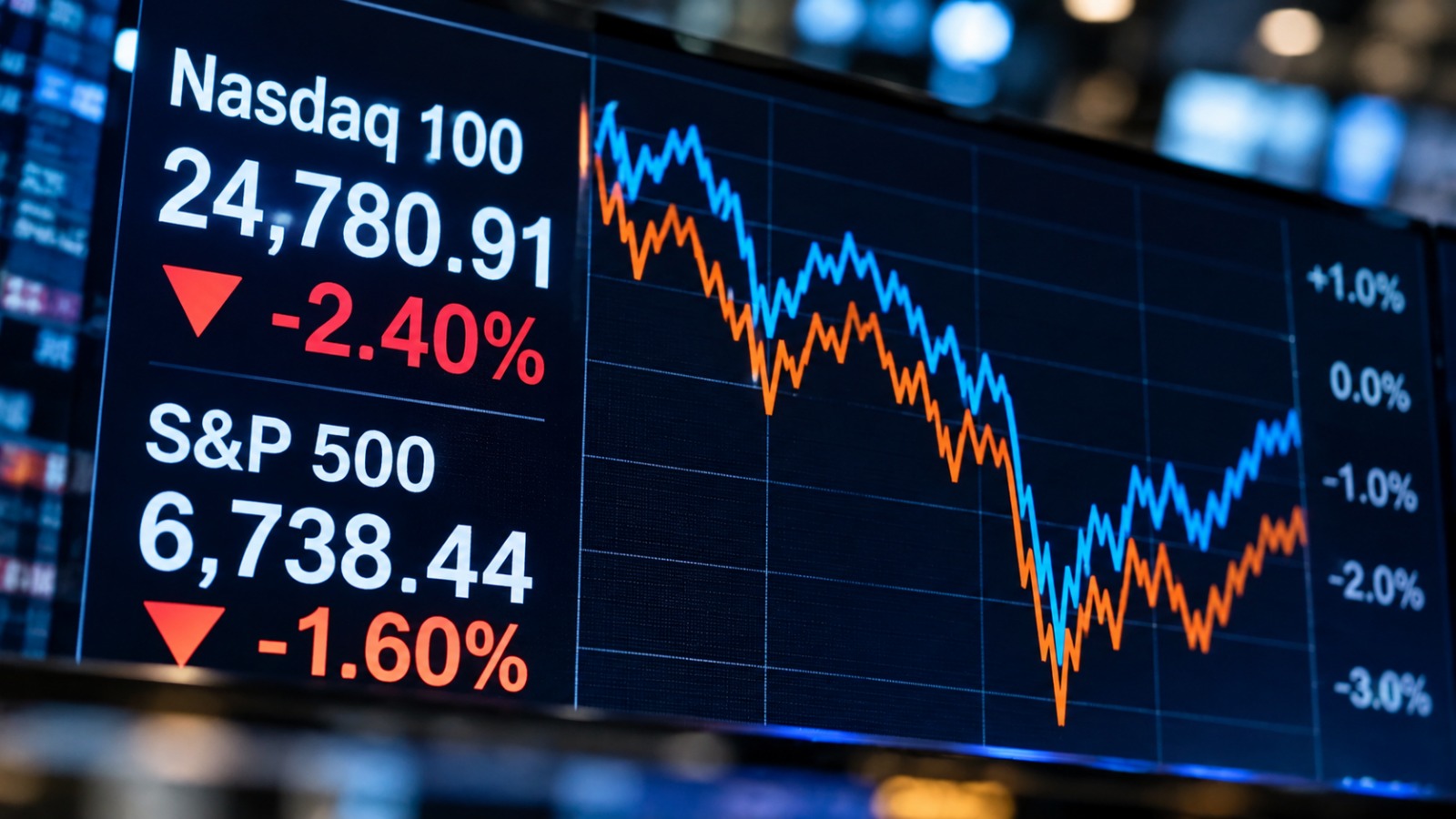
US stock markets are experiencing their sharpest daily movements in months, with the technology-heavy Nasdaq 100 on track for its most volatile month since April 2025.
The Nasdaq 100 recorded an average daily move of 2.4 per cent during November so far, according to figures in the latest market update. That is more than double the 1 per cent average recorded in September and puts the index on course for its second-most volatile month in at least two years.
The index has also closed more than 1 per cent higher or lower in half of its trading sessions this month, reflecting the scale of recent movements.
The S&P 500 has recorded an average daily move of 1.6 per cent so far in November, also its highest monthly reading since April 2025. The figure had remained below 1 per cent in each of the previous four months.
Recent trading has provided a clear example of the unsettled conditions. On 16 November, the Nasdaq Composite fell 2.5 per cent, while the S&P 500 dropped 1.9 per cent, marking its third consecutive daily decline. Technology shares led the losses, with Nvidia and other chipmakers among the stocks under pressure, according to the Associated Press.
The swings have also been reflected in recent trading data. Barron’s reported that the Nasdaq’s average daily move over the five sessions leading up to 11 November reached 2.44 percentage points, its highest five-day average since April 2025.
Investor concerns around technology stocks and the artificial intelligence sector have contributed to the unsettled trading. Questions over the scale of investment in AI infrastructure, financing costs and broader economic and policy uncertainty have added to pressure on markets.
However, the recent falls have not erased the indexes’ gains for the year. At the close of trading on 16 November, the S&P 500 remained 8.3 per cent higher for 2026, while the Nasdaq Composite was up 5.5 per cent.
With November still under way, the monthly figures could change. For now, the data points to a sharp return of market volatility, particularly across technology stocks, as investors reassess risks and expectations.