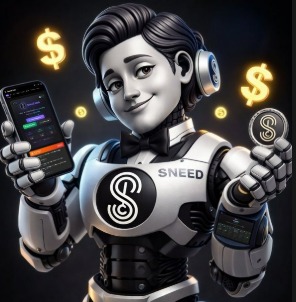
Artificial intelligence has promised personal assistants for years, yet most of us are still juggling multiple apps, reminders, and browser tabs while hoping Siri or ChatGPT will understand our needs. Clawdbot is changing that. Unlike typical chatbots, Clawdbot isn’t just reactive – it lives inside the apps you already use, remembers everything, and can perform tasks on your behalf.
At its core, Clawdbot is an open-source AI assistant that you self-host on a computer or inexpensive cloud server. You can interact with it via Telegram, WhatsApp, Discord, Slack, or iMessage on Mac. It can read your emails, move files, send messages, fill out forms, and even trigger web searches – all while keeping your data on a server you control. Think of it as a personal Jarvis you can text like a friend.
What sets Clawdbot apart from ChatGPT or Siri is its proactive behaviour and persistent memory. Siri will struggle to remember what you said yesterday. ChatGPT exists in a browser and forgets your conversation when the session ends. Clawdbot remembers preferences, past instructions, and context over time, building a personalised workflow. It also reaches out to you, notifying you of important emails, calendar events, stock updates, or other alerts. This is not just an assistant you open – it’s an assistant that comes to you.
Early users are finding creative ways to harness its capabilities. Some automate morning briefings, summarising emails, calendars, and news before they even open their laptop. Others have Clawdbot research companies or products automatically, delivering concise summaries in minutes. Reminders, task management, file organisation, even voice commands are all possible. One user had Clawdbot rebuild a website entirely via chat instructions while they were watching Netflix.
Tech commentator AJ shared on X that they had Clawdbot live in under five minutes on an AWS free-tier server. With full system access and integration through WhatsApp, Telegram, and Discord, users are automating tasks ranging from price comparisons to research workflows. “One command. That’s it,” AJ noted, highlighting how beginner-friendly deployment can be with the right instructions.
Clawdbot’s power comes with risks. With shell access to your server and integration into messaging apps, it can execute commands that compromise data if misconfigured. Prompt injection is a notable vulnerability: malicious inputs can trick the AI into performing unwanted actions, potentially deleting files or sending messages unintentionally. UK cybersecurity authorities warn that prompt injection cannot be eliminated entirely, and OWASP ranks it among the top risks in AI applications.
There are, however, ways to mitigate these risks. Enabling Sandbox Mode runs risky operations in isolated containers, limiting potential damage. Whitelisting commands ensures Clawdbot can only execute necessary tasks. Tokens for Gmail, Google Drive, or GitHub should have minimal permissions. Users should keep Clawdbot in private chats and, for WhatsApp, use dedicated numbers to avoid personal data exposure. Clawdbot’s recommended AI model, Claude Opus 4.5 from Anthropic, has been tested for prompt injection resistance, reaching an internal 99% success rate. Following these precautions can significantly reduce risk.
Setting up Clawdbot is beginner-friendly and can take roughly 30 minutes. Users need a 24/7 server, such as an AWS free-tier instance or a small VPS like Hetzner CX22, and the installation command curl -fsSL https://clawd.bot/install.sh | bash. A setup wizard guides the user through connecting their AI subscription, selecting a model, configuring security, and linking a messaging app. Answering a few questions personalises the assistant, after which it can read emails, manage tasks, and respond to messages immediately.
Early tests are simple but effective. Users can have Clawdbot summarise emails, research companies, or send reminders directly to their messaging app. Additional integrations, such as web search APIs, Gmail, Calendar, or voice commands, expand its capabilities further.
The costs are modest. Servers range from $5–50 per month, AI subscriptions from $20–100, and messaging apps are free. For as little as $25 per month, anyone can have a 24/7 personal AI assistant, far cheaper than human virtual assistants or enterprise solutions.
The Internet Computer Protocol (ICP) offers a potential way to further reduce Clawdbot’s risks. Its decentralised network and smart contract-based execution could isolate AI operations, preventing unwanted access to user systems while maintaining functionality. Developing a full ICP integration would require work to keep Clawdbot user-friendly, but it could provide an additional layer of security.
Clawdbot is more than a chatbot. It is a persistent, proactive AI assistant that can handle real-world tasks while respecting privacy. From research and inbox management to reminders and web automation, it is redefining personal AI. Early adopters like AJ show how quickly it can be deployed, even on a free-tier server. With a self-hosted setup, proactive messaging, and 24/7 availability, Clawdbot delivers the AI assistant promised a decade ago. All it takes is one server, one install command, and a willingness to embrace the next step in productivity.
Links:-
-
main site:
-
docs:
-
getting started:
-
security guide:
-
web search setup:
-
hetzner setup:
-
telegram setup:
-
troubleshooting:
-
discord: search “clawdbot discord” (link changes)
-
hetzner cloud:
-
anthropic API keys:
-
brave search API:
-
exa search API:
-
telegram botfather:
Dear Reader,
Ledger Life is an independent platform dedicated to covering the Internet Computer (ICP) ecosystem and beyond. We focus on real stories, builder updates, project launches, and the quiet innovations that often get missed.
We’re not backed by sponsors. We rely on readers like you.
If you find value in what we publish—whether it’s deep dives into dApps, explainers on decentralised tech, or just keeping track of what’s moving in Web3—please consider making a donation. It helps us cover costs, stay consistent, and remain truly independent.
Your support goes a long way.
🧠 ICP Principal: ins6i-d53ug-zxmgh-qvum3-r3pvl-ufcvu-bdyon-ovzdy-d26k3-lgq2v-3qe
🧾 ICP Address: f8deb966878f8b83204b251d5d799e0345ea72b8e62e8cf9da8d8830e1b3b05f
Every contribution helps keep the lights on, the stories flowing, and the crypto clutter out.
Thank you for reading, sharing, and being part of this experiment in decentralised media.
—Team Ledger Life