
The 21st century is witnessing technological progress at an unprecedented speed. Innovations that once existed only in science fiction are now becoming part of everyday reality. Artificial intelligence, biotechnology, space exploration, and advanced computing are transforming industries and redefining the way humanity interacts with technology.
As global challenges such as climate change, healthcare demands, urbanization, and digital transformation grow, scientists and innovators are developing technologies that promise to reshape the future of civilization.
Here are ten futuristic technologies and innovations expected to play a major role in shaping the coming decades.

1. Artificial General Intelligence (AGI)
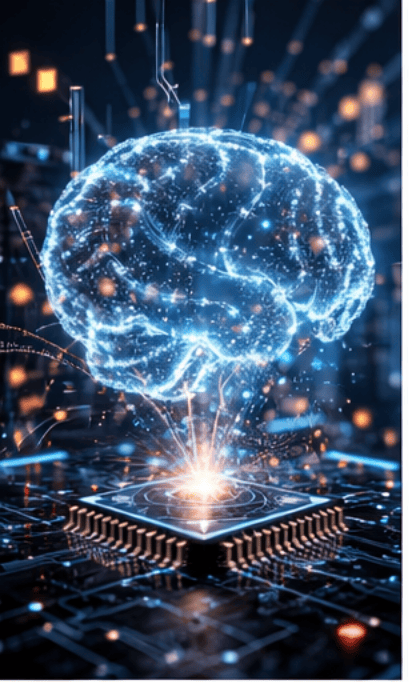 Artificial Intelligence has already transformed many sectors, from finance and healthcare to marketing and customer service. However, the current generation of AI systems is limited to specific tasks. The next major technological milestone is the development of Artificial General Intelligence (AGI) — machines that can perform any intellectual task that a human can.
AGI would represent a profound shift in computing and automation. Unlike today’s AI models that are trained for specialized functions, AGI systems could reason, learn, and adapt across multiple disciplines. Such systems could assist scientists in solving complex problems, accelerate medical research, and even contribute to policy-making by analyzing vast amounts of global data.
Researchers believe that AGI could dramatically enhance productivity and innovation. For example, it could help discover new materials for clean energy, simulate climate solutions, or design advanced medical treatments. However, AGI also raises important ethical and safety concerns regarding control, governance, and responsible development. The global technology community is therefore actively working to ensure that future AGI systems are aligned with human values.
2. Brain-Computer Interfaces (BCI)

Brain-Computer Interface technology is one of the most fascinating areas of modern research. It focuses on creating direct communication pathways between the human brain and external digital devices. Instead of typing on a keyboard or touching a screen, users could interact with computers simply by thinking.
This technology holds tremendous promise in the medical field. Patients suffering from paralysis or neurological disorders could regain the ability to control prosthetic limbs, wheelchairs, or digital communication tools through neural signals. Early experiments have already shown that implanted brain chips can help individuals move robotic arms or type messages.
Beyond medical applications, BCIs could redefine human-computer interaction. In the future, professionals might use brain interfaces to control complex systems, interact with virtual environments, or even communicate thoughts digitally. While widespread adoption is still years away, ongoing research suggests that brain-computer integration could become one of the most transformative innovations of the century.
3. Quantum Computing

Conventional computers process information using bits that represent either a 0 or a 1. Quantum computers operate differently by using quantum bits (qubits) that can exist in multiple states simultaneously. This property, known as superposition, allows quantum computers to process enormous amounts of information at once.
Because of this capability, quantum computers could solve problems that would take traditional supercomputers thousands of years to complete. Industries such as pharmaceuticals, cybersecurity, finance, and logistics are closely watching developments in this field.
For example, quantum computing could dramatically accelerate the discovery of new medicines by simulating molecular interactions at an atomic level. It could also revolutionize encryption technologies, forcing the development of new cybersecurity systems designed for a post-quantum world.
Although large-scale quantum computers are still under development, researchers believe that this technology could unlock breakthroughs that reshape science and industry.
4. Fully Autonomous Transportation

Transportation systems are undergoing a massive transformation driven by automation, artificial intelligence, and robotics. Autonomous vehicles, once considered futuristic concepts, are already being tested on roads around the world.
Self-driving cars use a combination of sensors, cameras, machine learning algorithms, and real-time data processing to navigate roads without human intervention. As these technologies mature, autonomous transportation could significantly reduce road accidents, improve traffic flow, and increase accessibility for elderly or disabled individuals.
The future of autonomous transportation extends beyond cars. Self-flying air taxis, autonomous cargo ships, and AI-powered delivery drones are being developed to create a fully automated logistics ecosystem. Cities could eventually operate transportation networks where vehicles communicate with each other and with infrastructure to optimize efficiency and safety.
If implemented effectively, autonomous mobility could revolutionize urban planning, reduce transportation costs, and reshape the way people travel.
5. Smart Cities Powered by Artificial Intelligence

Urban populations are growing rapidly, and cities are facing increasing pressure to manage resources efficiently. Smart city technologies aim to address these challenges by integrating artificial intelligence, Internet of Things (IoT) devices, and data analytics into urban infrastructure.
In a smart city, thousands of sensors collect real-time data about traffic patterns, energy usage, pollution levels, and public transportation systems. AI-powered platforms analyze this data to optimize city operations, helping authorities make faster and more informed decisions.
For example, intelligent traffic management systems can automatically adjust signal timings to reduce congestion. Smart energy grids can distribute electricity more efficiently and integrate renewable energy sources. Waste management systems can optimize collection routes based on real-time demand.
These innovations will make cities more sustainable, reduce environmental impact, and improve the quality of life for millions of people.
6. Advanced Biotechnology and Gene Editing
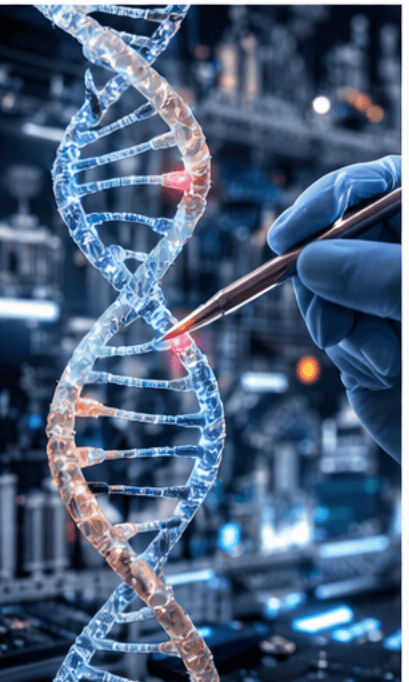 Biotechnology is advancing rapidly and has the potential to redefine modern medicine. One of the most groundbreaking developments in this field is gene editing technology, particularly techniques such as CRISPR.
Gene editing allows scientists to modify DNA with remarkable precision. This capability could help eliminate genetic diseases, develop targeted cancer treatments, and create personalized therapies tailored to individual patients.
Researchers are also exploring the possibility of growing organs in laboratories for transplantation, which could solve the global shortage of donor organs. Additionally, biotechnology may enable scientists to slow the aging process and improve human healthspan.
While these possibilities are exciting, gene editing also raises ethical questions about genetic enhancement, human modification, and long-term societal impacts. As the technology evolves, careful regulation and ethical oversight will be essential.
7. Space Tourism and Commercial Space Travel
 For decades, space exploration was limited to government space agencies. Today, private companies are driving a new era of commercial space innovation.
Reusable rocket technology has significantly reduced the cost of launching payloads into space. This development has opened the door for industries such as satellite internet, space tourism, and private space stations.
In the near future, wealthy travelers may take short suborbital flights that allow them to experience weightlessness and view Earth from space. Researchers are also exploring the possibility of building hotels in low Earth orbit.
Looking further ahead, humanity may establish permanent bases on the Moon or Mars. Commercial space exploration could eventually lead to asteroid mining, providing access to valuable minerals and resources beyond Earth.
8. The Metaverse and Immersive Digital Worlds
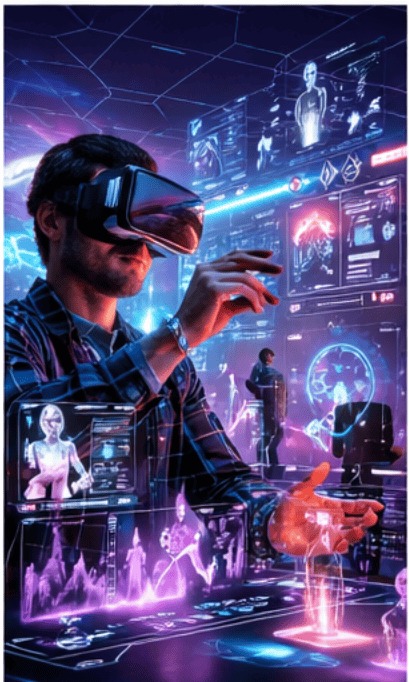 The internet is evolving from a collection of websites into immersive digital environments known as the Metaverse. This concept involves interconnected virtual worlds where users interact using digital avatars.
Through technologies such as virtual reality (VR), augmented reality (AR), and advanced graphics processing, the metaverse aims to create realistic digital spaces for work, education, entertainment, and commerce.
In these environments, people could attend meetings, collaborate with colleagues, participate in virtual conferences, or explore digital marketplaces. Educational institutions might conduct fully immersive virtual classes where students interact with complex simulations and interactive environments.
While the metaverse is still developing, many experts believe it could represent the next major evolution of the internet.
9. Sustainable Energy and Fusion Power
 Energy demand continues to grow as global populations expand and economies develop. At the same time, the world is seeking solutions to reduce carbon emissions and combat climate change.
Renewable energy technologies such as solar and wind power have already gained widespread adoption, but scientists are exploring even more advanced solutions. One of the most promising is nuclear fusion, a process that replicates the energy generation mechanism of the Sun.
Fusion energy could produce enormous amounts of clean power with minimal environmental impact and virtually unlimited fuel sources. If successfully commercialized, fusion reactors could provide reliable energy for centuries.
Alongside fusion, advancements in battery technology, hydrogen fuel systems, and smart energy grids will play an essential role in creating a sustainable global energy infrastructure.
10. AI-Powered Personal Digital Assistants
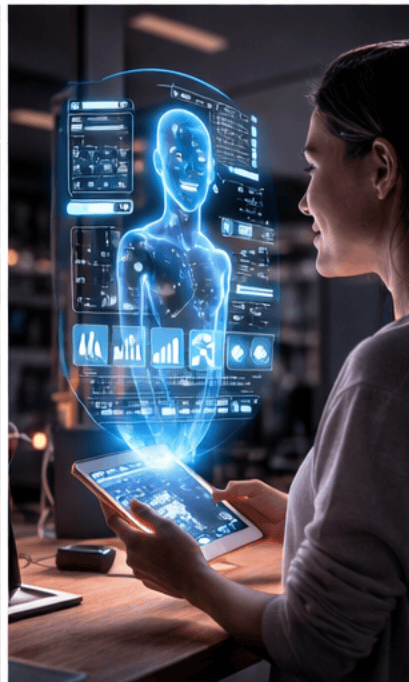 Future artificial intelligence systems will evolve far beyond today’s voice assistants. Instead of simple command-response interactions, AI assistants will become deeply integrated into daily life.
These advanced digital assistants could function as personal advisors capable of managing schedules, analyzing financial data, planning travel, organizing information, and even providing health insights based on wearable sensor data.
By understanding user preferences and behavior patterns, AI assistants could anticipate needs before users even express them. Professionals might rely on AI assistants to summarize research, generate reports, or coordinate complex projects.
Over time, these assistants may become highly personalized digital companions that enhance productivity and help individuals navigate increasingly complex digital environments.
The Future of Innovation
The technologies emerging in the 21st century are reshaping the boundaries of what humanity can achieve. From artificial intelligence and biotechnology to quantum computing and space exploration, these innovations hold the potential to solve global challenges and unlock new opportunities.
However, technological progress also comes with responsibility. Ethical governance, global cooperation, and responsible innovation will be crucial to ensure that these advancements benefit humanity as a whole.
The future will belong to those who not only create powerful technologies but also use them wisely to build a more sustainable and inclusive world.



Community Discussion