ICP Gears Up for Solana Integration—True Interoperability by June
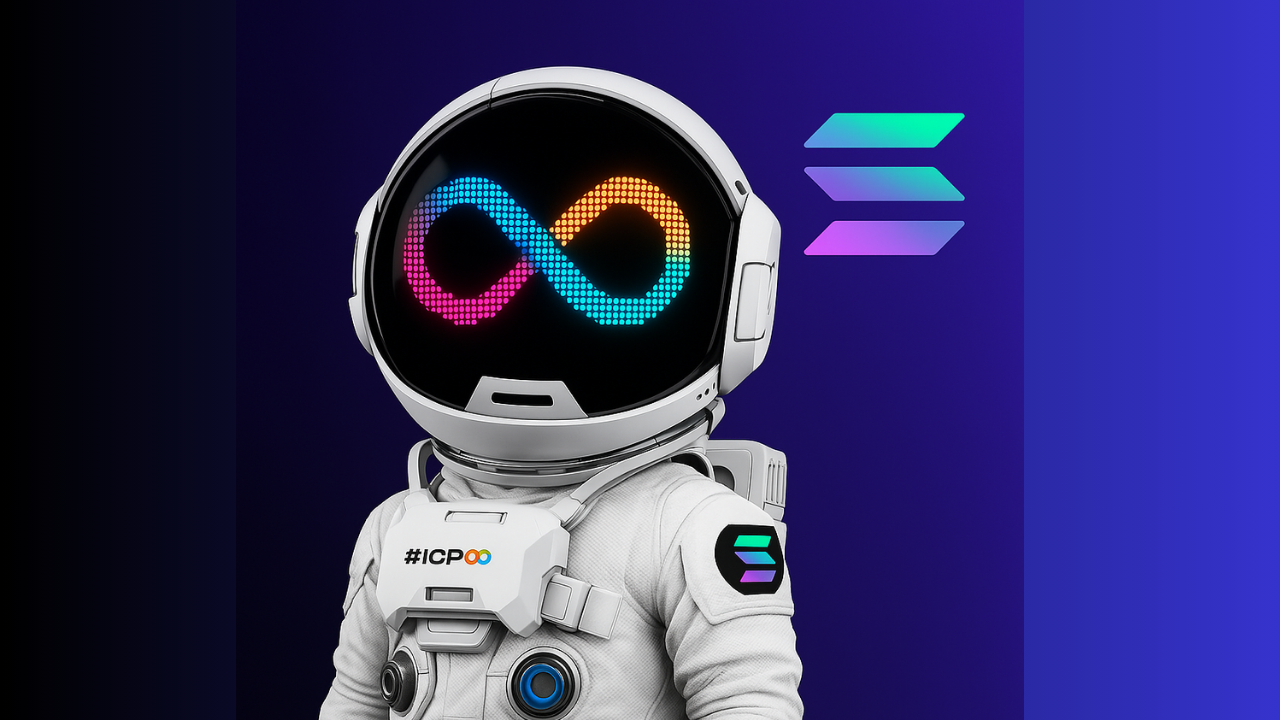
For developers building decentralised apps, the friction of working across different blockchains has always been a sticking point. Different languages, security models, and limitations in interoperability have meant that each chain has effectively operated in its own silo. That wall is being knocked down with the latest move from the Internet Computer Protocol (ICP), which now brings Solana into its expanding circle, sitting alongside Bitcoin and Ethereum through its Chain Fusion technology.
At the core of this update is a bold promise: full native interoperability between blockchains without needing bridges, wrappers or any of the usual patchwork that traditionally comes with working across chains. This is about smart contracts on one chain directly interacting with smart contracts on another—natively, securely and without the usual compromises. That sort of seamless interaction between chains hasn’t really existed before, not in a way that’s this integrated or safe.
Solana’s addition to the ICP ecosystem means developers can now build decentralised applications that talk directly to Bitcoin, Ethereum, and Solana contracts from a single interface. These aren’t surface-level integrations or approximations of cross-chain communication. The smart contracts on ICP—called canisters—operate with advanced chain-key cryptography, giving them the power to reach out and work with contracts on other networks. No middlemen, no loss of security, and nothing abstracted into oblivion. It’s like programming on one chain, with three languages rolled into one environment.
For years, interoperability has been more of a buzzword than a reality. Plenty of projects have claimed it, but always with trade-offs—bridges that get hacked, wrapped tokens that aren’t really native, and slow processes that defeat the whole point of smart contracts being autonomous and quick. Chain Fusion tech changes that script. It allows Solana, Ethereum, and Bitcoin to operate not as separate ecosystems that occasionally ping each other, but as co-stars in the same digital production, coordinated and enhanced through the capabilities of ICP.
Canisters on ICP are already known for their scalability and speed, and now those same canisters can become conductors, coordinating actions across networks. For example, an app might use a Solana smart contract for ultra-fast execution, tap into Ethereum’s DeFi infrastructure, and settle transactions on Bitcoin, all from one unified backend. ICP’s native environment handles the heavy lifting—compute, storage, cross-chain calls—so the developer doesn’t have to rebuild everything for each chain. It’s a single developer experience that results in a truly multi-chain app.
And Solana brings its own strengths to the table. Its high-speed, low-cost network complements ICP’s own performance focus. This isn’t just about ticking boxes or creating theoretical possibilities; it’s about creating a genuinely usable platform that allows developers to get creative without getting bogged down in compatibility issues or worrying about where exactly their contracts are running. You want to mint on Ethereum, trade on Solana, and log on ICP? That’s possible now, all within the same decentralised framework.
What’s striking is that this cross-chain capability is baked in, not bolted on. There’s no awkward adapter or outside oracle doing the handshakes. The system is built from the ground up to understand and communicate with other chains directly. The chain-key cryptography, one of ICP’s core innovations, plays a central role here. It allows ICP nodes to sign transactions on other chains, making these interactions as secure and trustworthy as native ones.
That’s particularly important for a chain like Solana, which has developed its own robust ecosystem and tooling. With this update, Solana isn’t being folded into ICP or abstracted away. It’s being fully embraced as it is. Developers working on Solana can extend their apps into the ICP world without giving anything up. And developers starting on ICP can now reach into the Solana world without any special tricks or compromises.
The result is a genuine shift in how multi-chain apps can be built and operated. No more picking a primary chain and hoping the bridges hold. No more fragmented logic or awkward re-implementations. A canister on ICP can now serve as the central brain of a decentralised application, coordinating actions across different chains like it’s all one seamless platform.
This also opens up doors for the next generation of decentralised services. Think of decentralised social media, marketplaces, gaming platforms, or financial systems that aren’t confined to a single blockchain’s limitations. These services can use the best parts of each chain—Bitcoin for settlement, Ethereum for programmability, Solana for speed, and ICP for orchestration and compute. All of them, woven together in real time by smart contracts that understand and speak each other’s language.
It’s a developer-centric move, but one with significant ripple effects for users. The apps that come out of this ecosystem won’t feel fragmented. There won’t be long waits for bridging or awkward token swaps that confuse newcomers. Everything will operate with a native feel, even if under the hood it’s bouncing between three or four chains. And it’s all happening with the security guarantees of on-chain execution—not some off-chain workaround or half-trust model.
The push for true interoperability isn’t new, but this is one of the few implementations that seems ready for actual usage without fine print. It doesn’t ask developers to choose between security and functionality. It gives them both, and then some. And by bringing Solana into the fold, ICP is showing that this isn’t a one-time integration exercise. It’s a growing movement towards a decentralised world that actually works together, chain by chain.
And with a June 2025 deadline for this integration, the clock is ticking. This isn’t a far-off vision. It’s an imminent shift—one that developers and the broader crypto ecosystem will need to be ready for. The final pieces are falling into place, and once they do, the door to seamless, secure, and truly decentralised cross-chain applications will be wide open.
So what’s next? The door is clearly open for more integrations. With Bitcoin, Ethereum, and Solana now effectively speaking through ICP, there’s a foundation for something broader. A decentralised internet where different blockchains aren’t competing or duplicating efforts, but genuinely co-operating through shared infrastructure.
For now, Solana developers can start playing with tools that give them new flexibility, Ethereum projects can scale and diversify, and Bitcoin can be brought into more complex decentralised applications without wrapping or trust layers. And all of this, orchestrated from a single canister, in a single place.
The tech world likes to chase the next big thing, but sometimes progress is about making things finally work the way they were always supposed to. This update doesn’t shout. It just works—and that might be the most radical part.