ICPEx: One Route, Many Pools
The Internet Computer Protocol (ICP) continues to extend its reach across decentralised finance, and the latest update from ICPEx hints at a new phase in how liquidity moves through the ecosystem. Rather than adding another trading platform or token to the mix, the team is laying down the framework for something more enduring: a liquidity aggregation standard that promises to bring unity to fragmented pools and smoother execution to every trade.
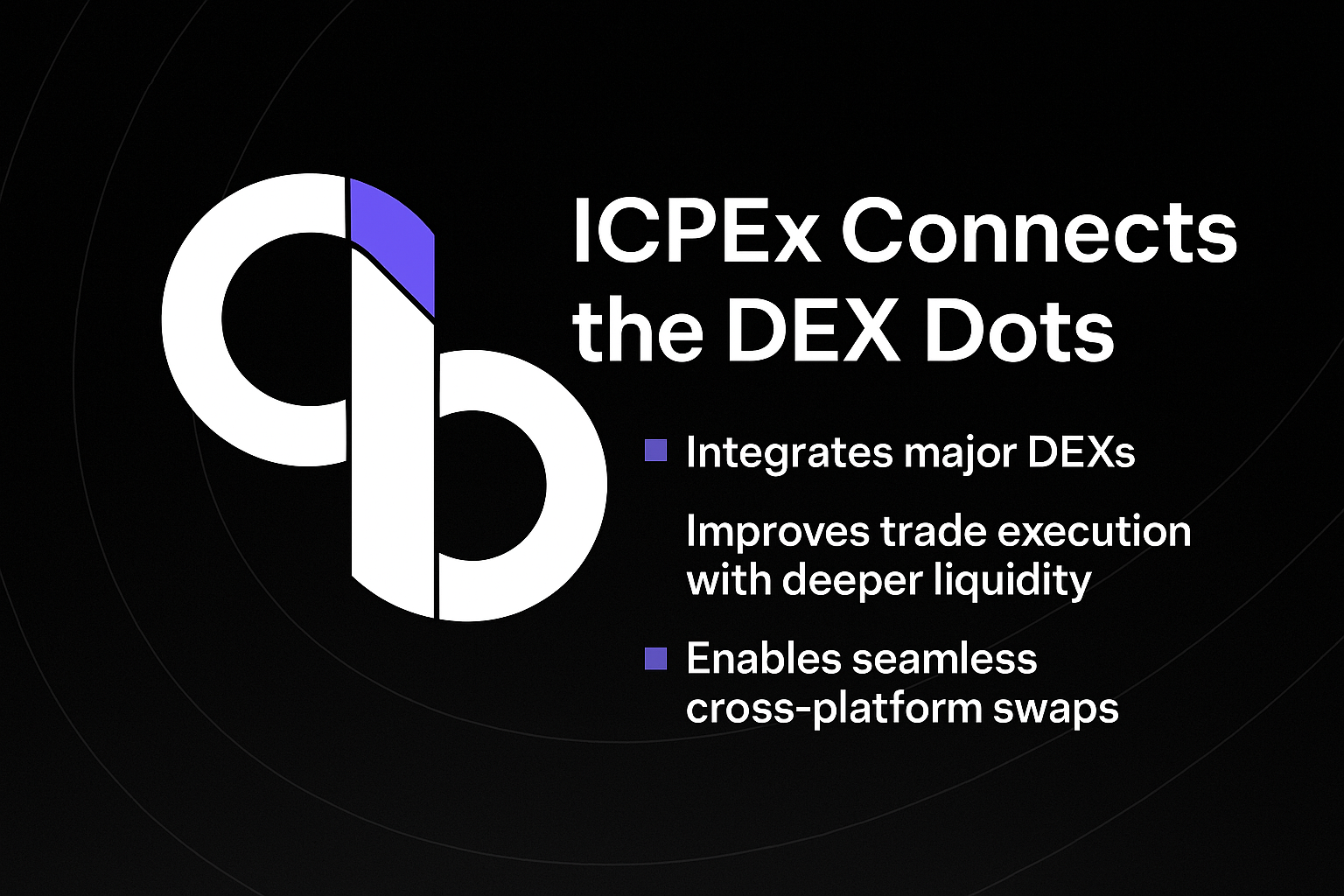
There’s no shortage of platforms offering swaps, staking, or pooling. What’s been missing, though, is a seamless way to connect them all—a way for users to access optimal pricing without toggling between tabs or wrestling with inconsistent interfaces. That’s where this new routing standard steps in. Built with openness in mind, it will bring together major DEXs like ICPSwap, Kongswap, and Sonic under a common framework. By linking them through a shared aggregation layer, the aim is to deepen liquidity, reduce slippage, and streamline execution, regardless of where a trade originates.
This isn’t about reinventing any single component, but about improving the entire experience through smart integration. Traders often miss the best deals simply because they’re not visible in a single view. With this update, ICPEx wants to change that by allowing users to interact with a range of liquidity sources in one action. In practical terms, that means you could initiate a swap on one interface, but the routing might take you through two or three DEXs behind the scenes to secure the best return.
It’s the kind of detail that doesn’t make headlines on its own but has far-reaching consequences once implemented. Better routing and liquidity access can shave off precious basis points from each trade. For smaller users, that means more transparency and fairness. For larger ones, it’s about efficiency and cost management at scale. Either way, the outcome is a trading environment that feels more connected and less like a maze.
The standard is being built as open source, which matters in a community-driven space like decentralised finance. It allows developers to build on top of it, integrate it into their own tools, or improve it further without waiting for permission or navigating licensing headaches. That collaborative energy—where innovation can compound quickly—is what often separates successful ecosystems from those that fizzle out after a promising start.
This move also reflects a broader shift in how DeFi infrastructure is maturing. Early-stage platforms often focus on siloed development, working hard to attract liquidity to their own pools and interfaces. But over time, ecosystems tend to benefit from shared standards that reduce redundancy and create better outcomes for users. Ethereum went through a similar arc, with protocols like 0x, Uniswap’s routing contracts, and others eventually becoming staples that most traders interact with, often without even knowing.
ICP is now heading down a similar path, but with the added benefit of hindsight. Learning from other networks’ early friction points, ICPEx appears to be prioritising user experience and developer flexibility right out of the gate. There’s a noticeable emphasis on cross-platform compatibility, which will be key for encouraging adoption. Traders won’t need to learn a whole new system or shift their habits dramatically; the routing layer will handle the complexity for them.
What makes this even more timely is the recent uptick in attention on ICP-based assets and projects. As the user base expands, the need for better execution layers grows. Markets move quickly, and liquidity that’s trapped in isolated pools isn’t doing anyone much good. Aggregation, when done well, creates a kind of breathing room—giving traders more options, better prices, and fewer surprises.
The focus here is technical, but the implications reach into almost every layer of the ecosystem. Wallet providers can build smoother swap flows. Portfolio trackers can offer more accurate price feeds. DeFi apps can provide more competitive rates without needing to manage multiple integrations themselves. It becomes a shared toolset that lifts the floor for everyone.
The ICPEx team hasn’t rushed this rollout either. Though the announcement has only just surfaced, early conversations suggest the routing standard has been under design and consideration for some time. That kind of slow-cooked development is often overlooked in favour of flashier launches, but it tends to yield more reliable infrastructure in the long run. Open-source projects rely on clarity, and clear documentation and flexibility are likely baked into the plan from the start.
As the aggregation layer is released into the open, it will be interesting to see how quickly other players plug in. With ICPSwap, Kongswap, and Sonic already named as core components, there’s a strong foundation in place. These platforms bring distinct strengths to the table, and being able to tap into all of them from one routing layer is an obvious win for users. It also helps reduce reliance on any one platform, which is a positive step for resilience and competition across the board.
This kind of move might fly under the radar for casual observers, but developers and power users will likely pay close attention. It opens up opportunities to build smarter interfaces, tools that automatically adjust to shifting market conditions, and perhaps even arbitrage bots that are more efficient and less disruptive. For teams building on ICP, this standard could remove a lot of the grunt work traditionally involved in liquidity management.
And for the end user? The experience will feel lighter. Fewer failed transactions, fewer missed prices, and more confidence that what you see is what you get. That kind of simplicity, delivered through complex backend architecture, is what defines great platforms in any domain—centralised or decentralised.
It’s also a reminder that real innovation doesn’t always need to be loud. Sometimes, it’s the quiet, structural changes that make the biggest difference over time. By focusing on the connective tissue between platforms, ICPEx is helping shape an ecosystem that feels more unified without becoming homogenous.
As DeFi continues to evolve, there’s plenty of room for wild experimentation. But the foundations matter too. Standards like this one don’t just support growth; they help ensure it doesn’t spiral into chaos. With the liquidity aggregation standard, ICPEx is laying down something practical, thoughtful, and entirely necessary for the next wave of adoption.
And it’s all happening in a way that doesn’t demand centre stage. No dramatic pronouncements, no inflated promises—just a clear step forward in how liquidity works across a growing network of platforms.