IQube Previews a Modular Future for Decentralised AI on ICP
IQube Protocol made its public demo debut during the latest Internet Computer (ICP) DeAI Working Group call, offering a glimpse into what its creators believe could be a smarter and more secure foundation for decentralised artificial intelligence. Presented by QryptiQ, the protocol aims to make data handling in AI both trustworthy and modular, using a novel packaging method that echoes NFT architecture but is designed with AI agents in mind.

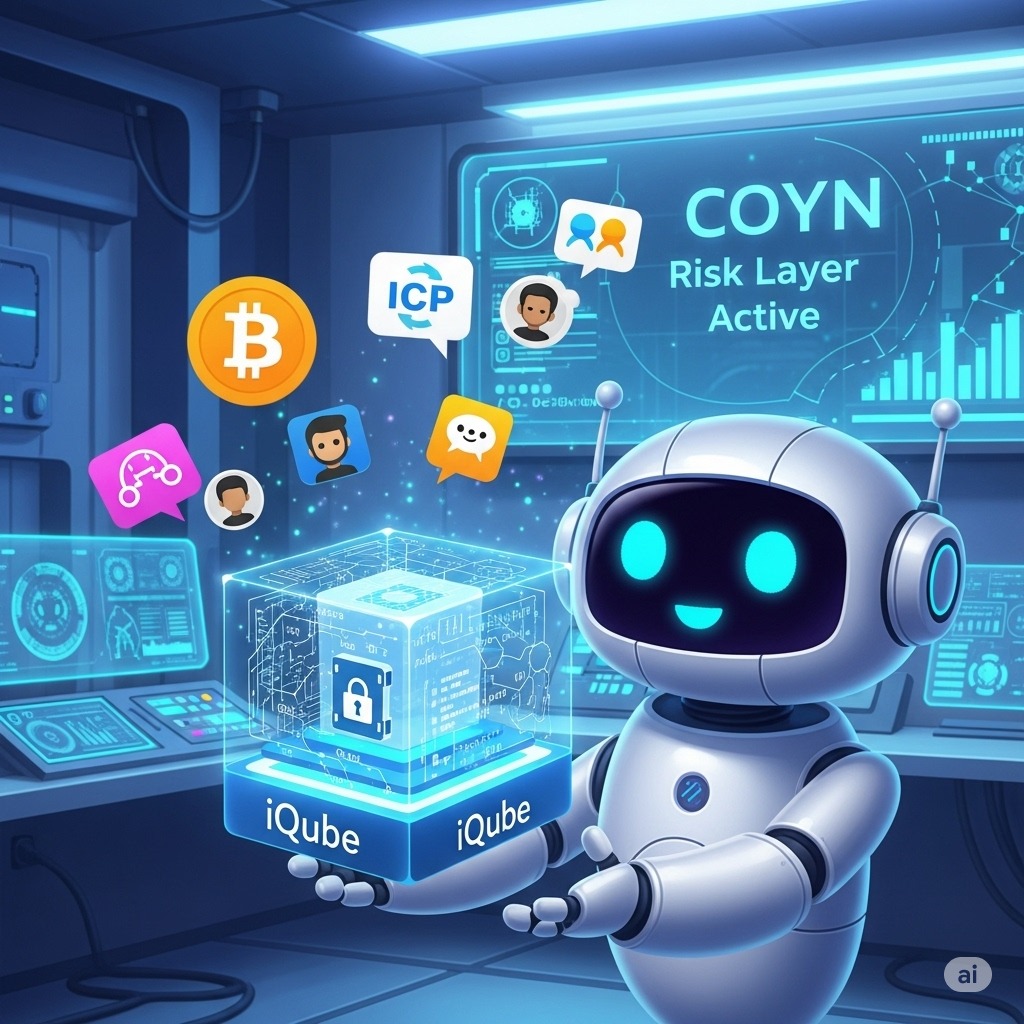
At the core of the system are “iQubes”, tokenised data units that combine public metadata with private, encrypted content. These iQubes are not just passive containers. They’re designed to enable risk-based valuations and permissioned data access, which could be especially useful in both consumer-facing and enterprise AI systems. Each iQube effectively acts as a programmable data capsule that can be used, referenced, or exchanged within a broader decentralised ecosystem.

The protocol introduces a layered architecture, with the COYN layer serving as the mechanism for tokenising data based on assessed risk. This idea of proof-of-risk adds a filtering tool for agents or users trying to decide what data is valuable or trustworthy in a given context. Combined with token-gated access, cross-chain compatibility, and Agent Protocol integration, the framework is set up for flexible deployment across platforms and use cases.

The demo showcased a working prototype called Aigent Nakamoto, which lets users share private data with AI agents to receive context-aware replies. The interaction model highlights the system’s potential to provide AI agents with curated, consent-based access to sensitive information. This could help AI tools respond more accurately without resorting to scraping or other questionable methods of data ingestion.

Beyond the ICP ecosystem, IQube is planning integration with Bitcoin for secure transaction settlement. This could widen its interoperability and offer an alternative path for decentralised data systems that don’t rely on traditional web infrastructure or centralised gatekeepers.

The QryptiQ team also flagged B2B utility as a key part of their plan. Enterprises could, for example, use iQubes to control how internal data is accessed by third-party AI services, or create paywalled content modules that offer real-time analytics. On the consumer side, the same principles could apply to personalised apps where users want a tighter grip on what they share and how.

The tech is still in early stages, and many questions remain about scale, adoption, and governance. But the demo did show that there is a coherent architectural strategy behind IQube—one that doesn’t just rely on marketing gloss or speculative tokens.

As decentralised AI continues to be a hot topic within crypto and adjacent industries, projects like IQube may find themselves at the centre of conversations around data sovereignty, monetisation, and technical accountability. Whether or not it becomes a core building block on ICP, its approach to data packaging and agent interaction is likely to influence how developers think about AI on-chain.

For those watching the Internet Computer’s DeAI movement, this was a noteworthy preview. QryptiQ’s demo didn’t try to do too much—it stuck to the core mechanics, provided a real-world use case, and left room for open discussion. The community response appeared engaged, with plenty of questions during the call and follow-up interest around implementation.

Time will tell how many builders adopt the iQube model, but if the goal is modular, permissioned, and secure AI on-chain, then this protocol is clearly making an early attempt to shape that conversation.


Dear Reader,

Ledger Life is an independent platform dedicated to covering the Internet Computer (ICP) ecosystem and beyond. We focus on real stories, builder updates, project launches, and the quiet innovations that often get missed.

We’re not backed by sponsors. We rely on readers like you.

If you find value in what we publish—whether it’s deep dives into dApps, explainers on decentralised tech, or just keeping track of what’s moving in Web3—please consider making a donation. It helps us cover costs, stay consistent, and remain truly independent.

Your support goes a long way.

🧠 ICP Principal: ins6i-d53ug-zxmgh-qvum3-r3pvl-ufcvu-bdyon-ovzdy-d26k3-lgq2v-3qe

🧾 ICP Address: f8deb966878f8b83204b251d5d799e0345ea72b8e62e8cf9da8d8830e1b3b05f

🪙 BTC Wallet: bc1pp5kuez9r2atdmrp4jmu6fxersny4uhnaxyrxau4dg7365je8sy2q9zff6p

Every contribution helps keep the lights on, the stories flowing, and the crypto clutter out.

Thank you for reading, sharing, and being part of this experiment in decentralised media.
—Team Ledger Life

LEAVE A REPLY

Please enter your comment!
Please enter your name here

More like this

Human + AI The 2027 Shift

AI in 2027: How Artificial Intelligence Will Change Our...

Artificial Intelligence is no longer a concept of the future. It is already shaping our present. But...

Dominic Williams challenges LayerZero’s “onchain cloud” claims over Zero’s...

Dominic Williams, founder of the Internet Computer, has criticised marketing claims around LayerZero’s upcoming network, Zero, arguing...

Bitcoin DeFi Firm Liquidium Explains How ICP Integration Smooths...

Liquidium’s chief executive, Robin Obermaier, discussed how the company uses technology from the Internet Computer Protocol (ICP)...

IQube Protocol made its public demo debut during the latest Internet Computer (ICP) DeAI Working Group call, offering a glimpse into what its creators believe could be a smarter and more secure foundation for decentralised artificial intelligence. Presented by QryptiQ, the protocol aims to make data handling in AI both trustworthy and modular, using a novel packaging method that echoes NFT architecture but is designed with AI agents in mind.

At the core of the system are “iQubes”, tokenised data units that combine public metadata with private, encrypted content. These iQubes are not just passive containers. They’re designed to enable risk-based valuations and permissioned data access, which could be especially useful in both consumer-facing and enterprise AI systems. Each iQube effectively acts as a programmable data capsule that can be used, referenced, or exchanged within a broader decentralised ecosystem.

The protocol introduces a layered architecture, with the COYN layer serving as the mechanism for tokenising data based on assessed risk. This idea of proof-of-risk adds a filtering tool for agents or users trying to decide what data is valuable or trustworthy in a given context. Combined with token-gated access, cross-chain compatibility, and Agent Protocol integration, the framework is set up for flexible deployment across platforms and use cases.

The demo showcased a working prototype called Aigent Nakamoto, which lets users share private data with AI agents to receive context-aware replies. The interaction model highlights the system’s potential to provide AI agents with curated, consent-based access to sensitive information. This could help AI tools respond more accurately without resorting to scraping or other questionable methods of data ingestion.

Beyond the ICP ecosystem, IQube is planning integration with Bitcoin for secure transaction settlement. This could widen its interoperability and offer an alternative path for decentralised data systems that don’t rely on traditional web infrastructure or centralised gatekeepers.

The QryptiQ team also flagged B2B utility as a key part of their plan. Enterprises could, for example, use iQubes to control how internal data is accessed by third-party AI services, or create paywalled content modules that offer real-time analytics. On the consumer side, the same principles could apply to personalised apps where users want a tighter grip on what they share and how.

The tech is still in early stages, and many questions remain about scale, adoption, and governance. But the demo did show that there is a coherent architectural strategy behind IQube—one that doesn’t just rely on marketing gloss or speculative tokens.

As decentralised AI continues to be a hot topic within crypto and adjacent industries, projects like IQube may find themselves at the centre of conversations around data sovereignty, monetisation, and technical accountability. Whether or not it becomes a core building block on ICP, its approach to data packaging and agent interaction is likely to influence how developers think about AI on-chain.

For those watching the Internet Computer’s DeAI movement, this was a noteworthy preview. QryptiQ’s demo didn’t try to do too much—it stuck to the core mechanics, provided a real-world use case, and left room for open discussion. The community response appeared engaged, with plenty of questions during the call and follow-up interest around implementation.

Time will tell how many builders adopt the iQube model, but if the goal is modular, permissioned, and secure AI on-chain, then this protocol is clearly making an early attempt to shape that conversation.


Dear Reader,

Ledger Life is an independent platform dedicated to covering the Internet Computer (ICP) ecosystem and beyond. We focus on real stories, builder updates, project launches, and the quiet innovations that often get missed.

We’re not backed by sponsors. We rely on readers like you.

If you find value in what we publish—whether it’s deep dives into dApps, explainers on decentralised tech, or just keeping track of what’s moving in Web3—please consider making a donation. It helps us cover costs, stay consistent, and remain truly independent.

Your support goes a long way.

🧠 ICP Principal: ins6i-d53ug-zxmgh-qvum3-r3pvl-ufcvu-bdyon-ovzdy-d26k3-lgq2v-3qe

🧾 ICP Address: f8deb966878f8b83204b251d5d799e0345ea72b8e62e8cf9da8d8830e1b3b05f

🪙 BTC Wallet: bc1pp5kuez9r2atdmrp4jmu6fxersny4uhnaxyrxau4dg7365je8sy2q9zff6p

Every contribution helps keep the lights on, the stories flowing, and the crypto clutter out.

Thank you for reading, sharing, and being part of this experiment in decentralised media.
—Team Ledger Life

LEAVE A REPLY

Please enter your comment!
Please enter your name here

More like this

Human + AI The 2027 Shift

AI in 2027: How Artificial Intelligence Will Change Our...

Artificial Intelligence is no longer a concept of the future. It is already shaping our present. But...

Dominic Williams challenges LayerZero’s “onchain cloud” claims over Zero’s...

Dominic Williams, founder of the Internet Computer, has criticised marketing claims around LayerZero’s upcoming network, Zero, arguing...

Bitcoin DeFi Firm Liquidium Explains How ICP Integration Smooths...

Liquidium’s chief executive, Robin Obermaier, discussed how the company uses technology from the Internet Computer Protocol (ICP)...

IQube Protocol made its public demo debut during the latest Internet Computer (ICP) DeAI Working Group call, offering a glimpse into what its creators believe could be a smarter and more secure foundation for decentralised artificial intelligence. Presented by QryptiQ, the protocol aims to make data handling in AI both trustworthy and modular, using a novel packaging method that echoes NFT architecture but is designed with AI agents in mind.

At the core of the system are “iQubes”, tokenised data units that combine public metadata with private, encrypted content. These iQubes are not just passive containers. They’re designed to enable risk-based valuations and permissioned data access, which could be especially useful in both consumer-facing and enterprise AI systems. Each iQube effectively acts as a programmable data capsule that can be used, referenced, or exchanged within a broader decentralised ecosystem.

The protocol introduces a layered architecture, with the COYN layer serving as the mechanism for tokenising data based on assessed risk. This idea of proof-of-risk adds a filtering tool for agents or users trying to decide what data is valuable or trustworthy in a given context. Combined with token-gated access, cross-chain compatibility, and Agent Protocol integration, the framework is set up for flexible deployment across platforms and use cases.

The demo showcased a working prototype called Aigent Nakamoto, which lets users share private data with AI agents to receive context-aware replies. The interaction model highlights the system’s potential to provide AI agents with curated, consent-based access to sensitive information. This could help AI tools respond more accurately without resorting to scraping or other questionable methods of data ingestion.

Beyond the ICP ecosystem, IQube is planning integration with Bitcoin for secure transaction settlement. This could widen its interoperability and offer an alternative path for decentralised data systems that don’t rely on traditional web infrastructure or centralised gatekeepers.

The QryptiQ team also flagged B2B utility as a key part of their plan. Enterprises could, for example, use iQubes to control how internal data is accessed by third-party AI services, or create paywalled content modules that offer real-time analytics. On the consumer side, the same principles could apply to personalised apps where users want a tighter grip on what they share and how.

The tech is still in early stages, and many questions remain about scale, adoption, and governance. But the demo did show that there is a coherent architectural strategy behind IQube—one that doesn’t just rely on marketing gloss or speculative tokens.

As decentralised AI continues to be a hot topic within crypto and adjacent industries, projects like IQube may find themselves at the centre of conversations around data sovereignty, monetisation, and technical accountability. Whether or not it becomes a core building block on ICP, its approach to data packaging and agent interaction is likely to influence how developers think about AI on-chain.

For those watching the Internet Computer’s DeAI movement, this was a noteworthy preview. QryptiQ’s demo didn’t try to do too much—it stuck to the core mechanics, provided a real-world use case, and left room for open discussion. The community response appeared engaged, with plenty of questions during the call and follow-up interest around implementation.

Time will tell how many builders adopt the iQube model, but if the goal is modular, permissioned, and secure AI on-chain, then this protocol is clearly making an early attempt to shape that conversation.


Dear Reader,

Ledger Life is an independent platform dedicated to covering the Internet Computer (ICP) ecosystem and beyond. We focus on real stories, builder updates, project launches, and the quiet innovations that often get missed.

We’re not backed by sponsors. We rely on readers like you.

If you find value in what we publish—whether it’s deep dives into dApps, explainers on decentralised tech, or just keeping track of what’s moving in Web3—please consider making a donation. It helps us cover costs, stay consistent, and remain truly independent.

Your support goes a long way.

🧠 ICP Principal: ins6i-d53ug-zxmgh-qvum3-r3pvl-ufcvu-bdyon-ovzdy-d26k3-lgq2v-3qe

🧾 ICP Address: f8deb966878f8b83204b251d5d799e0345ea72b8e62e8cf9da8d8830e1b3b05f

🪙 BTC Wallet: bc1pp5kuez9r2atdmrp4jmu6fxersny4uhnaxyrxau4dg7365je8sy2q9zff6p

Every contribution helps keep the lights on, the stories flowing, and the crypto clutter out.

Thank you for reading, sharing, and being part of this experiment in decentralised media.
—Team Ledger Life

LEAVE A REPLY

Please enter your comment!
Please enter your name here

More like this

Human + AI The 2027 Shift

AI in 2027: How Artificial Intelligence Will Change Our...

Artificial Intelligence is no longer a concept of the future. It is already shaping our present. But...

Dominic Williams challenges LayerZero’s “onchain cloud” claims over Zero’s...

Dominic Williams, founder of the Internet Computer, has criticised marketing claims around LayerZero’s upcoming network, Zero, arguing...

Bitcoin DeFi Firm Liquidium Explains How ICP Integration Smooths...

Liquidium’s chief executive, Robin Obermaier, discussed how the company uses technology from the Internet Computer Protocol (ICP)...

IQube Protocol made its public demo debut during the latest Internet Computer (ICP) DeAI Working Group call, offering a glimpse into what its creators believe could be a smarter and more secure foundation for decentralised artificial intelligence. Presented by QryptiQ, the protocol aims to make data handling in AI both trustworthy and modular, using a novel packaging method that echoes NFT architecture but is designed with AI agents in mind.

At the core of the system are “iQubes”, tokenised data units that combine public metadata with private, encrypted content. These iQubes are not just passive containers. They’re designed to enable risk-based valuations and permissioned data access, which could be especially useful in both consumer-facing and enterprise AI systems. Each iQube effectively acts as a programmable data capsule that can be used, referenced, or exchanged within a broader decentralised ecosystem.

The protocol introduces a layered architecture, with the COYN layer serving as the mechanism for tokenising data based on assessed risk. This idea of proof-of-risk adds a filtering tool for agents or users trying to decide what data is valuable or trustworthy in a given context. Combined with token-gated access, cross-chain compatibility, and Agent Protocol integration, the framework is set up for flexible deployment across platforms and use cases.

The demo showcased a working prototype called Aigent Nakamoto, which lets users share private data with AI agents to receive context-aware replies. The interaction model highlights the system’s potential to provide AI agents with curated, consent-based access to sensitive information. This could help AI tools respond more accurately without resorting to scraping or other questionable methods of data ingestion.

Beyond the ICP ecosystem, IQube is planning integration with Bitcoin for secure transaction settlement. This could widen its interoperability and offer an alternative path for decentralised data systems that don’t rely on traditional web infrastructure or centralised gatekeepers.

The QryptiQ team also flagged B2B utility as a key part of their plan. Enterprises could, for example, use iQubes to control how internal data is accessed by third-party AI services, or create paywalled content modules that offer real-time analytics. On the consumer side, the same principles could apply to personalised apps where users want a tighter grip on what they share and how.

The tech is still in early stages, and many questions remain about scale, adoption, and governance. But the demo did show that there is a coherent architectural strategy behind IQube—one that doesn’t just rely on marketing gloss or speculative tokens.

As decentralised AI continues to be a hot topic within crypto and adjacent industries, projects like IQube may find themselves at the centre of conversations around data sovereignty, monetisation, and technical accountability. Whether or not it becomes a core building block on ICP, its approach to data packaging and agent interaction is likely to influence how developers think about AI on-chain.

For those watching the Internet Computer’s DeAI movement, this was a noteworthy preview. QryptiQ’s demo didn’t try to do too much—it stuck to the core mechanics, provided a real-world use case, and left room for open discussion. The community response appeared engaged, with plenty of questions during the call and follow-up interest around implementation.

Time will tell how many builders adopt the iQube model, but if the goal is modular, permissioned, and secure AI on-chain, then this protocol is clearly making an early attempt to shape that conversation.


Dear Reader,

Ledger Life is an independent platform dedicated to covering the Internet Computer (ICP) ecosystem and beyond. We focus on real stories, builder updates, project launches, and the quiet innovations that often get missed.

We’re not backed by sponsors. We rely on readers like you.

If you find value in what we publish—whether it’s deep dives into dApps, explainers on decentralised tech, or just keeping track of what’s moving in Web3—please consider making a donation. It helps us cover costs, stay consistent, and remain truly independent.

Your support goes a long way.

🧠 ICP Principal: ins6i-d53ug-zxmgh-qvum3-r3pvl-ufcvu-bdyon-ovzdy-d26k3-lgq2v-3qe

🧾 ICP Address: f8deb966878f8b83204b251d5d799e0345ea72b8e62e8cf9da8d8830e1b3b05f

🪙 BTC Wallet: bc1pp5kuez9r2atdmrp4jmu6fxersny4uhnaxyrxau4dg7365je8sy2q9zff6p

Every contribution helps keep the lights on, the stories flowing, and the crypto clutter out.

Thank you for reading, sharing, and being part of this experiment in decentralised media.
—Team Ledger Life

LEAVE A REPLY

Please enter your comment!
Please enter your name here

More like this

Human + AI The 2027 Shift

AI in 2027: How Artificial Intelligence Will Change Our...

Artificial Intelligence is no longer a concept of the future. It is already shaping our present. But...

Dominic Williams challenges LayerZero’s “onchain cloud” claims over Zero’s...

Dominic Williams, founder of the Internet Computer, has criticised marketing claims around LayerZero’s upcoming network, Zero, arguing...

Bitcoin DeFi Firm Liquidium Explains How ICP Integration Smooths...

Liquidium’s chief executive, Robin Obermaier, discussed how the company uses technology from the Internet Computer Protocol (ICP)...