Liquidium Prepares to Launch Open Bitcoin Staking Framework
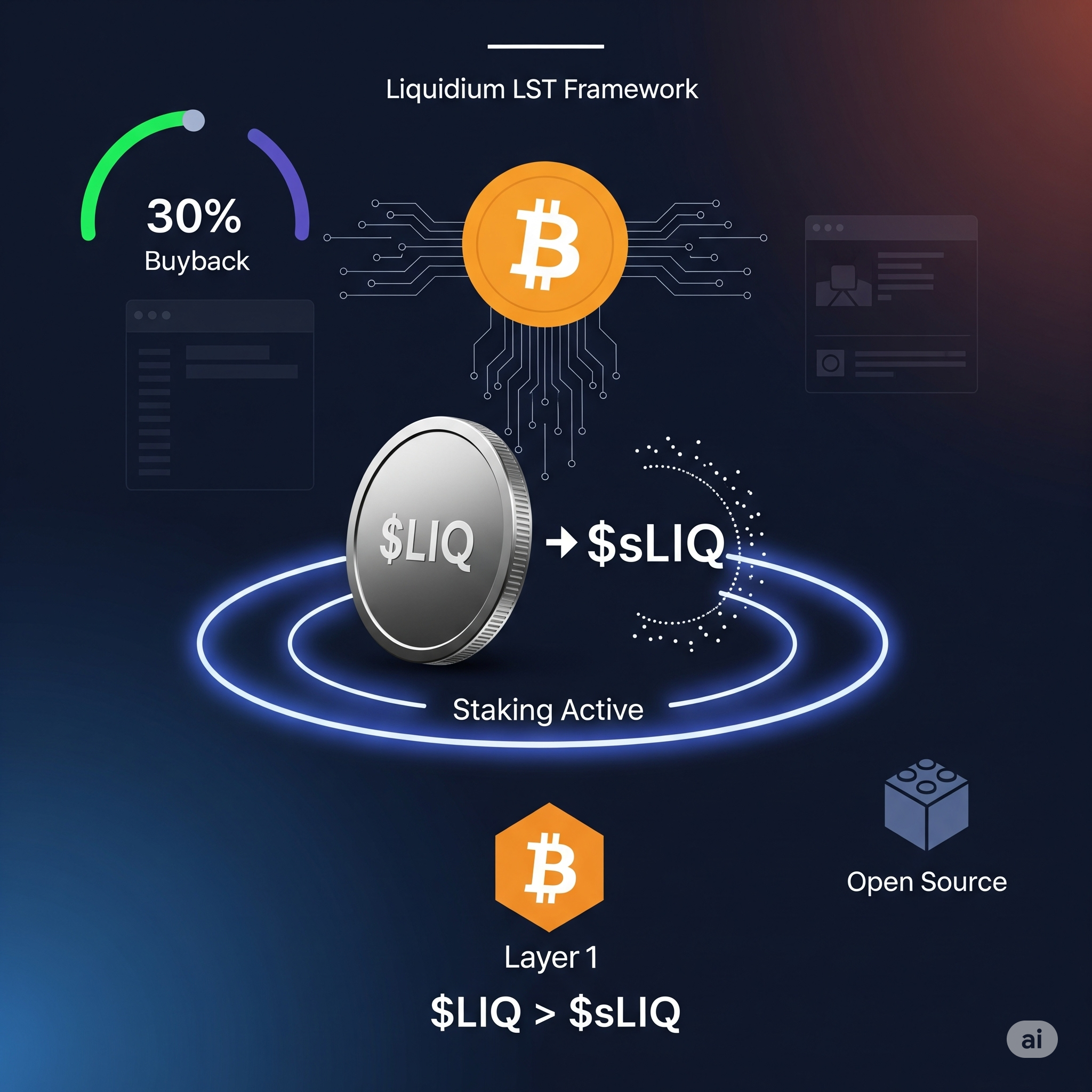
Liquidium is gearing up to release an open-source liquid staking token (LST) framework tailored for the Runes protocol, aiming to make Bitcoin-native staking more accessible and flexible. Built directly on Layer 1 Bitcoin, the framework will allow users to convert $LIQ into $sLIQ, unlocking a new staking mechanism with daily incentives.
The update introduces a 30% daily buyback programme tied to both Liquidium protocols. Users who opt into staking through the framework will benefit from consistent buybacks funded through protocol activity. This mechanism aims to create ongoing demand for $LIQ, while offering users a way to engage with the platform without giving up liquidity.
What makes this release different is its reusability. By keeping the framework open, Liquidium is offering other developers and projects the ability to build on top of the same staking architecture, creating the possibility of broader adoption within the emerging Runes-based ecosystem. The open design could serve smaller platforms looking to integrate LSTs without having to build core infrastructure from scratch.
The Runes protocol itself has been gaining attention for bringing a new form of fungible token activity to Bitcoin. With Liquidium’s approach, staking is no longer limited to high-barrier DeFi systems. By offering a native Bitcoin experience with minimal friction, Liquidium is placing itself at the centre of this evolving space.
Still, the model invites scrutiny. A 30% daily buyback rate raises questions about long-term sustainability and the mechanics behind the returns. While such figures may appeal to early adopters, the structure will need to withstand fluctuations in usage and revenue. Clarity on how these incentives are funded will be important, especially as interest grows.
There’s also the matter of security. Bitcoin’s native layer is known for its resilience, but any staking framework layered on top will naturally introduce new code, risks and responsibilities. Liquidium’s choice to make its framework public could invite peer review and auditing, but adoption will likely hinge on trust as much as on design.
The announcement is timely, given the current appetite for decentralised systems that do more than hold assets. As Bitcoin evolves beyond its store-of-value status, services like staking, lending and token swaps are becoming more sought after. Liquidium appears to be building for that future, starting with a focus on reusability, transparency and user control.
By lowering the barrier to entry for staking on Bitcoin, Liquidium’s open framework could nudge the network further into practical DeFi territory. Whether the wider market embraces it remains to be seen, but the tools are nearly in place.
Dear Reader,
Ledger Life is an independent platform dedicated to covering the Internet Computer (ICP) ecosystem and beyond. We focus on real stories, builder updates, project launches, and the quiet innovations that often get missed.
We’re not backed by sponsors. We rely on readers like you.
If you find value in what we publish—whether it’s deep dives into dApps, explainers on decentralised tech, or just keeping track of what’s moving in Web3—please consider making a donation. It helps us cover costs, stay consistent, and remain truly independent.
Your support goes a long way.
🧠 ICP Principal: ins6i-d53ug-zxmgh-qvum3-r3pvl-ufcvu-bdyon-ovzdy-d26k3-lgq2v-3qe
🧾 ICP Address: f8deb966878f8b83204b251d5d799e0345ea72b8e62e8cf9da8d8830e1b3b05f
🪙 BTC Wallet: bc1pp5kuez9r2atdmrp4jmu6fxersny4uhnaxyrxau4dg7365je8sy2q9zff6p
Every contribution helps keep the lights on, the stories flowing, and the crypto clutter out.
Thank you for reading, sharing, and being part of this experiment in decentralised media.
—Team Ledger Life