Membrane to Launch as Privacy-Focused AI Orchestration Layer on 17 October
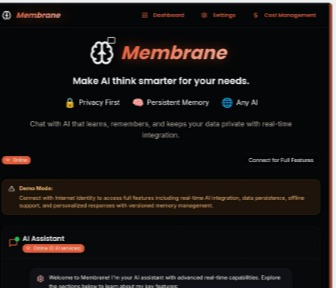
A new AI infrastructure tool called Membrane is set to go live on 17 October, promising users a smoother way to access and switch between leading AI services without compromising on privacy or performance. Built on top of Caffeine AI, Membrane is designed to connect with multiple AI providers, including OpenAI, Claude, Gemini, Grok, and others, through a single unified layer.
Rather than replacing existing tools, Membrane acts as a coordination layer that manages memory, context, and optimisation in the background. It is described as model-agnostic, allowing users to move between different AI models while retaining their data, preferences, and context.
The platform is expected to appeal to both casual and frequent users, particularly those juggling free-tier limits on various AI services. Membrane allows for seamless switching between providers without losing session continuity, making it easier to preserve progress and reduce friction during tasks.
One of Membrane’s key features is its approach to privacy. It operates on a zero-trust model, meaning it avoids unnecessary data exposure by design. Combined with persistent, portable memory and real-time performance, the tool aims to support a more personalised experience without centralising user information.
Caffeine AI, the foundation powering Membrane, has increasingly been used for developer tooling, app logic, and on-chain intelligence. Membrane appears to extend that direction by offering a user-facing interface that puts individuals in control of how they use and combine AI services.
With launch day approaching, early interest is growing, especially among those looking for more customisable and efficient ways to work across different models. The promise of near-zero latency and cross-AI memory syncing adds to the appeal for those already familiar with the limitations of switching between tools mid-task.
Membrane’s public rollout is expected to open access to a new layer of flexibility in everyday AI use.
Dear Reader,
Ledger Life is an independent platform dedicated to covering the Internet Computer (ICP) ecosystem and beyond. We focus on real stories, builder updates, project launches, and the quiet innovations that often get missed.
We’re not backed by sponsors. We rely on readers like you.
If you find value in what we publish—whether it’s deep dives into dApps, explainers on decentralised tech, or just keeping track of what’s moving in Web3—please consider making a donation. It helps us cover costs, stay consistent, and remain truly independent.
Your support goes a long way.
🧠 ICP Principal: ins6i-d53ug-zxmgh-qvum3-r3pvl-ufcvu-bdyon-ovzdy-d26k3-lgq2v-3qe
🧾 ICP Address: f8deb966878f8b83204b251d5d799e0345ea72b8e62e8cf9da8d8830e1b3b05f
🪙 BTC Wallet: bc1pp5kuez9r2atdmrp4jmu6fxersny4uhnaxyrxau4dg7365je8sy2q9zff6p
Every contribution helps keep the lights on, the stories flowing, and the crypto clutter out.
Thank you for reading, sharing, and being part of this experiment in decentralised media.
—Team Ledger Life