
Thrive to create first “marketing oriented” blockchain
Hoping to establish the first “marketing oriented” blockchain in the industry, Thrive is set to give global advertising bigwigs like Google AdSense/AdWords a run for their money.
Thrive, a decentralised platform, is attempting penetrate into the global advertising market by creating a network on which advertisers and content creators can seamlessly integrate digital ads on a peer-to-peer manner, without the interference of intermediaries and third party service providers.
Through the usage of blockchain technology, the Thrive team promises full transparency and data security, which are two advantages which centralised platforms like Google AdSense and Amazon Advertising cannot provide. Often, revenue shares, advertisement margins, and rates are not transparently provided to content creators as accessible data, making it difficult for content creators to plan ahead potential revenues and profits to finance their operations and daily activities.
Blockchain technology’s and its cryptographically encrypted network enables every piece of data to be accessed as public information.
This means that for the first time, both publishers and consumers willing to voluntarily share anonymous data will get monetary rewards. With Thrive, content creators will not experience similar issues they have had on platforms like YouTube, wherein content is unfairly demonetised. Recently, demonetisation of content on major platforms resulted in more than 50 per cent of their revenues were eliminated overnight.
Thrive is targeting a rapidly growing market in digital advertising. The total addressable market of Thrive is nearly $310 billion, and if it can establish itself as a key service provider within the market, it will be able to evolve into a leading advertising marketplace.
Digital advertising spending worldwide—which includes both desktop and laptop computers as well as mobile devices was estimated to be 198.4 billion U.S. dollars in 2016. This figure is forecast to constantly increase during the coming years, reaching a total of 310 billion U.S. dollars by 2020.
The token sale or initial coin offering (ICO) of the Thrive token (THRT) begins on 15 February. 53 per cent of the total supply of THRT (106 Million THRT) will be sold during the token sale. Unsold token will be burned. The initial pricing per THRT will be $0.3, and the dynamic hard cap of the token sale will be set at $30 million.
Tron reaches out to ‘global community’ to help send medical supplies to Coronavirus victims

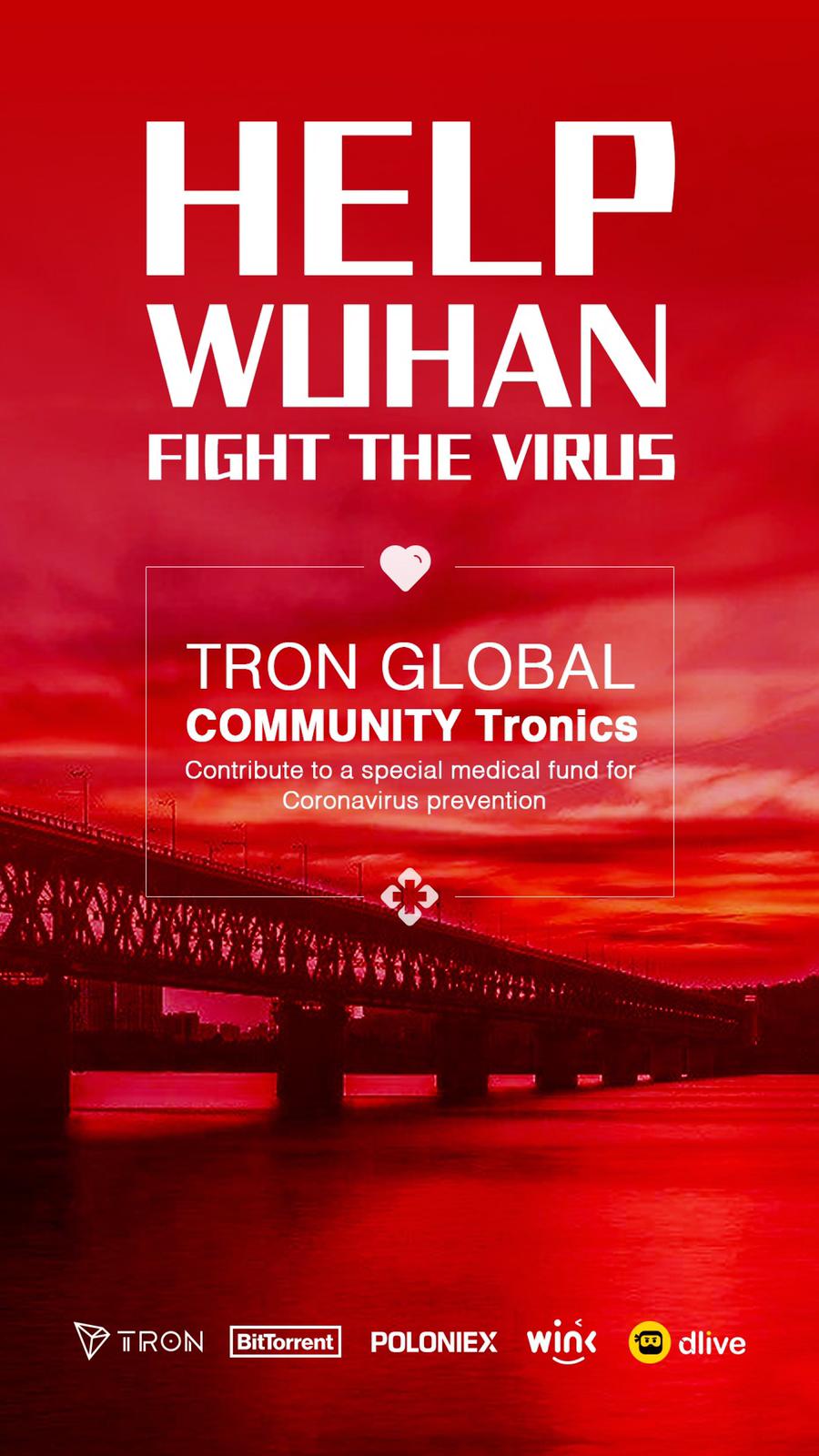
Blockchain solutions provider Tron is seeking help from its global community and partners to help those affected by the Coronavirus worldwide. “We are deeply concerned and aware of the extreme shortage of medical supplies in Wuhan, China, hence we are calling all the Tronics around the world to help those affected by sending medical necessities immediately,” said a press note from the company.
These supplies include goggles, face masks, food, water, and various medical supplies, and anything else needed to help them overcome this crisis. The company says they have already received commitments from various community members from Korea, Singapore, North America, and EU, as well as corporations within the Tron ecosystem including BitTorrent, Poloniex, DLive, and WINk, with more to be confirmed.
Tron is now coordinating with some of the largest logistics companies around the world to help deliver and distribute these supplies as soon as possible, to whoever is in need.
TruStory shuts down; business model “unsustainable” says Founder
A year and a half after raising $3 million from investors, social network platform TruStory is shutting down, announced founder Preethi Kasireddy in a blog post published last week. Kasireddy said the token-based digital debate platform was closing because its business model is “unsustainable”. Kasireddy said investors will be returned their money.
“In order to build a sustainable business, TruStory would need millions of users who can readily purchase tokens (legally) and seamlessly use them on the platform daily. While we believe we can capture a small niche of users, we don’t believe it’s large enough to build a sustainable business,” said Kasireddy in her post.
TruStory allowed users to participate in debates by staking tokens called “TRU”. Users who wrote compelling arguments on the platform earned tokens, while those who “misbehaved,” lost them. The goal, said Kasrireddy, was to crowdsource the best arguments on both sides of any issue.
“Right now the market is not mature enough for the tokenized future we believe in. Launching a token in a regulatory-friendly way is still a nightmare,” said Kasireddy.

“In order to distribute and use the token as prolifically as needed, we needed much better infrastructure (e.g. crypto wallets) and more seamless authorization solutions (i.e. transaction signing). Especially for a consumer facing application where speed and convenience are paramount. Unfortunately, the solutions out there today are nowhere close to what we need.”
She said the number of people who know about crypto, let alone who are willing to buy for a reason other than to “pump and dump”, is tiny. “Crypto today is little more than glorified gambling. The idea that you can use crypto for other (very innovative) things is still foreign to most people. In order to build a sustainable business, TruStory would need millions of users who can readily purchase tokens (legally) and seamlessly use them on the platform daily. While we believe we can capture a small niche of users, we don’t believe it’s large enough to build a sustainable business.”
Investors in TruStory include True Ventures, Pantera Capital and Coinbase Ventures.