Home Blog Page 9

FomoWell highlights multi-signature and wallet security measures

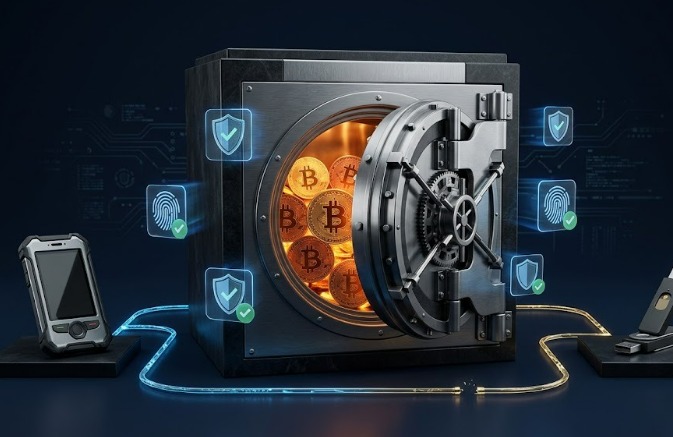
FomoWell has outlined the security measures it uses to protect Bitcoin reserves held on its platform, with a focus on multi-signature protection and the separation of hot and cold wallets.

The company said the approach is designed to reduce operational and custody risks while supporting the management of Bitcoin-based financial services.

According to FomoWell, multi-signature protection helps reduce the risk associated with a single point of failure by requiring multiple approvals for certain transactions. Hot and cold wallet separation is intended to keep long-term reserves isolated from online systems while allowing funds needed for day-to-day operations to remain accessible.

The company said the two measures are intended to balance asset protection with operational efficiency.

Multi-signature custody and wallet segregation are widely used security practices across digital asset platforms, exchanges and custody providers. Cold wallets are typically kept offline to reduce exposure to cyber attacks, while hot wallets are connected to the internet to facilitate transactions and platform activity.

FomoWell said it is continuing to develop its Bitcoin-focused financial infrastructure and views security as a central part of that effort.

The announcement comes as Bitcoin-based finance platforms place greater emphasis on custody arrangements, reserve management and risk controls as users pay closer attention to asset protection.


Dear Reader,

Ledger Life is an independent platform dedicated to covering the Internet Computer (ICP) ecosystem and beyond. We focus on real stories, builder updates, project launches, and the quiet innovations that often get missed.

We’re not backed by sponsors. We rely on readers like you.

If you find value in what we publish—whether it’s deep dives into dApps, explainers on decentralised tech, or just keeping track of what’s moving in Web3—please consider making a donation. It helps us cover costs, stay consistent, and remain truly independent.

Your support goes a long way.

🧠 ICP Principal: ins6i-d53ug-zxmgh-qvum3-r3pvl-ufcvu-bdyon-ovzdy-d26k3-lgq2v-3qe

🧾 ICP Address: f8deb966878f8b83204b251d5d799e0345ea72b8e62e8cf9da8d8830e1b3b05f

Every contribution helps keep the lights on, the stories flowing, and the crypto clutter out.

Thank you for reading, sharing, and being part of this experiment in decentralised media.
—Team Ledger Life

Plug Wallet adds Liquidium borrowing on mobile and extension

0

Plug Wallet has added support for Liquidium’s borrowing service on both its browser extension and mobile app, giving users the option to borrow against digital assets held as collateral.

The feature allows users to deposit eligible assets and take out a loan without selling their holdings, a model commonly used in decentralised finance where assets remain locked as collateral while funds are borrowed against them.

Plug announced the integration through its official channels, saying Liquidium is now available across both extension and mobile versions of the wallet.

Collateralised borrowing can offer liquidity to users who want access to funds while maintaining exposure to their digital assets. However, these arrangements also carry risks, including liquidation if the value of the collateral falls below required thresholds.

The addition expands the range of financial services available through Plug Wallet, which is widely used within the Internet Computer ecosystem.

Liquidium has become one of the lending platforms operating on the network, with borrowing and lending services centred on digital asset collateral.

The rollout reflects continued efforts by wallet providers to integrate lending, borrowing and other financial tools directly into their applications, reducing the need for users to move between multiple platforms.


Dear Reader,

Ledger Life is an independent platform dedicated to covering the Internet Computer (ICP) ecosystem and beyond. We focus on real stories, builder updates, project launches, and the quiet innovations that often get missed.

We’re not backed by sponsors. We rely on readers like you.

If you find value in what we publish—whether it’s deep dives into dApps, explainers on decentralised tech, or just keeping track of what’s moving in Web3—please consider making a donation. It helps us cover costs, stay consistent, and remain truly independent.

Your support goes a long way.

🧠 ICP Principal: ins6i-d53ug-zxmgh-qvum3-r3pvl-ufcvu-bdyon-ovzdy-d26k3-lgq2v-3qe

🧾 ICP Address: f8deb966878f8b83204b251d5d799e0345ea72b8e62e8cf9da8d8830e1b3b05f

Every contribution helps keep the lights on, the stories flowing, and the crypto clutter out.

Thank you for reading, sharing, and being part of this experiment in decentralised media.
—Team Ledger Life
DOM calls for open source security registry and measured approach to quantum risk

DOM has proposed the creation of an open source responder registry that would allow maintainers of software projects to receive confidential security alerts before vulnerabilities become public.

The proposal was shared on X, where DOM suggested that key maintainers of open source projects could voluntarily sign up for security notifications. Under the proposal, open source software would be analysed before the release of new frontier AI models, with maintainers privately informed about security issues that had been identified.

The idea is aimed at giving developers time to prepare fixes before vulnerabilities become widely known.

The proposal comes amid broader discussion about the impact of advanced AI systems on software security and the challenges of protecting widely used open source infrastructure.

DOM also weighed into debate about the potential impact of quantum computing on blockchain security, responding to comments from NEAR co-founder Illia Polosukhin about preparations for future quantum-related risks.

In a reply posted on X, DOM argued that the industry would receive warning before cryptographically relevant quantum computers became accessible to attackers.

The post said advances in quantum computing would likely be reported by research laboratories before such systems could be used to break existing cryptographic protections, allowing time for migration to quantum-safe cryptographic schemes.

The comments reflect a more measured view of the timeline for quantum-related threats than some of the more urgent warnings circulating within parts of the blockchain industry.

Quantum computing has long been viewed as a potential challenge for many existing cryptographic systems, although experts continue to debate when practical quantum attacks against widely deployed cryptography might become feasible.

Many blockchain projects are already exploring quantum-resistant cryptography as a precautionary measure, while researchers continue to assess the pace of progress in quantum hardware and algorithms.

DOM’s comments suggest that preparation and coordinated migration planning may be a more practical focus than assuming an immediate quantum threat.


Dear Reader,

Ledger Life is an independent platform dedicated to covering the Internet Computer (ICP) ecosystem and beyond. We focus on real stories, builder updates, project launches, and the quiet innovations that often get missed.

We’re not backed by sponsors. We rely on readers like you.

If you find value in what we publish—whether it’s deep dives into dApps, explainers on decentralised tech, or just keeping track of what’s moving in Web3—please consider making a donation. It helps us cover costs, stay consistent, and remain truly independent.

Your support goes a long way.

🧠 ICP Principal: ins6i-d53ug-zxmgh-qvum3-r3pvl-ufcvu-bdyon-ovzdy-d26k3-lgq2v-3qe

🧾 ICP Address: f8deb966878f8b83204b251d5d799e0345ea72b8e62e8cf9da8d8830e1b3b05f

Every contribution helps keep the lights on, the stories flowing, and the crypto clutter out.

Thank you for reading, sharing, and being part of this experiment in decentralised media.
—Team Ledger Life

Mingle Berry Media partners with Empath and Token-Rx on Chile cloud project

Mingle Berry Media has announced a partnership with Empath and Token-Rx to support the rollout of sovereign cloud infrastructure for businesses in Chile using Internet Computer technology.

The company said the collaboration will begin with Token-Rx’s own website, which has already been migrated to the Internet Computer as part of the project.

According to Mingle Berry Media, the migration serves as the first operational example of the partnership before work expands to business software used by companies in Chile.

The next stage of the project is expected to focus on Odoo-based businesses, reflecting the software’s broad use among Chilean companies.

Sovereign cloud infrastructure generally refers to cloud systems where data, applications and digital services are managed under local control or within defined jurisdictional and governance frameworks.

Mingle Berry Media said the partnership is intended to help businesses move selected digital services away from conventional cloud infrastructure.

The announcement points to a broader interest among technology companies in exploring alternative cloud models that can offer greater control over data, infrastructure and operational costs.

The project is still in its early stages, and no timeline has been announced for wider business migrations beyond the initial website deployment.

Token-Rx is currently active on LinkedIn, while the migrated website is already accessible through the Internet Computer network.


Dear Reader,

Ledger Life is an independent platform dedicated to covering the Internet Computer (ICP) ecosystem and beyond. We focus on real stories, builder updates, project launches, and the quiet innovations that often get missed.

We’re not backed by sponsors. We rely on readers like you.

If you find value in what we publish—whether it’s deep dives into dApps, explainers on decentralised tech, or just keeping track of what’s moving in Web3—please consider making a donation. It helps us cover costs, stay consistent, and remain truly independent.

Your support goes a long way.

🧠 ICP Principal: ins6i-d53ug-zxmgh-qvum3-r3pvl-ufcvu-bdyon-ovzdy-d26k3-lgq2v-3qe

🧾 ICP Address: f8deb966878f8b83204b251d5d799e0345ea72b8e62e8cf9da8d8830e1b3b05f

Every contribution helps keep the lights on, the stories flowing, and the crypto clutter out.

Thank you for reading, sharing, and being part of this experiment in decentralised media.
—Team Ledger Life

Dominic Williams outlines enterprise AI strategy and warns against quantum security hype

DFINITY founder and chief scientist Dominic Williams has outlined a new enterprise software initiative built on the Internet Computer Protocol while arguing that the digital asset industry is focusing too heavily on quantum-resistant cryptography and not enough on software security.

In a series of posts on X, Dom described the Mechanicus agent framework as one of the projects he is currently developing. The framework is intended to automate the migration of enterprise software to what he called Open SaaS running on ICP cloud engines.

According to Dom, the goal is to enable organisations to deploy tamper-resistant AI-powered software while reducing reliance on traditional software-as-a-service platforms and their ongoing subscription costs.

The proposed framework reflects a broader push within the Internet Computer ecosystem to position decentralised cloud infrastructure as an alternative to conventional enterprise software models. The concept combines automation, AI agents and distributed computing infrastructure in an effort to simplify enterprise migration.

Dom also used the posts to challenge what he described as the industry’s growing focus on quantum-resistant cryptography. He argued that concerns about quantum computing have become a marketing narrative similar to the Y2K fears that drove large spending programmes in the late 1990s.

He said many blockchain networks are promoting quantum safety as a competitive advantage, despite the uncertainty around when quantum computers capable of breaking widely used cryptographic systems might become practical.

Dom argued that the more immediate threat comes from advances in artificial intelligence, particularly AI systems that are becoming increasingly effective at identifying vulnerabilities in software code.

He said the digital asset industry has already experienced a steady stream of software exploits and security breaches, and that stronger engineering practices and code security should be a higher priority than rushing to adopt newer cryptographic schemes.

Dom also questioned whether many recently developed quantum-resistant cryptographic systems have received the same level of scrutiny as established cryptographic standards, which have been studied for decades. He pointed to the recent discovery of weaknesses in a candidate cryptographic standard as an example of why caution is warranted.

His argument was that adopting newer cryptographic systems too quickly could introduce fresh security risks, especially if AI accelerates the discovery of weaknesses in those algorithms.

Dom acknowledged that governments and corporations handling highly sensitive encrypted communications may face different risks because intercepted data could potentially be decrypted in the future if quantum computing advances. However, he argued that the digital asset industry faces a different set of immediate security challenges.

He said AI-assisted attacks on software vulnerabilities are already occurring and pose a more pressing risk to users than future quantum computing scenarios.

The comments come as blockchain developers, enterprise technology providers and cryptography researchers continue debating how quickly the industry should transition to post-quantum cryptographic standards. While some projects have accelerated work on quantum-resistant infrastructure, others have argued that implementation should be guided by careful testing and long-term security analysis.

Dom’s comments suggest that the Internet Computer’s enterprise strategy is focused on AI-driven software infrastructure while its founder believes software security, rather than quantum marketing, deserves greater attention in the current threat environment.


Dear Reader,

Ledger Life is an independent platform dedicated to covering the Internet Computer (ICP) ecosystem and beyond. We focus on real stories, builder updates, project launches, and the quiet innovations that often get missed.

We’re not backed by sponsors. We rely on readers like you.

If you find value in what we publish—whether it’s deep dives into dApps, explainers on decentralised tech, or just keeping track of what’s moving in Web3—please consider making a donation. It helps us cover costs, stay consistent, and remain truly independent.

Your support goes a long way.

🧠 ICP Principal: ins6i-d53ug-zxmgh-qvum3-r3pvl-ufcvu-bdyon-ovzdy-d26k3-lgq2v-3qe

🧾 ICP Address: f8deb966878f8b83204b251d5d799e0345ea72b8e62e8cf9da8d8830e1b3b05f

Every contribution helps keep the lights on, the stories flowing, and the crypto clutter out.

Thank you for reading, sharing, and being part of this experiment in decentralised media.
—Team Ledger Life

Menese promotes decentralised multichain asset management for institutions

Menese is promoting a decentralised approach to digital asset management, positioning its platform as an alternative to custodial systems and fragmented multichain infrastructure for individuals, businesses and decentralised organisations.

The platform says users can hold Bitcoin, Ether, Solana, XRP, Cardano and more than 50 other digital assets within a single operating system, while maintaining direct control of their assets.

According to Menese, the platform is fully non-custodial and uses Chain Key cryptography developed on the Internet Computer Protocol, allowing assets to be managed across multiple networks without relying on bridges, wrapped tokens or a central intermediary.

The company says its infrastructure is designed to remove single points of failure by distributing control across multiple machines operating globally. It argues that this model offers stronger protection for digital assets than systems that depend on a single company or custody provider.

Menese is also promoting cross-network functionality, allowing users to swap supported assets within the platform. The company says the same infrastructure can be used for a broader range of financial activities, including access to tokenised assets such as equities through integrated marketplace services.

The announcement reflects a wider trend in digital asset infrastructure, where developers are increasingly focused on interoperability, self-custody and institutional-grade security. As more organisations manage assets across multiple networks, the complexity of using separate wallets, custody arrangements and blockchain-specific tools has become a growing operational challenge.

Security remains one of the central issues in the sector. Recent thefts involving compromised wallet credentials and bridge exploits have renewed interest in non-custodial systems that reduce dependence on centralised infrastructure.

Menese says its platform is aimed at enterprise users, teams and decentralised organisations seeking native multichain asset management without surrendering control of their holdings. The company argues that decentralised cryptographic infrastructure can provide a more resilient foundation for organisations operating across multiple blockchain networks.

The platform’s claims highlight the continuing debate between custodial convenience and sovereign asset control, as infrastructure providers compete to offer secure, interoperable systems for an increasingly multichain digital asset environment.


Dear Reader,

Ledger Life is an independent platform dedicated to covering the Internet Computer (ICP) ecosystem and beyond. We focus on real stories, builder updates, project launches, and the quiet innovations that often get missed.

We’re not backed by sponsors. We rely on readers like you.

If you find value in what we publish—whether it’s deep dives into dApps, explainers on decentralised tech, or just keeping track of what’s moving in Web3—please consider making a donation. It helps us cover costs, stay consistent, and remain truly independent.

Your support goes a long way.

🧠 ICP Principal: ins6i-d53ug-zxmgh-qvum3-r3pvl-ufcvu-bdyon-ovzdy-d26k3-lgq2v-3qe

🧾 ICP Address: f8deb966878f8b83204b251d5d799e0345ea72b8e62e8cf9da8d8830e1b3b05f

Every contribution helps keep the lights on, the stories flowing, and the crypto clutter out.

Thank you for reading, sharing, and being part of this experiment in decentralised media.
—Team Ledger Life

Oisy points to seedless wallet model after $38m Bitcoin theft

0

A Bitcoin theft involving an estimated US$38 million has renewed attention on how hardware wallets generate and protect recovery credentials, with wallet provider Oisy arguing that the incident highlights weaknesses in seed phrase based security rather than in Bitcoin itself.

The theft was reportedly linked to a hardware wallet that generated predictable seed phrases, allowing attackers to reconstruct wallet access. Security researchers have long warned that seed phrase generation depends heavily on the quality of randomness used during wallet creation, and predictable or compromised entropy can create vulnerabilities.

Oisy said the incident reflected a failure in the seed phrase generation process rather than a flaw in the Bitcoin network.

The company has used the case to promote its seedless wallet architecture, which does not rely on a traditional recovery phrase. Instead, Oisy says users’ cryptographic keys are protected through a distributed network model in which no single device or machine holds the complete key.

According to the company, the design removes a single point of compromise and reduces the risk that a seed phrase could be guessed, stolen or extracted from a user’s device.

The comments come amid wider discussion within the digital asset industry about wallet security and self custody practices. Hardware wallets remain widely used for long-term storage of Bitcoin and other digital assets, but security experts generally emphasise that their safety depends on both secure hardware and robust key generation.

Traditional seed phrase wallets usually generate a 12 or 24 word recovery phrase, which can restore access to funds if a device is lost. That recovery method has also made seed phrases a frequent target for theft, phishing attacks and social engineering.

Alternative wallet models, including multi-party cryptography and distributed key management systems, aim to reduce reliance on a single recovery phrase by splitting or distributing control over cryptographic keys.

Oisy said its approach relies on advanced cryptographic techniques and a network of independent computers to protect user keys, arguing that no single machine ever possesses the full key.

The company is encouraging users to hold Bitcoin through its platform, while the broader industry continues to debate the trade-offs between traditional seed phrase recovery systems and newer seedless wallet designs.

The reported theft has reinforced a familiar lesson for digital asset users: the security of a wallet can depend as much on how access credentials are created and protected as on the security of the underlying network itself.


Dear Reader,

Ledger Life is an independent platform dedicated to covering the Internet Computer (ICP) ecosystem and beyond. We focus on real stories, builder updates, project launches, and the quiet innovations that often get missed.

We’re not backed by sponsors. We rely on readers like you.

If you find value in what we publish—whether it’s deep dives into dApps, explainers on decentralised tech, or just keeping track of what’s moving in Web3—please consider making a donation. It helps us cover costs, stay consistent, and remain truly independent.

Your support goes a long way.

🧠 ICP Principal: ins6i-d53ug-zxmgh-qvum3-r3pvl-ufcvu-bdyon-ovzdy-d26k3-lgq2v-3qe

🧾 ICP Address: f8deb966878f8b83204b251d5d799e0345ea72b8e62e8cf9da8d8830e1b3b05f

Every contribution helps keep the lights on, the stories flowing, and the crypto clutter out.

Thank you for reading, sharing, and being part of this experiment in decentralised media.
—Team Ledger Life
Sonic DEX traces $276,000 exploit and plans compensation portal for affected users

Sonic DEX has published an official report into a security incident that led to the unauthorised extraction of assets from 26 liquidity pools, with estimated losses of about $276,000.

The incident occurred on 15 July 2026 and prompted an investigation by the platform’s engineering and security teams, who examined the technical cause of the exploit, tracked the movement of the stolen assets on-chain, and contacted centralised exchanges and law enforcement agencies.

According to the report, the exploit was caused by a transaction atomicity vulnerability linked to the asynchronous execution model used by Internet Computer canisters. Sonic said the attacker was able to submit a large number of precisely timed asynchronous requests that altered execution ordering during intermediate state transitions.

The platform said the exploit did not involve compromised private keys or administrative access. Instead, it took advantage of an edge case in the protocol’s execution flow, allowing funds to be extracted before the final transaction state had been reconciled.

Sonic said the affected functionality was disabled after the vulnerability was identified, and architectural changes are being implemented to prevent similar attacks.

The forensic investigation traced the stolen assets through multiple intermediary wallets, token swaps and cross-chain transfers before they were converted into Bitcoin and eventually deposited at the HitBTC exchange.

The report states that about $195,000 was consolidated into a primary attacker wallet, while smaller amounts were distributed across three secondary wallets. Investigators said the attacker moved 96,780 ICP through a relay wallet, converted the assets into ckBTC through ICPSwap, liquidated about 30 million BOOM tokens, and later transferred the proceeds into a central aggregation wallet.

Sonic said approximately 3.145 BTC was converted into native Bitcoin through 62 separate burn transactions before being moved through a series of peel-chain wallets and deposited into a HitBTC address.

The company said it had contacted exchanges connected to the movement of funds and provided transaction records and forensic evidence. It said the exchanges had acknowledged receipt of the reports and indicated they would cooperate with law enforcement investigations where legally permitted.

Sonic also said investigators had identified an additional lead involving funding received by the attacker-controlled wallet about a month before the exploit.

The platform said it is continuing to work with authorities, while noting that identifying the individual behind the exchange account would require information held by the exchange and the appropriate legal process.

Alongside the investigation, Sonic announced plans to change the direction of the platform. It intends to phase out its liquidity pool protocol and focus on AI-powered token discovery, market analytics, token aggregation and investing tools.

The company said the redesign has been under development for several months and is intended to improve security, performance and long-term sustainability.

Sonic also announced that it plans to launch a compensation portal next week for affected users. Eligible users will be asked to submit their wallet address, details of affected assets and supporting information for verification.

The company said claims will be reviewed against on-chain records and that it intends to compensate eligible users either fully or partially, depending on the recovery process and available funds. Compensation is expected to be distributed directly to users’ wallets over the coming month.

The report says the current focus is on reimbursing regular community users who were directly affected by the exploit, with further details on eligibility, verification procedures and compensation timelines to be announced before the portal goes live.

Sonic said it would continue pursuing recovery of the stolen assets, cooperating with exchanges and law enforcement, and providing further updates as the investigation progresses.


Dear Reader,

Ledger Life is an independent platform dedicated to covering the Internet Computer (ICP) ecosystem and beyond. We focus on real stories, builder updates, project launches, and the quiet innovations that often get missed.

We’re not backed by sponsors. We rely on readers like you.

If you find value in what we publish—whether it’s deep dives into dApps, explainers on decentralised tech, or just keeping track of what’s moving in Web3—please consider making a donation. It helps us cover costs, stay consistent, and remain truly independent.

Your support goes a long way.

🧠 ICP Principal: ins6i-d53ug-zxmgh-qvum3-r3pvl-ufcvu-bdyon-ovzdy-d26k3-lgq2v-3qe

🧾 ICP Address: f8deb966878f8b83204b251d5d799e0345ea72b8e62e8cf9da8d8830e1b3b05f

Every contribution helps keep the lights on, the stories flowing, and the crypto clutter out.

Thank you for reading, sharing, and being part of this experiment in decentralised media.
—Team Ledger Life

MULTI/DEX opens Phase II trading competition and releases exchange code as open source

MULTI/DEX has launched Phase II of its trading competition and released its exchange code as open source, marking the next stage of development for the on-chain trading platform.

The project said the codebase is now publicly available through GitHub, allowing developers and community contributors to review and build on the platform. The release follows the completion of Phase I, which attracted nearly 1,500 participants.

According to the team, the Phase I trading ledger has been snapshotted and is now being analysed before prizes are awarded to participants. Details of the Phase II prize structure are expected to be announced separately.

The project has presented MULTI/DEX as a fully on-chain exchange and said it is now exploring perpetual futures trading as a future direction. Developers involved with the project argue that the platform’s architecture is designed to support advanced trading features while remaining entirely on-chain.

Open-sourcing the code allows independent developers to inspect the platform’s design and contribute improvements. Community participation has become an increasingly common feature of decentralised trading projects, particularly during early development phases where testing, security reviews and feature refinement often rely on external contributors.

The announcement also highlights the role of the project’s user community, with the team thanking participants from the first competition and encouraging continued involvement as development progresses.

Phase II is now open to traders, with further updates on prizes and additional trading features expected as the competition continues.


Dear Reader,

Ledger Life is an independent platform dedicated to covering the Internet Computer (ICP) ecosystem and beyond. We focus on real stories, builder updates, project launches, and the quiet innovations that often get missed.

We’re not backed by sponsors. We rely on readers like you.

If you find value in what we publish—whether it’s deep dives into dApps, explainers on decentralised tech, or just keeping track of what’s moving in Web3—please consider making a donation. It helps us cover costs, stay consistent, and remain truly independent.

Your support goes a long way.

🧠 ICP Principal: ins6i-d53ug-zxmgh-qvum3-r3pvl-ufcvu-bdyon-ovzdy-d26k3-lgq2v-3qe

🧾 ICP Address: f8deb966878f8b83204b251d5d799e0345ea72b8e62e8cf9da8d8830e1b3b05f

Every contribution helps keep the lights on, the stories flowing, and the crypto clutter out.

Thank you for reading, sharing, and being part of this experiment in decentralised media.
—Team Ledger Life

ICP-powered AI platform helps automate grant consultancy services

Entrepreneur Terry Igharoro, founder of agriiDAO, has announced that his AI-powered consultancy platform has onboarded its first three paying clients, using the Internet Computer Protocol (ICP) as its underlying infrastructure.

The platform is designed to help users establish nonprofit organisations and prepare grant applications through an AI agent trained on Igharoro’s own grant consultancy process.

Igharoro said he developed the system by converting the methods he used to help clients secure more than £750,000 in grants into an automated workflow. The platform aims to allow more people to offer grant consultancy services without needing years of experience in grant writing.

“The platform gives them an AI agent that handles the end-to-end process of setting up a nonprofit organisation and drafting a fundable grant application,” Igharoro said.

According to Igharoro, the first clients using the service have focused on the outcomes delivered by the platform rather than the technology behind it.

“None of them asked what it’s built on. They care that it delivers what I said it would,” he said.

The launch reflects a wider shift towards AI tools that package specialised professional services into accessible platforms. Businesses and independent creators are increasingly exploring AI agents to automate workflows, reduce administrative tasks and provide specialised support.

Built on ICP, agriiDAO’s platform uses decentralised infrastructure to support its AI-based consultancy model. The project is among a growing number of applications exploring how AI agents can be integrated into online services.

Igharoro’s approach focuses on turning a repeatable consulting process into a product that can be used by people seeking to build nonprofit initiatives and access funding opportunities.


Dear Reader,

Ledger Life is an independent platform dedicated to covering the Internet Computer (ICP) ecosystem and beyond. We focus on real stories, builder updates, project launches, and the quiet innovations that often get missed.

We’re not backed by sponsors. We rely on readers like you.

If you find value in what we publish—whether it’s deep dives into dApps, explainers on decentralised tech, or just keeping track of what’s moving in Web3—please consider making a donation. It helps us cover costs, stay consistent, and remain truly independent.

Your support goes a long way.

🧠 ICP Principal: ins6i-d53ug-zxmgh-qvum3-r3pvl-ufcvu-bdyon-ovzdy-d26k3-lgq2v-3qe

🧾 ICP Address: f8deb966878f8b83204b251d5d799e0345ea72b8e62e8cf9da8d8830e1b3b05f

Every contribution helps keep the lights on, the stories flowing, and the crypto clutter out.

Thank you for reading, sharing, and being part of this experiment in decentralised media.
—Team Ledger Life