Pass the Aux: CaniSafe Opens the Vault for Music Creators
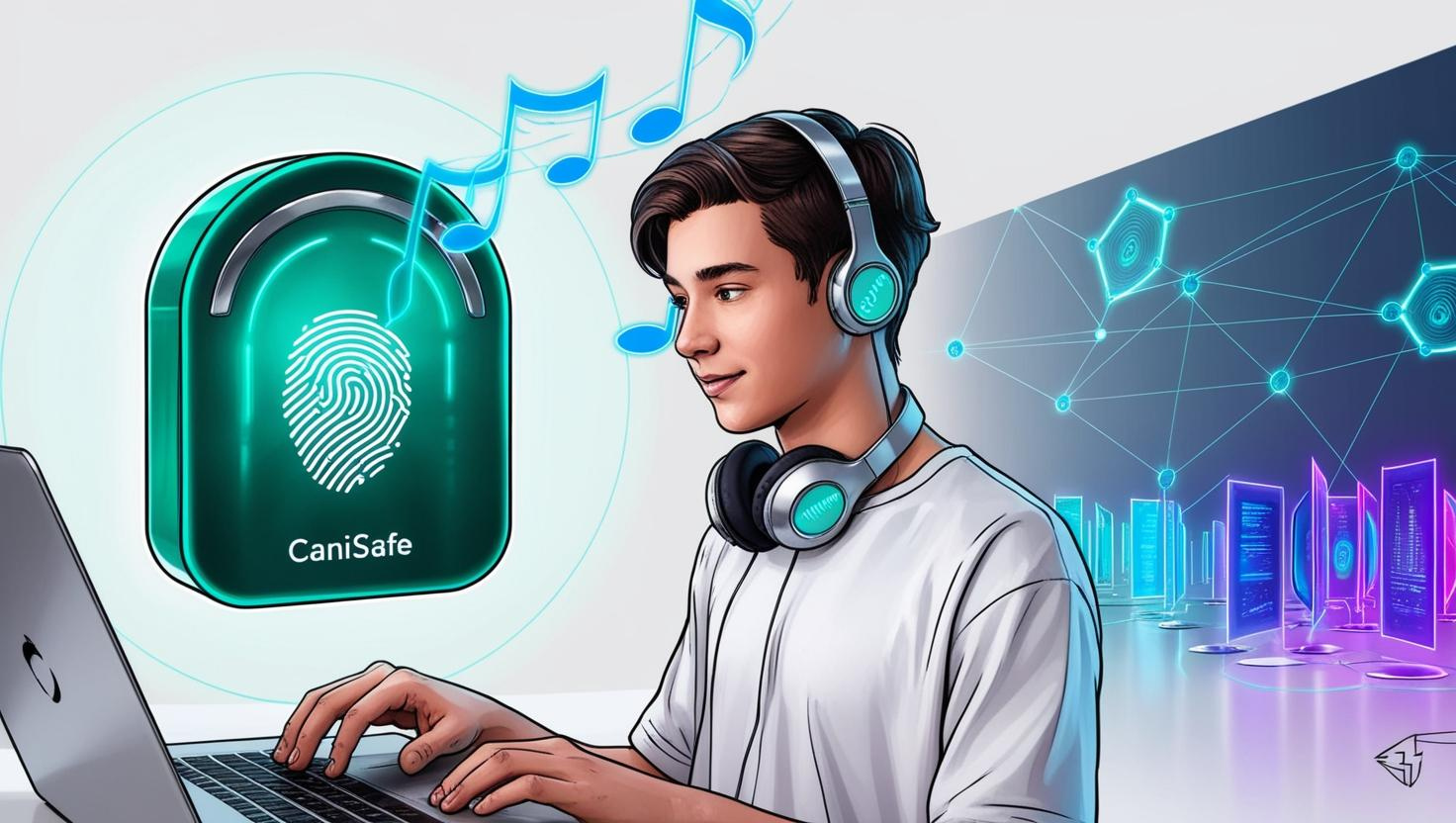
CaniSafe has officially launched, offering musicians something few platforms can match—storage without surveillance. Built entirely on the Internet Computer, the project hands artists a digital locker where they can store, share, and secure their music without handing over email addresses, passwords, or personal data. CaniSafe’s decision to scrap standard login credentials in favour of Internet Identity means no third-party tracking, no password resets, and no strings attached.
The early access window is now open exclusively for music creators. Those interested can apply for an invite code on the CaniSafe website. Once inside, they’ll find a clean interface designed to put their music and their autonomy front and centre. It’s a sharp contrast to the algorithm-driven spaces many are used to, where content gets filtered, boosted, or buried depending on opaque platform policies.
CaniSafe allows users to upload their music directly to on-chain storage that they fully control. No cloud intermediaries. No hidden compression. And no advertising incentives warping what gets heard. Artists can share their uploads directly to public CaniPlay playlists, letting fans stream music straight from the artist’s own vault.
The streaming experience on the fan side is seamless. There’s no need to sign up or subscribe to anything—just click a playlist and listen. It’s deliberately lightweight. The idea isn’t to mimic a streaming giant. It’s to offer a direct line from the creator to the listener, with the middleman removed. While the project is still in early access, the playlists already reflect a variety of genres and styles, hinting at the diversity of artists CaniSafe is attracting.
The project is underpinned by Internet Computer tech, which enables smart contracts and data storage that remain on-chain. This avoids the common pattern of decentralised apps storing only metadata on-chain while relying on external servers or IPFS for actual content. With CaniSafe, the file itself lives on the blockchain. That may sound like overkill for a few demo tracks or ambient loops, but for a creator concerned about provenance, preservation, or platform risk, it’s a significant shift.
It also means that CaniSafe doesn’t control your music. There’s no admin panel where someone can take down your work. Once uploaded, you own and manage it entirely. That model suits a generation of creators who are increasingly wary of commercial platforms that bury them under ads, squeeze them into algorithmic boxes, or gobble up licensing rights.
For independent musicians, the appeal is immediate. Ownership, transparency, and permanence are all built in. And it doesn’t stop with the music file. CaniSafe gives creators the ability to control metadata, access logs, and update their own content without needing to ask permission or appeal to support teams. It feels less like a platform and more like infrastructure—something you use, not something that uses you.
There’s also the social layer, though it operates differently from typical likes-and-follows setups. Fans can listen, share, and link to music, but there’s no central feed or ranking system. This is intentional. The goal isn’t virality, it’s permanence. Creators aren’t encouraged to chase trends. Instead, they’re nudged toward building durable archives of their work.
That doesn’t mean things feel barren. On the contrary, the playlists feel curated in a low-key way, almost like crate-digging through a friend’s record collection. The absence of autoplay, ads, and algorithmic sorting helps too—it creates space for a different kind of discovery. You click because the title intrigues you, or because you recognise the artist’s name from somewhere, or because you just feel like trying something odd and unpolished.
The team behind CaniSafe has hinted at plans to expand support beyond music. Visual art and writing are likely next, but the launch focus is squarely on musicians for now. That makes sense. Music is both deeply collaborative and often exploited by platforms and intermediaries. Giving creators a safe place to store, publish, and share their tracks—without feeding a data-hungry ecosystem—feels timely.
CaniSafe hasn’t tried to turn this launch into a spectacle. There’s no promo video, no countdown clock, no celebrity ambassador. Just a clean post, a link to apply, and a set of playlists anyone can explore. This restraint works in their favour. The product speaks clearly on its own: it’s fast, simple, and fiercely private.
Some might ask: what’s the catch? After all, if you’re not the product, and there are no ads, how does it run? The answer lies partly in how Internet Computer works. The blockchain architecture enables developers to build apps that store both logic and data on-chain, meaning they can run continuously without needing traditional servers or databases. That lowers the cost of running services and allows things like CaniSafe to exist with minimal overhead. There’s also a strong possibility that creator-owned services like this will evolve into cooperatives, or adopt usage fees at the creator level—models that are familiar in the open-source world.
Early users appear to appreciate the straightforwardness of the system. Signup involves no forms. You click a button, authenticate using Internet Identity, and you’re in. Once inside, uploads are quick, and controls are self-explanatory. Tracks go straight to the creator’s vault and can be streamed by anyone with the link or added to public playlists. There’s no infinite scroll, no gamified engagement metrics, no profile stats. Just you, your work, and a handful of options for sharing it.
This low-noise environment is likely to appeal to musicians tired of yelling into algorithmic voids. It also provides a fallback option for those wanting insurance against sudden deplatforming or platform shutdowns. Your music lives on-chain, which means it doesn’t vanish if the app ever goes offline. That’s a rare promise, even among decentralised apps.
The CaniPlay playlists serve as a kind of community radio station—a revolving catalogue of uploads from early adopters. The lack of corporate polish is a feature, not a bug. It reflects the experimental stage of the project but also invites a broader question: what happens when storage, sharing, and discovery are owned and controlled by creators rather than platforms?
There’s no loud pitch for Web3 here. CaniSafe doesn’t ask you to buy a token, stake a coin, or follow a Discord. It’s refreshingly quiet in that sense. All the buzzwords are gone, and what’s left is a working product with a clear purpose: help creators keep their work safe, share it on their own terms, and skip the middlemen.
That approach might not be for everyone, especially in an industry so focused on virality, monetisation, and exposure. But for a growing group of musicians who want to own their work without compromise, CaniSafe lands like a long-awaited yes.
Fans can already start listening. The playlists are live, and no login is required. Whether you’re a producer, singer, DJ, or just a bedroom musician who wants a permanent home for your demos, the invite form is up. And the vault is open.