
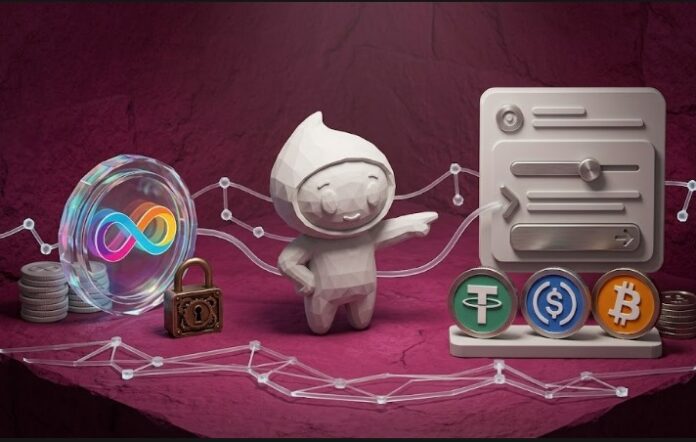
OniCAI’s latest litepaper has landed, and it’s shaking up how decentralised systems reach consensus. Proof-of-Artificial-Intelligence-Work (PoAIW) is the name of the game, and it’s doing things differently. Traditional mining methods rely on raw computational power or financial stakes, but PoAIW centres its entire model on AI-generated work, making artificial intelligence an active player in securing and maintaining blockchain networks.
This isn’t a minor tweak to existing methods; it’s a completely new approach. AI models, called “mAIners,” don’t just validate transactions. They take on protocol-defined challenges, produce results, and get ranked for their performance. The best ones earn rewards. It’s a competitive AI landscape where efficiency, accuracy, and innovation drive success. The first implementation of this protocol is fully on-chain, running on the Internet Computer (ICP), which allows AI models to function entirely within the blockchain environment.
A system like this needs a solid foundation, and PoAIW lays it out with a clear structure. Each round starts with a challenge that mAIners must tackle. These can range from answering complex questions to solving computational problems or even generating creative content. Once submitted, responses are ranked using a transparent set of rules. The top performers earn tokens, either in existing cryptocurrencies or competition-specific assets minted as part of the protocol.
With AI handling these tasks autonomously, the usual concerns around manipulation and fairness come into play. The protocol addresses this by integrating decentralisation mechanisms. AI models operate in a trustless environment, often within smart contracts, ensuring that no single entity can dominate the system. Techniques like Zero-Knowledge Proofs (ZKPs) and Trusted Execution Environments (TEEs) help keep things verifiable. AI-generated challenges must remain unpredictable to avoid exploitation, and cryptographic randomness mechanisms could be used to maintain fairness.
This setup is designed for expansion, and the potential applications stretch far beyond just securing blockchain networks. The protocol opens the door to decentralised AI job markets, federated AI training, trading competitions, governance frameworks, and even AI-generated art and music contests. AI models competing for rewards isn’t just a theoretical concept; it could redefine how automated systems function in the digital economy.
OniCAI’s first on-chain implementation of PoAIW is structured as an incentivised mining protocol, built entirely on ICP. Users deploy their AI models as mAIners, linking them to their digital wallets. The system is fully transparent, with a dashboard displaying real-time activity, challenge results, and ranking updates. Unlike other blockchains that require AI to function off-chain, ICP allows for full AI execution within its canister smart contracts. This means every aspect of the process—from challenge creation to ranking and reward distribution—happens directly on-chain, ensuring verifiability and security.
Accessibility is a key focus. The system features a user-friendly interface for setting up mAIners, making it possible for a wider audience to participate. There’s no need for extensive blockchain knowledge; the process is designed to be intuitive, encouraging broader engagement. The goal is to create a decentralised AI ecosystem where participation is incentivised, and value is generated from useful AI work.
Security is a major consideration. PoAIW integrates mechanisms to prevent Sybil attacks, where a single entity could attempt to control a majority of mAIners. A registry of mAIners, combined with ownership verification rules, ensures that the system remains decentralised. Privacy is also addressed, with AI models processing only necessary data, keeping sensitive outputs confidential unless explicitly required.
PoAIW isn’t just about theory; it’s already being built. The first version showcases how AI-driven consensus can work in a decentralised setting, laying the groundwork for larger, more complex applications. AI models are no longer just tools—they are active participants in blockchain ecosystems, making decisions, solving problems, and earning rewards. This shifts the conversation around AI and decentralisation, blending them into a single, functional model.
For those following AI’s increasing role in blockchain, this marks an important step. PoAIW offers a glimpse into a future where AI does more than process data—it competes, collaborates, and contributes to a decentralised economy. The full litepaper is available now, detailing the mechanics, security considerations, and potential expansions of the protocol. This is just the beginning, and with AI models already gearing up for competition, the next phase of decentralised systems could look very different.


Community Discussion