Developer credits ICP tools for building ‘NationOS’ on-chain governance system
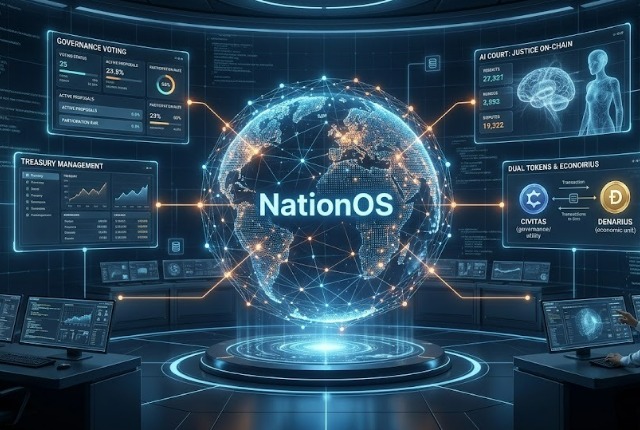
A developer working under the name ICPvibecoder has outlined how a complex on-chain governance platform, known as NationOS, was built using tools from the DFINITY Foundation, offering a detailed look at the technical approach behind the project.
NationOS is described as a fully on-chain digital governance system running on the Internet Computer. The design includes a constitution stored on-chain, a dual-token structure for governance and economic activity, a voting system with two chambers, and an AI-assisted court designed to issue decisions. Treasury management and external relations features are also part of the proposed framework.
According to the developer, the scale of the project required careful planning from the outset, particularly around system architecture. Early attempts to consolidate functionality into a single unit were ruled out due to technical limits, including restrictions on code size and upgrade flexibility. Instead, the system was divided across multiple canisters, allowing different components to operate independently while remaining connected.
Central to this approach was the use of ICP Skills, a set of structured development guidelines maintained by DFINITY. The developer said these resources helped avoid common issues such as storage limits, unstable upgrades and integration failures. By loading these guidelines at the start of each development session, the build process remained more consistent as the project expanded.
The system now runs across more than a dozen canisters, each handling specific functions such as governance logic, treasury operations and token management. This modular structure is intended to allow updates without disrupting the broader system, which is particularly relevant for applications that aim to operate over long periods.
Security and data persistence were also key considerations. The developer pointed to the use of stable memory techniques to ensure that data, including governance records and financial information, remains intact during upgrades. Additional tools, such as encrypted key management, were used to handle sensitive information within the system.
The project also integrates wallet functionality based on recognised token standards, allowing users to manage holdings tied to governance and economic participation. These features are designed to provide a smoother user experience while maintaining security requirements.
While the technical outline presents a structured build process, broader questions remain about how such systems perform in practice. On-chain governance models have been tested in various forms across the crypto sector, with mixed results. Issues around participation, decision-making efficiency and long-term sustainability continue to shape discussions in the space.
The use of artificial intelligence in governance, particularly in areas such as dispute resolution, also raises questions about accountability and oversight. While automation can improve efficiency, it introduces new considerations around transparency and trust in decision-making processes.
For now, the developer positions NationOS as an evolving project with a stable technical foundation. The emphasis on architecture and tooling reflects a wider trend among blockchain developers, where managing complexity has become as important as adding new features.
By sharing the build process publicly, the project offers insight into how large-scale applications are being approached on newer blockchain platforms. Whether NationOS gains wider adoption will depend on how these technical choices translate into real-world use and user engagement.
Dear Reader,
Ledger Life is an independent platform dedicated to covering the Internet Computer (ICP) ecosystem and beyond. We focus on real stories, builder updates, project launches, and the quiet innovations that often get missed.
We’re not backed by sponsors. We rely on readers like you.
If you find value in what we publish—whether it’s deep dives into dApps, explainers on decentralised tech, or just keeping track of what’s moving in Web3—please consider making a donation. It helps us cover costs, stay consistent, and remain truly independent.
Your support goes a long way.
🧠 ICP Principal: ins6i-d53ug-zxmgh-qvum3-r3pvl-ufcvu-bdyon-ovzdy-d26k3-lgq2v-3qe
🧾 ICP Address: f8deb966878f8b83204b251d5d799e0345ea72b8e62e8cf9da8d8830e1b3b05f
Every contribution helps keep the lights on, the stories flowing, and the crypto clutter out.
Thank you for reading, sharing, and being part of this experiment in decentralised media.
—Team Ledger Life