Dominic Williams warns of growing control over wallets as Google policy sparks concern
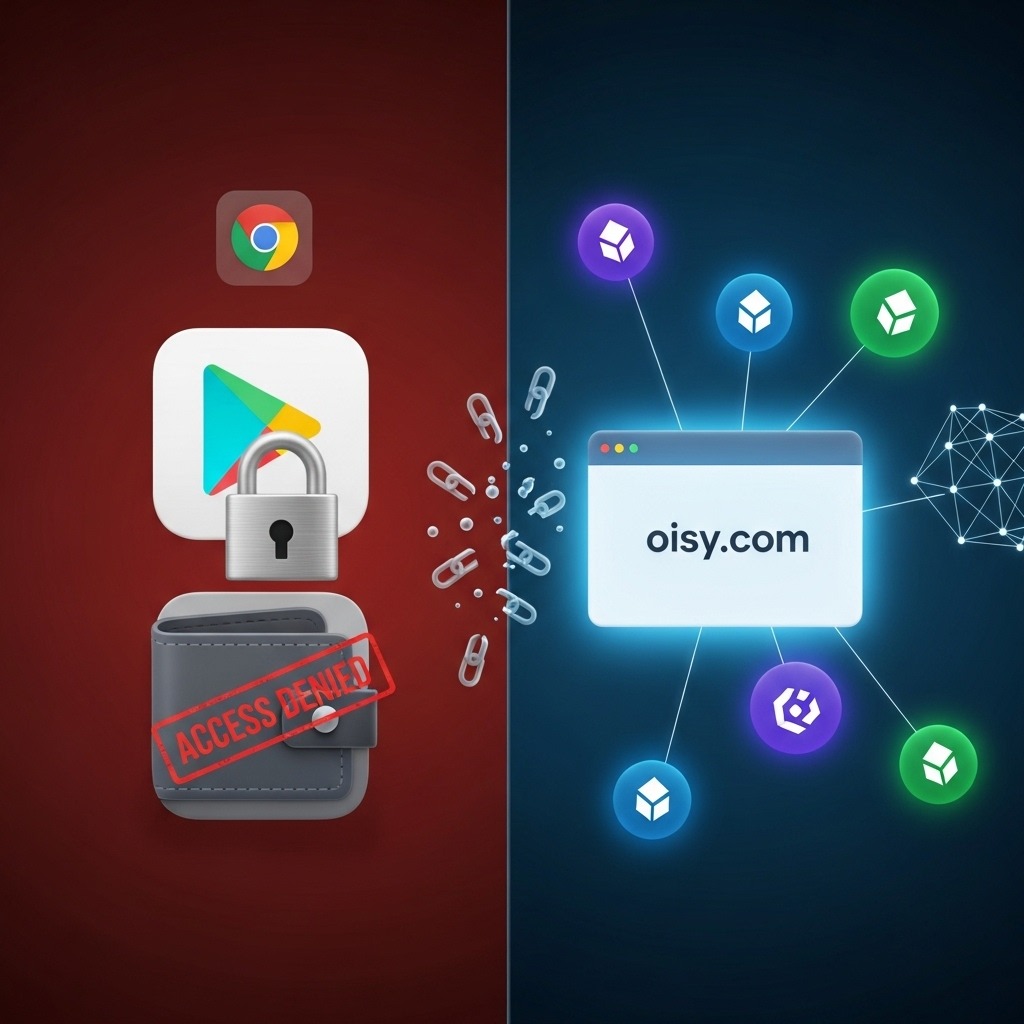
Google’s updated Play Store rules on crypto wallets have prompted a sharp response from Internet Computer founder Dominic Williams, who says the move is part of a broader shift towards centralised control. The policy states that wallet developers must hold licences such as a FinCEN registration in the United States or MiCA approval in the European Union. In the EU, that effectively rules out many non-custodial wallets, since MiCA licensing is aimed at custodial services.

Williams pointed out that Chrome extension wallets can be disabled remotely by Google, and warned that app-store-level control could now extend to other platforms. He described the latest Play Store change as the next stage of that process, with restrictions beginning to reach beyond the browser environment.

As an alternative, he highlighted decentralised multi-chain wallets delivered directly into browsers by smart contracts, citing oisy.com on the Internet Computer as an example. According to Williams, such wallets remove the dependency on centralised distribution channels and can offer a smoother user experience.

While the policy is framed as a compliance measure, the reaction from developers and decentralisation advocates suggests a wider unease about the direction of app-store governance. The tension between regulatory requirements and open access tools is unlikely to ease soon, making solutions outside traditional gatekeepers an area to watch.


Dear Reader,

Ledger Life is an independent platform dedicated to covering the Internet Computer (ICP) ecosystem and beyond. We focus on real stories, builder updates, project launches, and the quiet innovations that often get missed.

We’re not backed by sponsors. We rely on readers like you.

If you find value in what we publish—whether it’s deep dives into dApps, explainers on decentralised tech, or just keeping track of what’s moving in Web3—please consider making a donation. It helps us cover costs, stay consistent, and remain truly independent.

Your support goes a long way.

🧠 ICP Principal: ins6i-d53ug-zxmgh-qvum3-r3pvl-ufcvu-bdyon-ovzdy-d26k3-lgq2v-3qe

🧾 ICP Address: f8deb966878f8b83204b251d5d799e0345ea72b8e62e8cf9da8d8830e1b3b05f

🪙 BTC Wallet: bc1pp5kuez9r2atdmrp4jmu6fxersny4uhnaxyrxau4dg7365je8sy2q9zff6p

Every contribution helps keep the lights on, the stories flowing, and the crypto clutter out.

Thank you for reading, sharing, and being part of this experiment in decentralised media.
—Team Ledger Life

LEAVE A REPLY

Please enter your comment!
Please enter your name here

More like this

Traders Watch ICP Open Interest and Short Positions Climb...

Internet Computer (ICP) is seeing a sharp rise in derivatives activity on Binance, with both open interest...

$MENES Token Launch Goes Live on ICP With Staking-Led...

The $MENES token launch is now live on the Internet Computer blockchain, with the sale scheduled to...

ODIN•FUN frames fair token launches as part of Bitcoin’s...

ODIN•FUN is positioning itself as a platform built around one straightforward idea: token launches on Bitcoin should...

Google’s updated Play Store rules on crypto wallets have prompted a sharp response from Internet Computer founder Dominic Williams, who says the move is part of a broader shift towards centralised control. The policy states that wallet developers must hold licences such as a FinCEN registration in the United States or MiCA approval in the European Union. In the EU, that effectively rules out many non-custodial wallets, since MiCA licensing is aimed at custodial services.

Williams pointed out that Chrome extension wallets can be disabled remotely by Google, and warned that app-store-level control could now extend to other platforms. He described the latest Play Store change as the next stage of that process, with restrictions beginning to reach beyond the browser environment.

As an alternative, he highlighted decentralised multi-chain wallets delivered directly into browsers by smart contracts, citing oisy.com on the Internet Computer as an example. According to Williams, such wallets remove the dependency on centralised distribution channels and can offer a smoother user experience.

While the policy is framed as a compliance measure, the reaction from developers and decentralisation advocates suggests a wider unease about the direction of app-store governance. The tension between regulatory requirements and open access tools is unlikely to ease soon, making solutions outside traditional gatekeepers an area to watch.


Dear Reader,

Ledger Life is an independent platform dedicated to covering the Internet Computer (ICP) ecosystem and beyond. We focus on real stories, builder updates, project launches, and the quiet innovations that often get missed.

We’re not backed by sponsors. We rely on readers like you.

If you find value in what we publish—whether it’s deep dives into dApps, explainers on decentralised tech, or just keeping track of what’s moving in Web3—please consider making a donation. It helps us cover costs, stay consistent, and remain truly independent.

Your support goes a long way.

🧠 ICP Principal: ins6i-d53ug-zxmgh-qvum3-r3pvl-ufcvu-bdyon-ovzdy-d26k3-lgq2v-3qe

🧾 ICP Address: f8deb966878f8b83204b251d5d799e0345ea72b8e62e8cf9da8d8830e1b3b05f

🪙 BTC Wallet: bc1pp5kuez9r2atdmrp4jmu6fxersny4uhnaxyrxau4dg7365je8sy2q9zff6p

Every contribution helps keep the lights on, the stories flowing, and the crypto clutter out.

Thank you for reading, sharing, and being part of this experiment in decentralised media.
—Team Ledger Life

LEAVE A REPLY

Please enter your comment!
Please enter your name here

More like this

Traders Watch ICP Open Interest and Short Positions Climb...

Internet Computer (ICP) is seeing a sharp rise in derivatives activity on Binance, with both open interest...

$MENES Token Launch Goes Live on ICP With Staking-Led...

The $MENES token launch is now live on the Internet Computer blockchain, with the sale scheduled to...

ODIN•FUN frames fair token launches as part of Bitcoin’s...

ODIN•FUN is positioning itself as a platform built around one straightforward idea: token launches on Bitcoin should...

Google’s updated Play Store rules on crypto wallets have prompted a sharp response from Internet Computer founder Dominic Williams, who says the move is part of a broader shift towards centralised control. The policy states that wallet developers must hold licences such as a FinCEN registration in the United States or MiCA approval in the European Union. In the EU, that effectively rules out many non-custodial wallets, since MiCA licensing is aimed at custodial services.

Williams pointed out that Chrome extension wallets can be disabled remotely by Google, and warned that app-store-level control could now extend to other platforms. He described the latest Play Store change as the next stage of that process, with restrictions beginning to reach beyond the browser environment.

As an alternative, he highlighted decentralised multi-chain wallets delivered directly into browsers by smart contracts, citing oisy.com on the Internet Computer as an example. According to Williams, such wallets remove the dependency on centralised distribution channels and can offer a smoother user experience.

While the policy is framed as a compliance measure, the reaction from developers and decentralisation advocates suggests a wider unease about the direction of app-store governance. The tension between regulatory requirements and open access tools is unlikely to ease soon, making solutions outside traditional gatekeepers an area to watch.


Dear Reader,

Ledger Life is an independent platform dedicated to covering the Internet Computer (ICP) ecosystem and beyond. We focus on real stories, builder updates, project launches, and the quiet innovations that often get missed.

We’re not backed by sponsors. We rely on readers like you.

If you find value in what we publish—whether it’s deep dives into dApps, explainers on decentralised tech, or just keeping track of what’s moving in Web3—please consider making a donation. It helps us cover costs, stay consistent, and remain truly independent.

Your support goes a long way.

🧠 ICP Principal: ins6i-d53ug-zxmgh-qvum3-r3pvl-ufcvu-bdyon-ovzdy-d26k3-lgq2v-3qe

🧾 ICP Address: f8deb966878f8b83204b251d5d799e0345ea72b8e62e8cf9da8d8830e1b3b05f

🪙 BTC Wallet: bc1pp5kuez9r2atdmrp4jmu6fxersny4uhnaxyrxau4dg7365je8sy2q9zff6p

Every contribution helps keep the lights on, the stories flowing, and the crypto clutter out.

Thank you for reading, sharing, and being part of this experiment in decentralised media.
—Team Ledger Life

LEAVE A REPLY

Please enter your comment!
Please enter your name here

More like this

Traders Watch ICP Open Interest and Short Positions Climb...

Internet Computer (ICP) is seeing a sharp rise in derivatives activity on Binance, with both open interest...

$MENES Token Launch Goes Live on ICP With Staking-Led...

The $MENES token launch is now live on the Internet Computer blockchain, with the sale scheduled to...

ODIN•FUN frames fair token launches as part of Bitcoin’s...

ODIN•FUN is positioning itself as a platform built around one straightforward idea: token launches on Bitcoin should...

Google’s updated Play Store rules on crypto wallets have prompted a sharp response from Internet Computer founder Dominic Williams, who says the move is part of a broader shift towards centralised control. The policy states that wallet developers must hold licences such as a FinCEN registration in the United States or MiCA approval in the European Union. In the EU, that effectively rules out many non-custodial wallets, since MiCA licensing is aimed at custodial services.

Williams pointed out that Chrome extension wallets can be disabled remotely by Google, and warned that app-store-level control could now extend to other platforms. He described the latest Play Store change as the next stage of that process, with restrictions beginning to reach beyond the browser environment.

As an alternative, he highlighted decentralised multi-chain wallets delivered directly into browsers by smart contracts, citing oisy.com on the Internet Computer as an example. According to Williams, such wallets remove the dependency on centralised distribution channels and can offer a smoother user experience.

While the policy is framed as a compliance measure, the reaction from developers and decentralisation advocates suggests a wider unease about the direction of app-store governance. The tension between regulatory requirements and open access tools is unlikely to ease soon, making solutions outside traditional gatekeepers an area to watch.


Dear Reader,

Ledger Life is an independent platform dedicated to covering the Internet Computer (ICP) ecosystem and beyond. We focus on real stories, builder updates, project launches, and the quiet innovations that often get missed.

We’re not backed by sponsors. We rely on readers like you.

If you find value in what we publish—whether it’s deep dives into dApps, explainers on decentralised tech, or just keeping track of what’s moving in Web3—please consider making a donation. It helps us cover costs, stay consistent, and remain truly independent.

Your support goes a long way.

🧠 ICP Principal: ins6i-d53ug-zxmgh-qvum3-r3pvl-ufcvu-bdyon-ovzdy-d26k3-lgq2v-3qe

🧾 ICP Address: f8deb966878f8b83204b251d5d799e0345ea72b8e62e8cf9da8d8830e1b3b05f

🪙 BTC Wallet: bc1pp5kuez9r2atdmrp4jmu6fxersny4uhnaxyrxau4dg7365je8sy2q9zff6p

Every contribution helps keep the lights on, the stories flowing, and the crypto clutter out.

Thank you for reading, sharing, and being part of this experiment in decentralised media.
—Team Ledger Life

LEAVE A REPLY

Please enter your comment!
Please enter your name here

More like this

Traders Watch ICP Open Interest and Short Positions Climb...

Internet Computer (ICP) is seeing a sharp rise in derivatives activity on Binance, with both open interest...

$MENES Token Launch Goes Live on ICP With Staking-Led...

The $MENES token launch is now live on the Internet Computer blockchain, with the sale scheduled to...

ODIN•FUN frames fair token launches as part of Bitcoin’s...

ODIN•FUN is positioning itself as a platform built around one straightforward idea: token launches on Bitcoin should...