
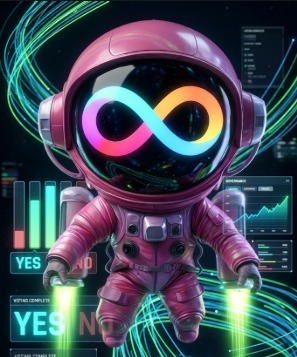
A new dashboard focused on the Internet Computer ecosystem has gone live, offering users a way to track tokens, network activity and market sentiment within a single interface. The platform, called ICP Index, is built entirely on-chain and is now available to the public in its first version.
The release brings together a wide set of tools aimed at both casual observers and active participants in the ecosystem. Users can monitor token prices, market capitalisation, decentralised exchange liquidity and trading volume, alongside OHLC candlestick charts. The data is currently sourced from platforms such as ICPSwap and CoinGecko, with plans to add further sources over time.

Beyond token tracking, the dashboard includes a dedicated network view that presents real-time figures on cycle burn rates, ICP supply, staking levels, neuron counts, canister activity and Internet Identity usage. This broader perspective reflects an effort to combine market data with underlying network metrics, giving users a more rounded view of activity across the protocol.
Several sentiment-focused tools have also been introduced. A Fear and Greed Index, an ICP Alt Index and a live sentiment gauge aim to capture market mood, while users can register daily bullish or bearish views on individual tokens. These inputs feed into token-specific sentiment bars and a rolling 30-day history. Some of these indicators are still in the early stages and may take time to stabilise as more data is collected.
The platform also includes a portfolio tracker that supports both manual entries and automatic balance detection through saved principals. This feature allows users to monitor holdings directly on-chain without relying on external tools. A customisable workspace, described as a Workbench, lets users arrange and resize more than 20 widgets, creating a personalised dashboard layout.
Additional features point to a mix of analytics and community engagement. A global chat function, leaderboard and integrated wallet are part of the initial release. The wallet supports deposits and withdrawals using the ICRC-2 standard and is linked to a user’s Internet Identity, which serves as the login method. The absence of passwords and centralised servers reflects the platform’s focus on decentralised access.
Token listing has also been opened to the public. Projects can add ICRC-1 tokens by submitting a canister ID, with metadata fetched automatically and listings going live after a flat fee. Promotion slots are available, suggesting a potential revenue stream for the platform.
A referral programme offering lifetime commissions has been introduced as well, encouraging users to bring others onto the platform. While such incentives can help drive early adoption, they also raise questions about how engagement is sustained over time once initial interest settles.
The first token listed on ICP Index is $MAPTF, marking the beginning of what the developer expects to become a broader catalogue of ecosystem assets. As with many early-stage platforms, the long-term value will depend on data reliability, user adoption and how the feature set develops in response to feedback.
ICP Index enters a space where dashboards and analytics tools are already widely used across different blockchain networks. Its focus on being fully on-chain may appeal to users who prioritise decentralisation, though it also places pressure on performance and scalability as usage increases.
The developer has encouraged feedback through built-in tools such as a bug tracker and feature request system. That openness suggests the platform is still evolving, with future updates likely to refine both functionality and data coverage.
For now, ICP Index presents a broad toolkit in its first iteration, combining market tracking, network insights and user interaction within a single environment. Whether it becomes a regular stop for Internet Computer users will depend on how well it balances depth with usability as it develops further.
Dear Reader,
Ledger Life is an independent platform dedicated to covering the Internet Computer (ICP) ecosystem and beyond. We focus on real stories, builder updates, project launches, and the quiet innovations that often get missed.
We’re not backed by sponsors. We rely on readers like you.
If you find value in what we publish—whether it’s deep dives into dApps, explainers on decentralised tech, or just keeping track of what’s moving in Web3—please consider making a donation. It helps us cover costs, stay consistent, and remain truly independent.
Your support goes a long way.
🧠 ICP Principal: ins6i-d53ug-zxmgh-qvum3-r3pvl-ufcvu-bdyon-ovzdy-d26k3-lgq2v-3qe
🧾 ICP Address: f8deb966878f8b83204b251d5d799e0345ea72b8e62e8cf9da8d8830e1b3b05f
Every contribution helps keep the lights on, the stories flowing, and the crypto clutter out.
Thank you for reading, sharing, and being part of this experiment in decentralised media.
—Team Ledger Life


Community Discussion