Internet Computer marks five years with focus on new cloud tools
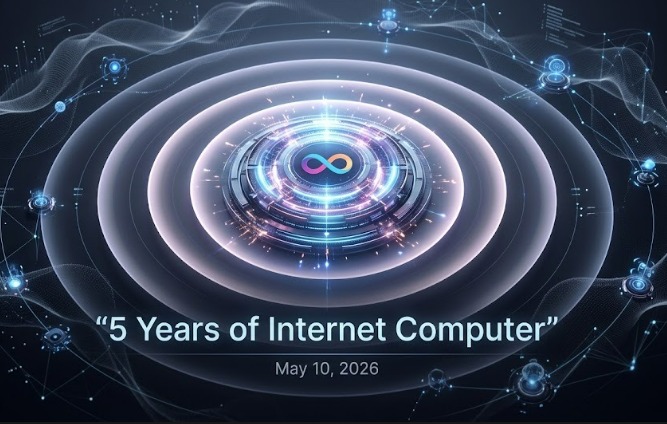
DFINITY Foundation is preparing to mark the fifth anniversary of the Internet Computer on 10 May 2026, with plans to showcase a new set of technologies described as “cloud engines”.
The demonstration is expected to include tools built around agent-driven development, artificial intelligence infrastructure and decentralised compute systems. The announcement signals a continued effort by the organisation to position the Internet Computer as an alternative to traditional cloud platforms.
Since its launch in 2021, the Internet Computer has aimed to extend blockchain functionality beyond payments and smart contracts, focusing on hosting applications and services directly on-chain. The upcoming presentation suggests a shift towards integrating AI capabilities more deeply into that framework.
According to early details, the “cloud engines” concept centres on systems that can support autonomous or semi-autonomous software agents, alongside dedicated nodes designed to handle AI-related workloads. The approach reflects a broader trend across the tech sector, where interest in combining distributed infrastructure with machine learning tools has grown.
Supporters of the model argue that decentralised compute networks could offer advantages in transparency and resilience compared with conventional cloud providers. By distributing workloads across independent nodes, these systems aim to reduce reliance on centralised data centres.
At the same time, questions remain around scalability, performance and adoption. Established cloud providers continue to dominate the market, backed by extensive infrastructure and long-standing enterprise relationships. Newer decentralised platforms face the challenge of proving they can match reliability while offering a clear benefit to developers and users.
The anniversary event is likely to serve both as a technical showcase and a signal of direction. By highlighting agentic builds and AI-focused nodes, DFINITY appears to be aligning its roadmap with current interest in automation and intelligent systems.
For the Internet Computer community, the milestone marks five years of development in a competitive and fast-moving space. Whether the upcoming demonstrations translate into broader uptake will depend on how these tools perform in practice and how easily developers can integrate them into real-world applications.
The 10 May event is expected to draw attention from developers and observers tracking the intersection of blockchain, cloud infrastructure and artificial intelligence, with the next phase of the project set to hinge on how these elements come together.
Dear Reader,
Ledger Life is an independent platform dedicated to covering the Internet Computer (ICP) ecosystem and beyond. We focus on real stories, builder updates, project launches, and the quiet innovations that often get missed.
We’re not backed by sponsors. We rely on readers like you.
If you find value in what we publish—whether it’s deep dives into dApps, explainers on decentralised tech, or just keeping track of what’s moving in Web3—please consider making a donation. It helps us cover costs, stay consistent, and remain truly independent.
Your support goes a long way.
🧠 ICP Principal: ins6i-d53ug-zxmgh-qvum3-r3pvl-ufcvu-bdyon-ovzdy-d26k3-lgq2v-3qe
🧾 ICP Address: f8deb966878f8b83204b251d5d799e0345ea72b8e62e8cf9da8d8830e1b3b05f
Every contribution helps keep the lights on, the stories flowing, and the crypto clutter out.
Thank you for reading, sharing, and being part of this experiment in decentralised media.
—Team Ledger Life