

Home Blog Page 6

Caffeine passes 15 billion lines of AI-generated code, says Dominic Williams

Caffeine has passed 15 billion lines of generated code, according to Dominic Williams, founder of the DFINITY Foundation.

Williams announced the milestone in a post on X, describing it as evidence of accelerating activity among developers using the platform.

He said a large share of the generated code has been written in Motoko, the programming language developed specifically for building applications and services on the Internet Computer network.

Williams described Motoko as “the world’s first language for AI agents” and said it is being used to build applications, services and what he referred to as next generation AI software.

The claim could not be independently verified, and Williams did not provide a detailed breakdown of how the 15 billion line figure was measured or what proportion of the code was produced by AI-assisted workflows compared with direct developer input.

AI coding tools have become increasingly prominent across the software industry, with developers using them to generate code, automate repetitive tasks and accelerate prototyping. The broader technology sector has seen rapid adoption of AI-assisted programming tools over the past two years, with several major platforms reporting strong growth in usage.

Williams said Motoko had been “getting a real workout” and was advancing faster than before, suggesting that increased developer activity was contributing to the language’s evolution.

Supporters of the Internet Computer ecosystem have argued that integrating AI-assisted development with decentralised infrastructure could reduce the time and technical barriers involved in launching applications. Critics, however, have questioned whether large code generation figures necessarily translate into production-ready software, maintainable codebases or sustained developer adoption.

The announcement adds to a series of updates around Caffeine and AI-focused development within the Internet Computer ecosystem, where the emphasis has increasingly shifted towards faster application creation and AI-native software tools.


Dear Reader,

Ledger Life is an independent platform dedicated to covering the Internet Computer (ICP) ecosystem and beyond. We focus on real stories, builder updates, project launches, and the quiet innovations that often get missed.

We’re not backed by sponsors. We rely on readers like you.

If you find value in what we publish—whether it’s deep dives into dApps, explainers on decentralised tech, or just keeping track of what’s moving in Web3—please consider making a donation. It helps us cover costs, stay consistent, and remain truly independent.

Your support goes a long way.

🧠 ICP Principal: ins6i-d53ug-zxmgh-qvum3-r3pvl-ufcvu-bdyon-ovzdy-d26k3-lgq2v-3qe

🧾 ICP Address: f8deb966878f8b83204b251d5d799e0345ea72b8e62e8cf9da8d8830e1b3b05f

Every contribution helps keep the lights on, the stories flowing, and the crypto clutter out.

Thank you for reading, sharing, and being part of this experiment in decentralised media.
—Team Ledger Life


Mingle Berry launches partner program for freelancers and digital agencies

Mingle Berry Media has launched a partner program aimed at freelancers and digital agencies that work with businesses still using traditional web hosting platforms.

The program offers commissions of up to 18 per cent for partners who refer clients whose websites are migrated to the Internet Computer network. Certified partners can also receive recurring revenue from Mingle Editor and Mingle Care subscriptions for up to 12 months, according to the company.

Mingle Berry said the program is designed for web professionals who manage client websites and want to offer migration services without handling the technical transition themselves.

Participants are required to sign in using Internet Identity and complete six free online courses through the company’s Mingle Academy. After passing the associated exams, partners receive certification and can begin referring clients.

The company said referred leads will be protected for the partner who registered them.

Partner programs have become increasingly common among software and web infrastructure companies, particularly as businesses look to modernise older websites and hosting arrangements. Such programs allow agencies and independent consultants to generate referral income while expanding the services they can offer clients.

Mingle Berry said it will accept 25 partners during the launch phase before temporarily closing new applications.

The program is available through the company’s partner portal at partner.mingleberrymedia.com .


Dear Reader,

Ledger Life is an independent platform dedicated to covering the Internet Computer (ICP) ecosystem and beyond. We focus on real stories, builder updates, project launches, and the quiet innovations that often get missed.

We’re not backed by sponsors. We rely on readers like you.

If you find value in what we publish—whether it’s deep dives into dApps, explainers on decentralised tech, or just keeping track of what’s moving in Web3—please consider making a donation. It helps us cover costs, stay consistent, and remain truly independent.

Your support goes a long way.

🧠 ICP Principal: ins6i-d53ug-zxmgh-qvum3-r3pvl-ufcvu-bdyon-ovzdy-d26k3-lgq2v-3qe

🧾 ICP Address: f8deb966878f8b83204b251d5d799e0345ea72b8e62e8cf9da8d8830e1b3b05f

Every contribution helps keep the lights on, the stories flowing, and the crypto clutter out.

Thank you for reading, sharing, and being part of this experiment in decentralised media.
—Team Ledger Life

DOM Protocol launches Domify with 50,000 live radio stations worldwide

0

DOM Protocol has added Domify, a live radio streaming feature that gives users access to thousands of stations from around the world directly through the wallet.

The new utility allows users to search radio stations by name or browse by genres and moods including news, jazz, lounge, classical, rock, dance, hip-hop, Bollywood, afrobeat, reggae and chill.

According to the project, Domify currently provides access to around 50,000 radio stations spanning countries around the world. Users can select a station and begin listening while continuing to navigate through the wallet, with a now-playing bar remaining available during use.

The feature also includes a favourites function, allowing users to star stations they want to return to. The project says these favourites are stored locally on the user’s device rather than on a central account.

Domify also supports lock-screen playback controls on mobile devices, allowing listeners to manage playback without keeping the wallet open on screen.

The project said the radio feature does not require an account, sign-up or payment. Users can open the DOM wallet, find Domify under the Utility section or access it through the feature shortcut at the top of the wallet.

The addition broadens the range of functions available within the DOM wallet, which already includes tools connected to the wider DOM Protocol. While the project is primarily associated with token-based applications and games, Domify takes a different approach by adding an everyday media utility to the wallet.

The quality and availability of individual stations can depend on their external streaming sources, meaning stations may occasionally be unavailable or offline. The feature is intended to provide access to stations that are currently broadcasting rather than guarantee continuous availability from every listed station.

With Domify now live, users can listen to radio from different parts of the world while using the wallet, turning the application into a more general-purpose mobile utility.


Dear Reader,

Ledger Life is an independent platform dedicated to covering the Internet Computer (ICP) ecosystem and beyond. We focus on real stories, builder updates, project launches, and the quiet innovations that often get missed.

We’re not backed by sponsors. We rely on readers like you.

If you find value in what we publish—whether it’s deep dives into dApps, explainers on decentralised tech, or just keeping track of what’s moving in Web3—please consider making a donation. It helps us cover costs, stay consistent, and remain truly independent.

Your support goes a long way.

🧠 ICP Principal: ins6i-d53ug-zxmgh-qvum3-r3pvl-ufcvu-bdyon-ovzdy-d26k3-lgq2v-3qe

🧾 ICP Address: f8deb966878f8b83204b251d5d799e0345ea72b8e62e8cf9da8d8830e1b3b05f

Every contribution helps keep the lights on, the stories flowing, and the crypto clutter out.

Thank you for reading, sharing, and being part of this experiment in decentralised media.
—Team Ledger Life
Canic team explores Motoko support for large-scale ICP applications

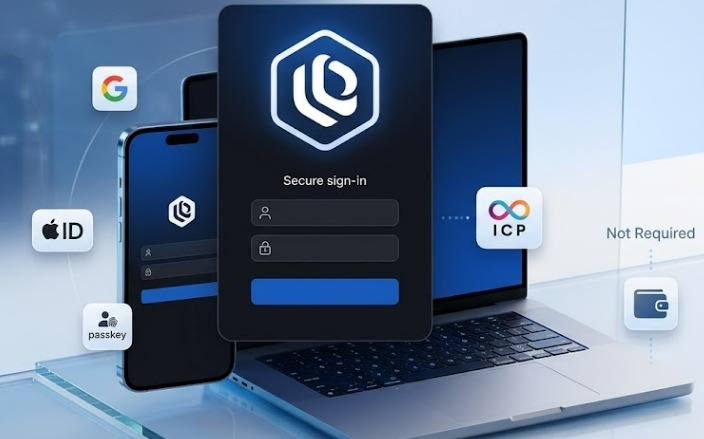
The team behind Toko and Dragginz is exploring whether Motoko applications could eventually be managed through Canic Fleet, a system designed to operate large collections of canisters on the Internet Computer.

Canic is intended to help developers deploy, upgrade, monitor, back up and coordinate the canisters that make up larger applications. The proposed work would examine whether Motoko-based applications could be incorporated into the same infrastructure.

The project is currently at the investigation stage and is not a released feature. The team plans to begin with a limited feasibility proof to determine whether the approach can work reliably.

If successful, the proposed integration could allow Motoko developers to use Canic’s infrastructure while connecting their applications with specialised services written in Rust. One example is IcyDB, an on-chain database designed to provide data storage capabilities for applications running on the Internet Computer.

The proposal does not involve rewriting Canic or IcyDB in Motoko. Instead, the team is considering a smaller compatibility layer that would allow Motoko and Rust canisters to communicate and operate together securely.

The approach reflects the way applications on the Internet Computer can combine canisters written in different programming languages, with each component handling a specific role. For developers building larger applications, managing many canisters can introduce additional operational requirements around deployment, upgrades, monitoring and coordination.

For Motoko developers, access to fleet management infrastructure could provide another option for building and operating applications that require multiple canisters. However, whether the proposed approach can meet those requirements will depend on the outcome of the technical investigation.

The team has described the work as an early feasibility exercise rather than a confirmed product feature. A successful proof would be the next step before any wider implementation is considered.

More details about the proposal are available on the Dfinity developer forum.


Dear Reader,

Ledger Life is an independent platform dedicated to covering the Internet Computer (ICP) ecosystem and beyond. We focus on real stories, builder updates, project launches, and the quiet innovations that often get missed.

We’re not backed by sponsors. We rely on readers like you.

If you find value in what we publish—whether it’s deep dives into dApps, explainers on decentralised tech, or just keeping track of what’s moving in Web3—please consider making a donation. It helps us cover costs, stay consistent, and remain truly independent.

Your support goes a long way.

🧠 ICP Principal: ins6i-d53ug-zxmgh-qvum3-r3pvl-ufcvu-bdyon-ovzdy-d26k3-lgq2v-3qe

🧾 ICP Address: f8deb966878f8b83204b251d5d799e0345ea72b8e62e8cf9da8d8830e1b3b05f

Every contribution helps keep the lights on, the stories flowing, and the crypto clutter out.

Thank you for reading, sharing, and being part of this experiment in decentralised media.
—Team Ledger Life

Liquidium adds Internet Identity login with Google, Apple ID and passkeys

Liquidium has introduced Internet Identity login, allowing users to access their accounts through familiar sign-in methods including Google, Apple ID and passkeys.

The update removes the need for users to connect a Web3 wallet when logging into Liquidium. The platform said users can choose their preferred authentication method without additional transaction signing during the login process.

Internet Identity is designed to provide a passwordless authentication system while allowing users to use established identity providers and passkeys. For Liquidium users, the new login option provides an alternative to wallet-based access and could make the platform easier to use for people who are less familiar with wallet connections.

The update does not remove wallet functionality where it is required for activities on the platform. Instead, the new login system separates account access from the need to connect a wallet simply to sign in.

Liquidium has described the change as a way to give users more choice over how they access their accounts, with Google, Apple ID, passkeys and other supported sign-in options available alongside existing methods.

The move reflects a broader effort across decentralised applications to reduce the barriers associated with wallet-based onboarding. Requiring users to set up and connect a wallet before they can explore a platform can add friction, particularly for those encountering decentralised applications for the first time.

With Internet Identity login now available, Liquidium users can choose a sign-in method that suits them without having to complete an additional wallet signing step simply to access their account.


Dear Reader,

Ledger Life is an independent platform dedicated to covering the Internet Computer (ICP) ecosystem and beyond. We focus on real stories, builder updates, project launches, and the quiet innovations that often get missed.

We’re not backed by sponsors. We rely on readers like you.

If you find value in what we publish—whether it’s deep dives into dApps, explainers on decentralised tech, or just keeping track of what’s moving in Web3—please consider making a donation. It helps us cover costs, stay consistent, and remain truly independent.

Your support goes a long way.

🧠 ICP Principal: ins6i-d53ug-zxmgh-qvum3-r3pvl-ufcvu-bdyon-ovzdy-d26k3-lgq2v-3qe

🧾 ICP Address: f8deb966878f8b83204b251d5d799e0345ea72b8e62e8cf9da8d8830e1b3b05f

Every contribution helps keep the lights on, the stories flowing, and the crypto clutter out.

Thank you for reading, sharing, and being part of this experiment in decentralised media.
—Team Ledger Life

ICPay adds social links and bookmark features as wallet activity grows

ICPay has introduced two new features to its wallet app, adding support for social links and a one tap bookmark function as the platform reports growing user activity.

The update allows users to add social profile links and save frequently used addresses or pages through a simplified bookmarking feature. The latest changes were published in a new code commit, which the project shared alongside the announcement.

The team said the wallet has recorded more than 130 active wallets within six days, presenting the figure as an early sign of user engagement. The announcement thanked the Dfinity and ICP community for its support and said further development would continue.

The app is available at icpay.app .

Wallet applications across the ICP ecosystem have been expanding their feature sets in recent months, with developers placing greater emphasis on usability and everyday convenience. Social integrations and bookmarking tools are commonly used to reduce friction for repeat transactions and improve navigation within wallet interfaces.

The reported activity figure has not been independently verified, and early wallet counts do not necessarily indicate long term adoption. Even so, the update suggests the team is continuing to iterate on the product while tracking user participation during its early growth phase.

ICPay said it plans to keep building features aimed at showcasing the broader utility of the ICP ecosystem.


Dear Reader,

Ledger Life is an independent platform dedicated to covering the Internet Computer (ICP) ecosystem and beyond. We focus on real stories, builder updates, project launches, and the quiet innovations that often get missed.

We’re not backed by sponsors. We rely on readers like you.

If you find value in what we publish—whether it’s deep dives into dApps, explainers on decentralised tech, or just keeping track of what’s moving in Web3—please consider making a donation. It helps us cover costs, stay consistent, and remain truly independent.

Your support goes a long way.

🧠 ICP Principal: ins6i-d53ug-zxmgh-qvum3-r3pvl-ufcvu-bdyon-ovzdy-d26k3-lgq2v-3qe

🧾 ICP Address: f8deb966878f8b83204b251d5d799e0345ea72b8e62e8cf9da8d8830e1b3b05f

Every contribution helps keep the lights on, the stories flowing, and the crypto clutter out.

Thank you for reading, sharing, and being part of this experiment in decentralised media.
—Team Ledger Life
Sonic launches recovery portal for users affected by DEX exploit

Sonic has opened a recovery portal for users whose liquidity positions were affected by the recent exploit on Sonic DEX, giving eligible participants a way to verify their holdings and submit claims under the project’s recovery programme.

The portal allows users to connect the ICP wallet they originally used to provide liquidity on Sonic DEX. Their wallet principal is then matched against a pre-drain snapshot of liquidity provider positions recorded before the exploit occurred.

Users can view the affected liquidity positions associated with their wallet and submit a claim for review. Sonic said claims will be assessed against pre-drain on-chain records before any recovery is processed.

The company said the wallet connection is read-only and does not request transaction signatures, token approvals or permission to move user funds. The portal supports several ICP ecosystem wallets, including Plug, Internet Identity, NFID, OISY, Bitfinity, Stoic, AstroX and MSQ.

The recovery portal is intended solely for users affected by the exploit. Sonic said the verification process is based on historical on-chain data captured before funds were drained, and recoveries will be handled according to the terms of the recovery programme.

The exploit affected liquidity providers on Sonic DEX and prompted calls from users for a clearer recovery process. Incidents involving decentralised finance platforms have often highlighted the challenges of compensating users after smart contract or protocol breaches, particularly when assets have already been moved on-chain.

Sonic said it will continue providing updates as the recovery programme progresses and encouraged affected users to submit claims through the dedicated portal.

The claim portal is available at app.sonic.ooo/claim .


Dear Reader,

Ledger Life is an independent platform dedicated to covering the Internet Computer (ICP) ecosystem and beyond. We focus on real stories, builder updates, project launches, and the quiet innovations that often get missed.

We’re not backed by sponsors. We rely on readers like you.

If you find value in what we publish—whether it’s deep dives into dApps, explainers on decentralised tech, or just keeping track of what’s moving in Web3—please consider making a donation. It helps us cover costs, stay consistent, and remain truly independent.

Your support goes a long way.

🧠 ICP Principal: ins6i-d53ug-zxmgh-qvum3-r3pvl-ufcvu-bdyon-ovzdy-d26k3-lgq2v-3qe

🧾 ICP Address: f8deb966878f8b83204b251d5d799e0345ea72b8e62e8cf9da8d8830e1b3b05f

Every contribution helps keep the lights on, the stories flowing, and the crypto clutter out.

Thank you for reading, sharing, and being part of this experiment in decentralised media.
—Team Ledger Life

ICPay prepares for mobile app rollout with React Native development

ICPay is preparing to move towards a native mobile experience as it develops its payments platform using React Native, with plans to bring the application to both the Google Play Store and Apple App Store.

The move is aimed at making ICPay faster and more consistent across mobile devices, as the platform looks to make on-chain payments easier to use in everyday situations.

ICPay has positioned the application around payments involving ICP, with its latest announcement focusing on mobile accessibility and a smoother user experience. Rather than requiring users to rely on a browser-based interface, the planned mobile applications are expected to provide a more direct way to access the service from smartphones.

The company has not yet announced a specific release date for the Android and iOS versions. For now, development is focused on the React Native implementation before the applications are submitted to the respective app stores.

React Native allows developers to build mobile applications for multiple platforms while sharing much of the underlying code. For a payments service, this can help maintain a more consistent interface and behaviour between Android and iOS, although the quality of the final experience will depend on how the application is implemented and tested.

ICPay is also planning to expand the social features connected to user profiles. The company says users will soon be able to attach a social link to their profile, potentially giving accounts a more recognisable identity beyond payment activity.

The platform currently points users towards support and information through its website, GitHub and LinkedIn, while its domain support includes a range of common web extensions.

The planned app-store rollout comes as services built around the Internet Computer continue to explore ways of making decentralised applications more accessible to people who primarily use smartphones. Mobile access can remove some of the friction associated with browser-based applications, particularly for services intended for frequent, everyday use.

At the same time, moving to dedicated mobile applications brings its own challenges. Payments applications need to balance ease of use with security, reliability and clear transaction information. App-store approval processes can also introduce additional requirements before an application becomes publicly available.

For ICPay, the next stage will therefore be turning its React Native development work into applications ready for distribution through Google’s and Apple’s mobile platforms. Until those releases arrive, the service remains accessible through its existing web presence.

ICPay’s stated direction is straightforward: build a mobile payment experience around ICP that is easier to access and more consistent across devices. The coming app-store releases will show how closely the finished products match that goal.


Dear Reader,

Ledger Life is an independent platform dedicated to covering the Internet Computer (ICP) ecosystem and beyond. We focus on real stories, builder updates, project launches, and the quiet innovations that often get missed.

We’re not backed by sponsors. We rely on readers like you.

If you find value in what we publish—whether it’s deep dives into dApps, explainers on decentralised tech, or just keeping track of what’s moving in Web3—please consider making a donation. It helps us cover costs, stay consistent, and remain truly independent.

Your support goes a long way.

🧠 ICP Principal: ins6i-d53ug-zxmgh-qvum3-r3pvl-ufcvu-bdyon-ovzdy-d26k3-lgq2v-3qe

🧾 ICP Address: f8deb966878f8b83204b251d5d799e0345ea72b8e62e8cf9da8d8830e1b3b05f

Every contribution helps keep the lights on, the stories flowing, and the crypto clutter out.

Thank you for reading, sharing, and being part of this experiment in decentralised media.
—Team Ledger Life

OhShii Labs Confirms Bug Bounty Launch Is Near

OhShii Labs says it has sold all of the cycles involved in its latest programme and has committed half of the ICP revenue from those sales to a Bug Bounty reward pool.

The lab said the final size of the pool has not yet been determined, but confirmed that it will be worth at least 1,500 ckUSDC. It said further details, including the official launch date, will be announced shortly.

According to OhShii Labs, part of the cycles it purchased and later resold was funded through a 300 ICP contribution from PassionPlanet1, who made two contributions during April.

The lab said the contribution followed an informal external security review in which it identified several vulnerabilities affecting one of PassionPlanet1’s platforms. OhShii Labs said it reported the issues and assisted with their resolution before PassionPlanet1 voluntarily contributed to the Bug Bounty programme.

OhShii Labs described the contribution as support for the initiative and thanked PassionPlanet1 for backing the project.

The proposed Bug Bounty is intended to provide rewards for researchers who identify and responsibly report vulnerabilities. Such programmes are commonly used in software development to encourage independent security testing and give project teams an additional way to identify weaknesses before they can be exploited.

OhShii Labs has not yet published the full rules for its programme, including eligibility requirements, reward criteria, submission procedures or the way individual payouts will be determined. Those details are expected when the Bug Bounty officially launches.

For now, the lab has confirmed the minimum size of the reward pool and said the programme will launch soon. The final amount available to researchers will depend on the completed calculation of revenue from the cycle sales.


Dear Reader,

Ledger Life is an independent platform dedicated to covering the Internet Computer (ICP) ecosystem and beyond. We focus on real stories, builder updates, project launches, and the quiet innovations that often get missed.

We’re not backed by sponsors. We rely on readers like you.

If you find value in what we publish—whether it’s deep dives into dApps, explainers on decentralised tech, or just keeping track of what’s moving in Web3—please consider making a donation. It helps us cover costs, stay consistent, and remain truly independent.

Your support goes a long way.

🧠 ICP Principal: ins6i-d53ug-zxmgh-qvum3-r3pvl-ufcvu-bdyon-ovzdy-d26k3-lgq2v-3qe

🧾 ICP Address: f8deb966878f8b83204b251d5d799e0345ea72b8e62e8cf9da8d8830e1b3b05f

Every contribution helps keep the lights on, the stories flowing, and the crypto clutter out.

Thank you for reading, sharing, and being part of this experiment in decentralised media.
—Team Ledger Life

Dom says AI has turned intelligence into a tool as synthetic biology advances

Dominic Williams has weighed in on one of the most closely watched developments in artificial intelligence and biotechnology, arguing that humanity is entering a period unlike any before.

Reacting to reports that an AI model helped design viruses that had never existed in nature, the Internet Computer founder wrote on X: “After 20,000 generations of humans, this is the first where: intelligence is a tool; we have manufactured ‘life.’ Meanwhile, more than half of the humans that have ever lived, are alive today, and the climate is changing. Interesting times…”

His post followed a New York Times report on research led by scientists at Stanford University and the Arc Institute, which was published in the journal Science. The study described how a genomic AI model called Evo was trained on trillions of DNA building blocks, known as nucleotides, and then used to generate new viral genome sequences.

Researchers chemically synthesised 285 AI designed viral genomes and found that 16 successfully assembled into functioning viruses capable of infecting E. coli bacteria and reproducing.

The work focused on bacteriophages, viruses that infect bacteria rather than humans. Scientists involved in the research said the viruses were not harmful to people and that the model was not trained on viruses known to infect humans.

The study builds on decades of virus synthesis research, where scientists have used the genetic sequences of existing viruses to study disease mechanisms and develop treatments. What has drawn attention in this case is the AI model’s ability to generate large numbers of new genome sequences that appeared biologically viable.

The researchers trained Evo on more than 9 trillion nucleotides drawn from a vast collection of genetic sequences across plants, animals, microbes and viruses. They then focused on the Phi X-174 bacteriophage, a virus that has been studied for more than a century. From hundreds of thousands of proposed genomes, the team selected a small number for laboratory testing.

One practical finding from the study was that some AI designed phages were able to overcome bacterial resistance, a result that could have implications for phage therapy, an area of research aimed at treating antibiotic resistant infections.

The findings have also prompted debate about oversight and biosecurity. Some experts argue that AI could accelerate beneficial research in medicine and biotechnology, while others say the technology may outpace existing safeguards and regulatory frameworks.

Dom’s comments reflected the wider concern that AI is beginning to influence fields beyond software and automation, extending into biology and the design of living systems.

The study’s authors have emphasised that creating simple bacteriophages is very different from designing viruses that affect humans, and they have framed the work as a controlled scientific investigation. Even so, the research has become part of a broader discussion about how quickly AI capabilities are advancing and how societies should respond.

For supporters of AI driven scientific discovery, the work shows how machine learning can uncover patterns in biological data that would be difficult for humans to identify manually. For critics, it raises questions about governance, transparency and the limits of powerful generative technologies.

Dom’s observation that “intelligence is a tool” captured a point increasingly echoed across the technology sector: AI is no longer confined to analysing information, and is beginning to take a role in designing systems in the physical world, including biological ones.


Dear Reader,

Ledger Life is an independent platform dedicated to covering the Internet Computer (ICP) ecosystem and beyond. We focus on real stories, builder updates, project launches, and the quiet innovations that often get missed.

We’re not backed by sponsors. We rely on readers like you.

If you find value in what we publish—whether it’s deep dives into dApps, explainers on decentralised tech, or just keeping track of what’s moving in Web3—please consider making a donation. It helps us cover costs, stay consistent, and remain truly independent.

Your support goes a long way.

🧠 ICP Principal: ins6i-d53ug-zxmgh-qvum3-r3pvl-ufcvu-bdyon-ovzdy-d26k3-lgq2v-3qe

🧾 ICP Address: f8deb966878f8b83204b251d5d799e0345ea72b8e62e8cf9da8d8830e1b3b05f

Every contribution helps keep the lights on, the stories flowing, and the crypto clutter out.

Thank you for reading, sharing, and being part of this experiment in decentralised media.
—Team Ledger Life