

Home Blog Page 5

Salon booking platform built on ICP expands with AI and WhatsApp integration

A salon booking platform built on the Internet Computer Protocol (ICP) is moving into its next phase, with plans to integrate WhatsApp and an AI agent to handle customer enquiries and appointment bookings.

The update was shared by agriiDAO founder Terry Igharoro, who said the system has already been deployed for a salon and that the next stage will focus on automating customer interactions through WhatsApp.

According to Igharoro, the salon has an existing client base of around 5,000 customers, who will be able to use the new booking and enquiry system without changing the way they already communicate with the business.

The planned AI agent is designed to respond to enquiries, manage bookings and assist with routine customer service tasks through WhatsApp, a platform widely used by many small businesses for appointment scheduling and client communication.

While the announcement did not include details on deployment timelines or technical specifications, it reflects a growing interest among developers in using blockchain-based infrastructure for customer-facing business applications.

Projects built on ICP have increasingly focused on integrating familiar consumer platforms and messaging services, with the aim of reducing barriers to adoption for both businesses and their customers.

For salons and other appointment-based businesses, AI-assisted booking tools are becoming more common as operators look for ways to manage enquiries outside business hours and reduce administrative workload.

The project appears to be an early example of ICP infrastructure being used behind the scenes in a service that customers can access through a mainstream messaging platform.


Dear Reader,

Ledger Life is an independent platform dedicated to covering the Internet Computer (ICP) ecosystem and beyond. We focus on real stories, builder updates, project launches, and the quiet innovations that often get missed.

We’re not backed by sponsors. We rely on readers like you.

If you find value in what we publish—whether it’s deep dives into dApps, explainers on decentralised tech, or just keeping track of what’s moving in Web3—please consider making a donation. It helps us cover costs, stay consistent, and remain truly independent.

Your support goes a long way.

🧠 ICP Principal: ins6i-d53ug-zxmgh-qvum3-r3pvl-ufcvu-bdyon-ovzdy-d26k3-lgq2v-3qe

🧾 ICP Address: f8deb966878f8b83204b251d5d799e0345ea72b8e62e8cf9da8d8830e1b3b05f

Every contribution helps keep the lights on, the stories flowing, and the crypto clutter out.

Thank you for reading, sharing, and being part of this experiment in decentralised media.
—Team Ledger Life
Liquidium expands Ordinals offering with new Robinhood sister collection

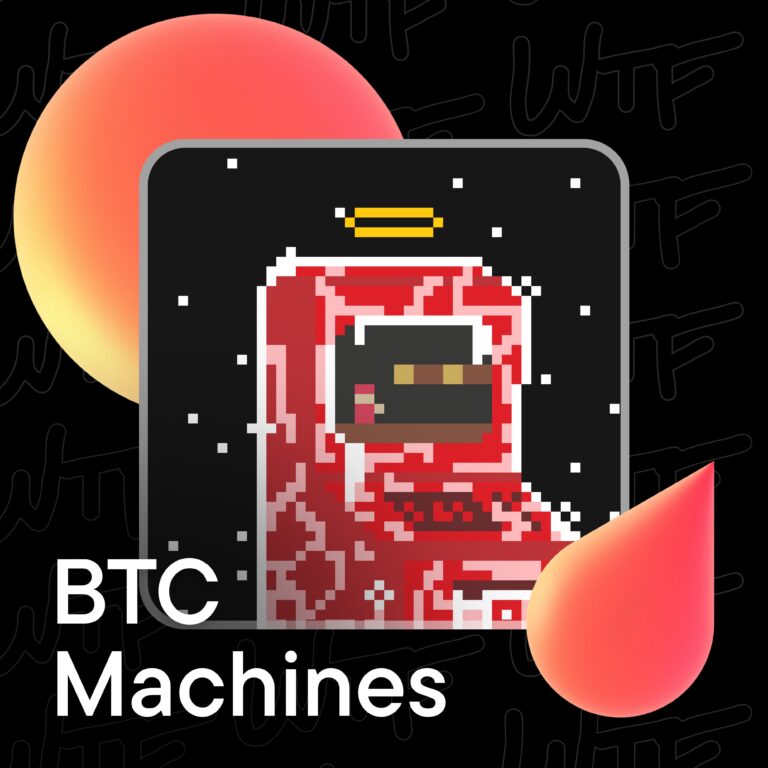
Liquidium has announced the launch of a Robinhood sister collection tied to its Machines project, while renewed trading activity has drawn attention back to the original Machines Ordinals collection.

The update encourages holders and traders to use the Machines collection through the Liquidium marketplace, where users can buy listed assets or use their Ordinals holdings in lending and borrowing activities that generate Bitcoin-denominated returns.

Liquidium has positioned the new Robinhood collection as a companion release rather than a replacement for the original Machines series. The company said interest in the launch has led many traders to revisit the earlier collection, which remains active on the platform.

Ordinals collections have become an increasingly visible part of the Bitcoin digital asset market, with platforms competing to offer trading, lending and collateral-based financial services built around Bitcoin-native assets. Liquidium has focused on using Ordinals as collateral for loans and other yield-generating activities within the Bitcoin ecosystem.

The company did not disclose the size of the Robinhood collection or provide further details on future releases. The announcement centred on increasing activity around Machines and expanding participation through Liquidium’s lending infrastructure.

Market interest in Ordinals collections can be highly volatile, with prices and trading volumes often driven by collector demand and broader sentiment across Bitcoin-related digital assets.


Dear Reader,

Ledger Life is an independent platform dedicated to covering the Internet Computer (ICP) ecosystem and beyond. We focus on real stories, builder updates, project launches, and the quiet innovations that often get missed.

We’re not backed by sponsors. We rely on readers like you.

If you find value in what we publish—whether it’s deep dives into dApps, explainers on decentralised tech, or just keeping track of what’s moving in Web3—please consider making a donation. It helps us cover costs, stay consistent, and remain truly independent.

Your support goes a long way.

🧠 ICP Principal: ins6i-d53ug-zxmgh-qvum3-r3pvl-ufcvu-bdyon-ovzdy-d26k3-lgq2v-3qe

🧾 ICP Address: f8deb966878f8b83204b251d5d799e0345ea72b8e62e8cf9da8d8830e1b3b05f

Every contribution helps keep the lights on, the stories flowing, and the crypto clutter out.

Thank you for reading, sharing, and being part of this experiment in decentralised media.
—Team Ledger Life
FomoWell partners with WhatPay to expand Bitcoin asset access

FomoWell has announced a partnership with WhatPay aimed at expanding access to Bitcoin-based digital assets and improving how users discover, manage and trade them.

The collaboration brings together FomoWell’s infrastructure for Bitcoin asset issuance and trading with WhatPay’s AI-native MPC wallet technology. The companies said the partnership is intended to create a more connected environment for Bitcoin asset activity and simplify the user experience for on-chain transactions.

According to the announcement, the two platforms plan to improve how Bitcoin assets are discovered and used, with an emphasis on smoother wallet interactions and asset management tools.

WhatPay’s wallet is designed to provide AI-assisted asset management and on-chain trading functions, while FomoWell focuses on infrastructure supporting the creation and trading of Bitcoin-linked assets.

The companies said they expect the partnership to explore applications involving Bitcoin, artificial intelligence and digital asset infrastructure, although no timeline or specific product integrations were announced.

Partnerships between infrastructure providers and wallet platforms have become increasingly common as companies seek to improve usability and broaden access to decentralised financial services built around Bitcoin and other digital assets.

FomoWell and WhatPay said the collaboration is intended to make Bitcoin assets easier for users to access and use across a wider range of on-chain applications.


Dear Reader,

Ledger Life is an independent platform dedicated to covering the Internet Computer (ICP) ecosystem and beyond. We focus on real stories, builder updates, project launches, and the quiet innovations that often get missed.

We’re not backed by sponsors. We rely on readers like you.

If you find value in what we publish—whether it’s deep dives into dApps, explainers on decentralised tech, or just keeping track of what’s moving in Web3—please consider making a donation. It helps us cover costs, stay consistent, and remain truly independent.

Your support goes a long way.

🧠 ICP Principal: ins6i-d53ug-zxmgh-qvum3-r3pvl-ufcvu-bdyon-ovzdy-d26k3-lgq2v-3qe

🧾 ICP Address: f8deb966878f8b83204b251d5d799e0345ea72b8e62e8cf9da8d8830e1b3b05f

Every contribution helps keep the lights on, the stories flowing, and the crypto clutter out.

Thank you for reading, sharing, and being part of this experiment in decentralised media.
—Team Ledger Life

ICPay launches cloud API keys for automated storage uploads

ICPay has introduced cloud API keys that allow developers to automate file uploads to the Internet Computer without requiring a wallet session or manual approval for each upload.

The new feature is designed for developers and teams managing recurring uploads, application deployments and scheduled file updates. API keys can be created for individual storage buckets and assigned write or delete permissions, with users able to revoke them at any time. ICPay said the secret key is displayed only once during creation.

The company said the feature enables assets to be deployed directly to on-chain storage through CI/CD workflows, while automated processes such as bots and scheduled jobs can update files without manual intervention. Files stored through the service can also be served through public CDN links.

According to ICPay, storage remains encrypted at rest and users can manage up to 10 API keys per bucket. The service continues to use ICP for payments.

API-based access is a common feature across cloud storage platforms, allowing applications and infrastructure tools to interact with storage services programmatically. ICPay’s approach brings that workflow to storage hosted on the Internet Computer, where files are stored on-chain rather than through conventional cloud infrastructure.

The feature is available through the ICPay dashboard, where users can generate and manage bucket-specific keys from the storage interface.


Dear Reader,

Ledger Life is an independent platform dedicated to covering the Internet Computer (ICP) ecosystem and beyond. We focus on real stories, builder updates, project launches, and the quiet innovations that often get missed.

We’re not backed by sponsors. We rely on readers like you.

If you find value in what we publish—whether it’s deep dives into dApps, explainers on decentralised tech, or just keeping track of what’s moving in Web3—please consider making a donation. It helps us cover costs, stay consistent, and remain truly independent.

Your support goes a long way.

🧠 ICP Principal: ins6i-d53ug-zxmgh-qvum3-r3pvl-ufcvu-bdyon-ovzdy-d26k3-lgq2v-3qe

🧾 ICP Address: f8deb966878f8b83204b251d5d799e0345ea72b8e62e8cf9da8d8830e1b3b05f

Every contribution helps keep the lights on, the stories flowing, and the crypto clutter out.

Thank you for reading, sharing, and being part of this experiment in decentralised media.
—Team Ledger Life

ODIN reports busiest development week of the quarter with 187 code commits

ODIN has released its Week 31 development update, reporting 187 code commits and 42 pull requests, making it the project’s busiest development week of the quarter.

The update focuses on infrastructure reliability, security testing, monitoring systems and staking improvements, with several changes aimed at strengthening the platform before wider deployment.

One of the main changes involved the project’s indexing infrastructure. ODIN said both of its indexers now have dedicated health endpoints, allowing the system to verify whether they are functioning correctly before deployments proceed. The event indexer deployment process has been tied to successful health checks, while the staking indexer now uses a watchdog system that separates “alive” and “caught up” status checks. The team also introduced operational monitoring tools, including metrics dashboards, incident routing and a documented runbook for troubleshooting.

The project also disclosed that it conducted an adversarial exploit exercise against its phase-one staking canister before launch. According to the update, the testing identified multiple issues, including findings from the exploit suite, a withdrawal review and a transfer fee accounting problem labelled FEE-1. ODIN said the issue involved a flat 100-satoshi transfer fee that had not been fully accounted for by the canister. The team said all identified issues were resolved before users were affected.

As part of the security changes, production deployments have been restricted to manual approval, and the production environment is now limited to a fixed 27-method allowlist enforced through continuous integration checks.

The update also addressed a SQL injection vulnerability. A temporary escaping patch introduced in the previous week has been replaced with parameter binding, which is generally considered the standard approach for preventing SQL injection attacks. The project said read queries have also been moved to a read replica.

Changes were made to API error handling, with errors now being logged against the originating call rather than a wrapper layer. The update said HTTP responses will now return more accurate status codes instead of defaulting to generic server errors.

ODIN also expanded monitoring across liquidity, withdrawal and transfer operations. The team said incident paging has been limited to production systems, while development and staging environments can no longer trigger operational alerts. No-data alerts have also been adjusted to reduce unnecessary notifications.

Staking duration handling was updated to align with canister timing, with internationalisation support added across the interface. The platform now blocks extension requests once the maximum staking duration has been reached, preventing users from submitting requests that the canister would reject.

The project continues to publish weekly development updates under its “building in public” approach, giving users and developers visibility into engineering progress, operational issues and security work as the platform evolves.


Dear Reader,

Ledger Life is an independent platform dedicated to covering the Internet Computer (ICP) ecosystem and beyond. We focus on real stories, builder updates, project launches, and the quiet innovations that often get missed.

We’re not backed by sponsors. We rely on readers like you.

If you find value in what we publish—whether it’s deep dives into dApps, explainers on decentralised tech, or just keeping track of what’s moving in Web3—please consider making a donation. It helps us cover costs, stay consistent, and remain truly independent.

Your support goes a long way.

🧠 ICP Principal: ins6i-d53ug-zxmgh-qvum3-r3pvl-ufcvu-bdyon-ovzdy-d26k3-lgq2v-3qe

🧾 ICP Address: f8deb966878f8b83204b251d5d799e0345ea72b8e62e8cf9da8d8830e1b3b05f

Every contribution helps keep the lights on, the stories flowing, and the crypto clutter out.

Thank you for reading, sharing, and being part of this experiment in decentralised media.
—Team Ledger Life

Internet Computer expands list of ICP support providers as Julius Bär adds custody service

The Internet Computer has updated its network economics page to include a broader range of exchanges, brokers, banks and custodians that support buying, managing and holding ICP, according to a post on X by Pierre Samaties.

The update gives users a wider view of financial institutions and service providers that offer access to ICP, reflecting the range of channels available for custody and investment services.

Among the additions is Bank Julius Bär & Co. AG, which now offers ICP custody to its clients through a collaboration with AMINA Bank. The arrangement places ICP within the custody services available through the Swiss private banking group.

Custody services have become an important part of digital asset adoption among institutional and private banking clients, particularly where regulated financial institutions are involved. Banks and custodians generally provide safekeeping, reporting and compliance services that differ from self-custody arrangements used by many retail users.

The Internet Computer website update does not indicate a change to the network’s underlying economic model. Instead, it expands the list of institutions that support ICP-related services, making it easier for users to identify providers that offer custody, brokerage or trading access.

Julius Bär has been gradually expanding its digital asset capabilities in recent years through partnerships with specialist firms, while AMINA Bank has focused on regulated digital asset banking and custody services.

The broader list of support providers may improve visibility for institutional and professional investors who prefer accessing digital assets through established financial intermediaries, although the availability of services can vary by jurisdiction and client eligibility requirements.

For ICP users, the update provides a clearer reference point for where custody and investment services are currently available across the banking, brokerage and custodial sectors.


Dear Reader,

Ledger Life is an independent platform dedicated to covering the Internet Computer (ICP) ecosystem and beyond. We focus on real stories, builder updates, project launches, and the quiet innovations that often get missed.

We’re not backed by sponsors. We rely on readers like you.

If you find value in what we publish—whether it’s deep dives into dApps, explainers on decentralised tech, or just keeping track of what’s moving in Web3—please consider making a donation. It helps us cover costs, stay consistent, and remain truly independent.

Your support goes a long way.

🧠 ICP Principal: ins6i-d53ug-zxmgh-qvum3-r3pvl-ufcvu-bdyon-ovzdy-d26k3-lgq2v-3qe

🧾 ICP Address: f8deb966878f8b83204b251d5d799e0345ea72b8e62e8cf9da8d8830e1b3b05f

Every contribution helps keep the lights on, the stories flowing, and the crypto clutter out.

Thank you for reading, sharing, and being part of this experiment in decentralised media.
—Team Ledger Life
Menese launches enterprise platform with free trial for merchants and developers

Menese has launched its Enterprise & Merchants platform, introducing what it describes as a multichain operating system for businesses that want to manage digital asset holdings, trading, payments and customer rewards from a single interface.

The company said the platform supports non-custodial holding and trading across multiple blockchain networks, including Ethereum and XRP, and is designed for merchants, developers and businesses building digital finance applications. New users can register for a free three-month trial, with the company offering onboarding support through follow-up consultations.

According to Menese, the platform allows businesses to issue invoices, create loyalty points and manage private accounts through a unified dashboard. It also provides API access that enables developers to connect to multiple blockchain ecosystems through a single integration rather than maintaining separate infrastructure for each network.

One of the platform’s features is access to tokenised real-world assets, including stock offerings available through venues such as Robinhood and xStocks. The company says this gives users a single environment for managing digital assets and tokenised securities across different providers.

The launch comes as a growing number of financial technology companies seek to simplify access to blockchain-based services for businesses. Managing assets across multiple networks has often required separate wallets, APIs and operational systems, creating added complexity for merchants and developers.

Menese is positioning the platform as a command and control centre for businesses operating across different blockchain ecosystems, with an emphasis on non-custodial asset management and cross-chain functionality.

As with any platform that involves digital assets and tokenised securities, businesses are likely to consider factors such as regulatory requirements, security arrangements, liquidity and integration costs before adopting new infrastructure.

The company has made the platform available through its builders portal and says the free trial is intended to allow merchants and developers to test its multichain capabilities before committing to a paid service.


Dear Reader,

Ledger Life is an independent platform dedicated to covering the Internet Computer (ICP) ecosystem and beyond. We focus on real stories, builder updates, project launches, and the quiet innovations that often get missed.

We’re not backed by sponsors. We rely on readers like you.

If you find value in what we publish—whether it’s deep dives into dApps, explainers on decentralised tech, or just keeping track of what’s moving in Web3—please consider making a donation. It helps us cover costs, stay consistent, and remain truly independent.

Your support goes a long way.

🧠 ICP Principal: ins6i-d53ug-zxmgh-qvum3-r3pvl-ufcvu-bdyon-ovzdy-d26k3-lgq2v-3qe

🧾 ICP Address: f8deb966878f8b83204b251d5d799e0345ea72b8e62e8cf9da8d8830e1b3b05f

Every contribution helps keep the lights on, the stories flowing, and the crypto clutter out.

Thank you for reading, sharing, and being part of this experiment in decentralised media.
—Team Ledger Life
ORIGYN positions digital product passport platform for EU supply chain rules

ORIGYN is positioning its digital product passport infrastructure as a compliance and traceability solution for businesses preparing for upcoming European Union product transparency requirements.

The company says its platform allows manufacturers and brands to create digital records for products that can store authenticity, provenance and lifecycle information on a permanent and tamper-resistant network. The passports can be linked to physical products through QR codes or NFC technology, allowing users to access product data, materials information, documents and images by scanning the item.

Digital product passports are expected to play a growing role under the EU’s Ecodesign for Sustainable Products Regulation (ESPR), which aims to improve product traceability, sustainability reporting and circular economy outcomes across a range of industries. The requirements are being introduced progressively across product categories.

ORIGYN says its platform has been listed on dppindex.eu as an EU digital product passport provider and is designed to support audit readiness and regulatory compliance. The company offers different infrastructure options, including Swiss-based, global and self-managed server deployments.

The platform is intended to integrate with existing product data systems, allowing businesses to issue passports in bulk without building a separate infrastructure. ORIGYN says the system can scale from pilot projects to large product catalogues.

The company argues that digital product passports can help reduce fraud, improve product authentication and provide greater transparency across supply chains. These features are attracting interest from sectors including luxury goods, industrial manufacturing, consumer products and regulated industries where product provenance and documentation are increasingly important.

As EU requirements become clearer, businesses are beginning to assess how digital product passport systems will fit into existing supply chain and compliance processes. Industry analysts have noted that implementation will depend on interoperability, data quality and the ability to connect digital records reliably with physical products throughout their lifecycle.

ORIGYN’s approach focuses on providing a ready-to-deploy infrastructure rather than a bespoke development platform, placing it among a growing number of companies competing in the emerging digital product passport market.

Dear Reader,

Ledger Life is an independent platform dedicated to covering the Internet Computer (ICP) ecosystem and beyond. We focus on real stories, builder updates, project launches, and the quiet innovations that often get missed.

We’re not backed by sponsors. We rely on readers like you.

If you find value in what we publish—whether it’s deep dives into dApps, explainers on decentralised tech, or just keeping track of what’s moving in Web3—please consider making a donation. It helps us cover costs, stay consistent, and remain truly independent.

Your support goes a long way.

🧠 ICP Principal: ins6i-d53ug-zxmgh-qvum3-r3pvl-ufcvu-bdyon-ovzdy-d26k3-lgq2v-3qe

🧾 ICP Address: f8deb966878f8b83204b251d5d799e0345ea72b8e62e8cf9da8d8830e1b3b05f

Every contribution helps keep the lights on, the stories flowing, and the crypto clutter out.

Thank you for reading, sharing, and being part of this experiment in decentralised media.
—Team Ledger Life

Tie Tracker update brings iCloud sync and native file storage to iOS

0

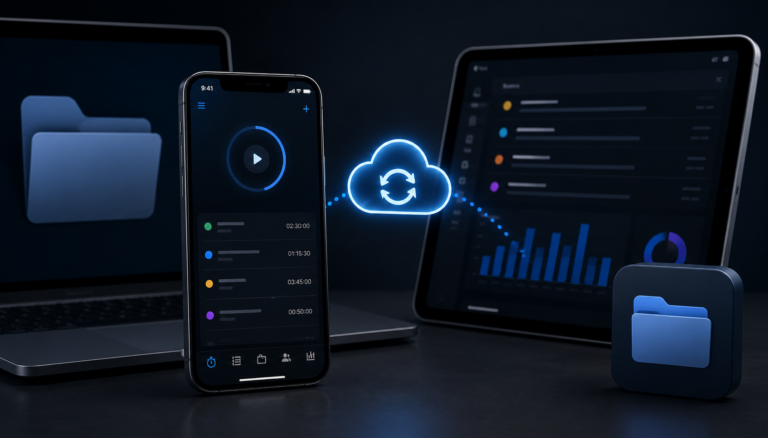
Tie Tracker, the local-first time tracking app created by developer David Dal Busco, has received a major update that replaces IndexedDB storage with the device’s native filesystem, bringing automatic iCloud synchronisation to iOS and removing the need for manual backups.

Dal Busco announced the release on social media, saying the change allows data to sync across Apple devices through iCloud by default, while still giving users the option to disable the feature if they prefer not to share data with Apple.

The update also includes a refreshed dark mode and a broader review of the app’s visual design. Dal Busco said the project’s codebase is now more than seven years old, and described the latest release as an opportunity to make substantial architectural improvements.

Tie Tracker is designed as a local-first application, meaning users’ data remains on their own device or in their browser when using the web version. According to the project documentation, the app does not use a remote database, analytics or user tracking.

The software is aimed at freelancers, contractors and other professionals who need to track working hours across clients and projects. Features include project budgeting, marking entries as billed, weekly and daily reporting, and exporting invoice timesheets in XLSX format.

The iOS version now uses iCloud synchronisation by default, allowing data to transfer automatically when users move to a new iPhone. Backup and restore through ZIP files remains available across platforms.

Dal Busco has also kept the project open source under the GNU Affero General Public License, with the full source code available on GitHub. The app is offered free on iOS, Android and the web.

The update reflects a wider trend among productivity app developers towards local-first architecture, which prioritises user control over data while reducing dependence on cloud-based services. For existing Tie Tracker users, the move to native filesystem storage is likely to be the most noticeable change, particularly on iOS where backups and device migration become largely automatic.


Dear Reader,

Ledger Life is an independent platform dedicated to covering the Internet Computer (ICP) ecosystem and beyond. We focus on real stories, builder updates, project launches, and the quiet innovations that often get missed.

We’re not backed by sponsors. We rely on readers like you.

If you find value in what we publish—whether it’s deep dives into dApps, explainers on decentralised tech, or just keeping track of what’s moving in Web3—please consider making a donation. It helps us cover costs, stay consistent, and remain truly independent.

Your support goes a long way.

🧠 ICP Principal: ins6i-d53ug-zxmgh-qvum3-r3pvl-ufcvu-bdyon-ovzdy-d26k3-lgq2v-3qe

🧾 ICP Address: f8deb966878f8b83204b251d5d799e0345ea72b8e62e8cf9da8d8830e1b3b05f

Every contribution helps keep the lights on, the stories flowing, and the crypto clutter out.

Thank you for reading, sharing, and being part of this experiment in decentralised media.
—Team Ledger Life

ICPay launches on-chain storage service with CDN support

ICPay has launched ICPay Bucket, a file storage service built on the Internet Computer that allows users to store files on-chain and deliver them through a dedicated content delivery network.

The service is aimed primarily at developers seeking an alternative to conventional cloud object storage, with support for both public and private storage buckets.

According to ICPay, the platform includes encrypted storage at rest, bucket-based file management, multiple storage tiers, automatic image optimisation to WebP format and a 30-day storage renewal model.

Public buckets can serve files directly through the CDN, while private buckets restrict access to authorised users.

The company said the service is designed to keep storage and delivery within on-chain infrastructure rather than relying on traditional centralised storage providers.

Decentralised storage has become an increasingly active area within blockchain-based computing networks, with developers exploring ways to host applications, media assets and user-generated content without depending on a single infrastructure provider. The approach can offer greater transparency and resilience, although it may also involve different trade-offs in cost, performance and scalability compared with established cloud storage services.

ICPay said API key access is planned for a future release, enabling programmatic uploads, integrations and automated storage workflows.

The company is positioning ICPay Bucket as a storage option for developers who want simplified file management while retaining the characteristics of on-chain infrastructure.

The service is available through the ICPay application at icpay.app .


Dear Reader,

Ledger Life is an independent platform dedicated to covering the Internet Computer (ICP) ecosystem and beyond. We focus on real stories, builder updates, project launches, and the quiet innovations that often get missed.

We’re not backed by sponsors. We rely on readers like you.

If you find value in what we publish—whether it’s deep dives into dApps, explainers on decentralised tech, or just keeping track of what’s moving in Web3—please consider making a donation. It helps us cover costs, stay consistent, and remain truly independent.

Your support goes a long way.

🧠 ICP Principal: ins6i-d53ug-zxmgh-qvum3-r3pvl-ufcvu-bdyon-ovzdy-d26k3-lgq2v-3qe

🧾 ICP Address: f8deb966878f8b83204b251d5d799e0345ea72b8e62e8cf9da8d8830e1b3b05f

Every contribution helps keep the lights on, the stories flowing, and the crypto clutter out.

Thank you for reading, sharing, and being part of this experiment in decentralised media.
—Team Ledger Life