PiggyCell and Rynus Link Up to Power Real-World DePIN Use
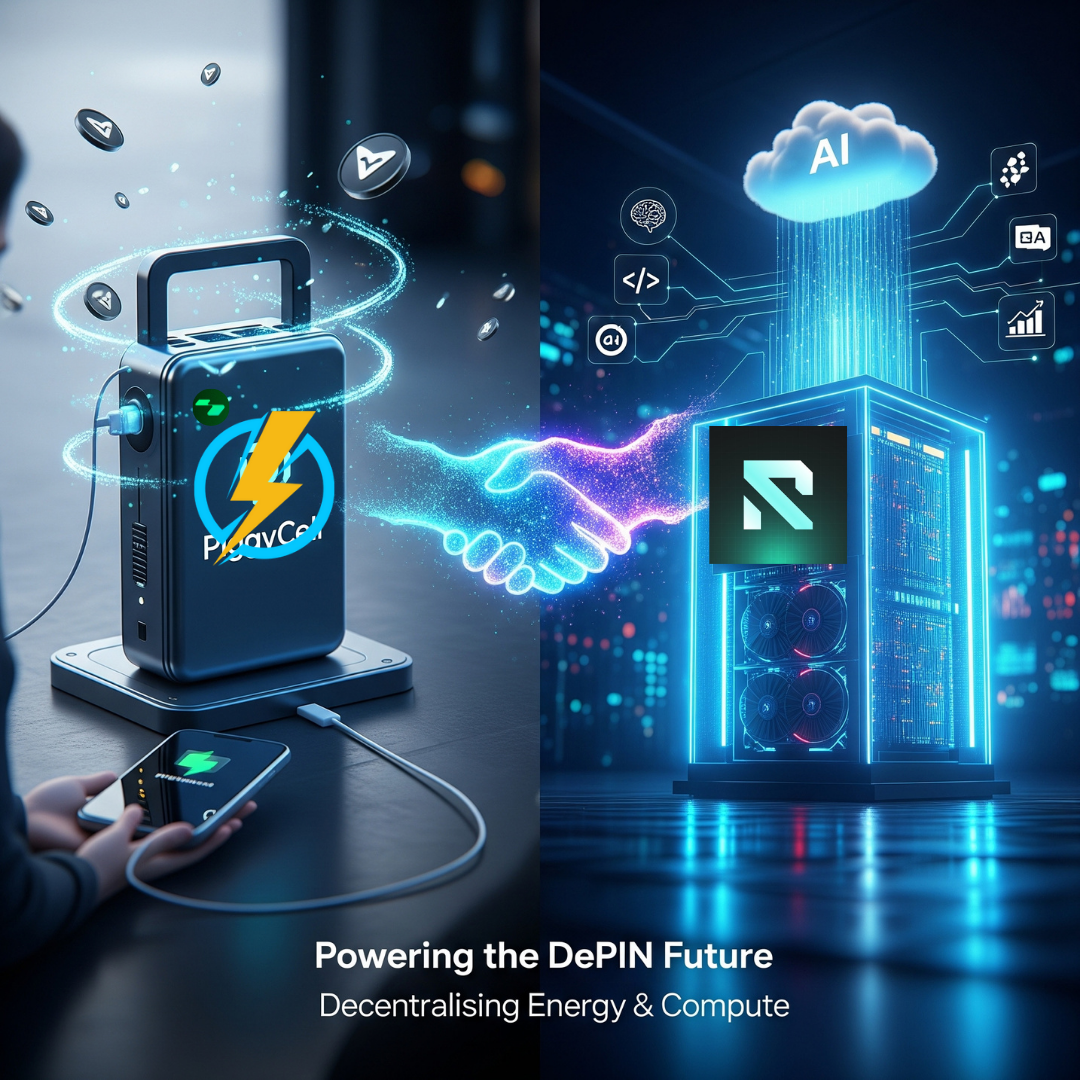
Piggycell’s latest collaboration plugs into something both ambitious and grounded—making decentralised infrastructure actually useful. Partnering with Rynus.io, a platform focused on decentralised GPU clouds, the two are aiming to bring a new shape to compute power, one that isn’t parked inside closed systems or buried under speculative noise.
The idea is relatively simple: use what you have to create real-world utility, and earn from it. For Piggycell, that’s been about turning idle batteries into active yield-generating assets. For Rynus.io, it’s decentralising GPU power to serve AI and other compute-heavy tasks. Together, they’re merging energy and processing muscle into a network built for doing, not just dreaming.
This is part of what’s being described as a multi-vertical DePIN approach. Think physical infrastructure meets tokenised incentive. Think of GPUs and batteries that aren’t owned by a single company, but offered up by anyone with the hardware to contribute. The incentive is baked in—rewards flow based on usage, not hope. What matters is how the infrastructure performs and whether it serves actual demand.
Rynus.io isn’t just building another cloud. It’s building one that operates without the usual middlemen, where contributors can plug in their own GPUs and get paid when their compute is used. It shifts cloud infrastructure from something centralised and costly into something distributed and open. For those training AI models or running big workloads, this could become a more cost-efficient and transparent way to get things done.
Piggycell fits in neatly here. Their model takes distributed energy assets—specifically batteries—and lets users earn by sharing stored power during periods of high demand. It’s energy on tap, with rewards attached. When paired with something like decentralised GPU compute, the entire backend of what powers the internet and AI starts looking a lot more democratic.
Together, the pairing feels less like a corporate tie-up and more like a plug-and-play collaboration. It’s not just about fitting the pieces together. It’s about creating a loop where energy feeds processing, and processing earns value back into the system. The underlying ethos isn’t complicated. Use what you have. Share it. Earn from it. That’s the core idea.
What sets this apart is the attention to physical outcomes. Many decentralised projects have remained in proof-of-concept limbo or have been overrun by speculation. But DePIN, when taken seriously, puts boots on the ground—or rather, chips in machines and charge in cells. Rynus.io offers a way for anyone with GPU capacity to join a larger network. Piggycell ensures that the power behind those GPUs can also be monetised in a decentralised fashion. The synergy isn’t forced. It’s practical.
Rynus.io’s appeal to AI developers is clear. GPUs are essential for training and inference tasks, but the current market is riddled with bottlenecks—high costs, limited availability, and opaque pricing structures. A decentralised GPU cloud could help flatten those issues by creating competition, increasing supply, and letting contributors earn fairly. It also adds a layer of transparency missing in traditional setups.
Meanwhile, Piggycell’s angle appeals to a different crowd—those sitting on untapped battery capacity. Whether it’s home storage, EV batteries, or commercial energy banks, Piggycell gives users a way to monetise energy in a smart, responsive way. It’s the kind of utility-first thinking that makes decentralisation meaningful, not just trendy.
What’s interesting is that these aren’t just passive systems. There’s a level of engagement expected. You opt in. You share. You decide how much to contribute. It’s participation, not just investment. And the rewards aren’t hypothetical—they come from usage, from being part of an infrastructure that’s doing real work in the world.
The collaboration isn’t pretending to fix everything overnight. Instead, it’s opening a door to practical decentralised systems that scale naturally, because they’re tied to things people already need: compute and power. With the rapid acceleration of AI models, demand for GPUs is unlikely to shrink. At the same time, as energy markets get more dynamic, distributed battery usage becomes a key asset. Bringing those two together just makes sense.
There’s also an environmental thread running through this. By leveraging already-existing hardware—GPUs that might be idle, batteries that sit unused—there’s a kind of resource efficiency at play. It avoids the need for massive new infrastructure builds by making better use of what’s out there. It’s green without the greenwashing.
For both parties, this move shows a steady hand. There’s no fanfare about token launches or inflated promises. Instead, it’s a grounded step toward usable systems that invite participation. It’s less about hype and more about habits—getting people used to the idea that they can contribute to infrastructure and get something in return.
There’s a future in which your GPU and your battery might both be earning while you sleep. That future, according to Piggycell and Rynus.io, doesn’t require a tech overhaul. It just needs the right connections. That’s what this partnership provides: the wiring for a decentralised backend that can handle the demands of modern applications without the overhead of traditional models.
The technical lift behind this shouldn’t be underestimated. Connecting energy storage to dynamic grid needs and balancing that against compute workloads that can change by the hour is no easy task. But decentralisation thrives on coordination. When it works, it doesn’t just decentralise—it distributes power in every sense of the word.
This may start small, but the logic behind it is scalable. Each user who connects a battery or a GPU strengthens the network. Each piece of real infrastructure added is a step toward a system that doesn’t rely on central actors to function. That kind of robustness is hard to come by in tech, but when it appears, it tends to last.
There’s a kind of quiet confidence in how this is being rolled out. It’s not an announcement dressed up as a spectacle. It’s a feature release. A piece added. A function made possible. That tone—of builders building—is what often separates working systems from passing trends.
Piggycell and Rynus.io are placing a bet on participation. Not mass hype, not viral campaigns—just the idea that people will join in if the tools are clear and the rewards make sense. Time will tell how far the model spreads. But for now, it’s a clean move. A focused integration. A bit of wiring done right.
No big speech required. Just two projects making something functional. And for a space that’s sometimes too loud for its own good, that silence speaks volumes.