Writers test the waters with NFT-minted articles on Nuance
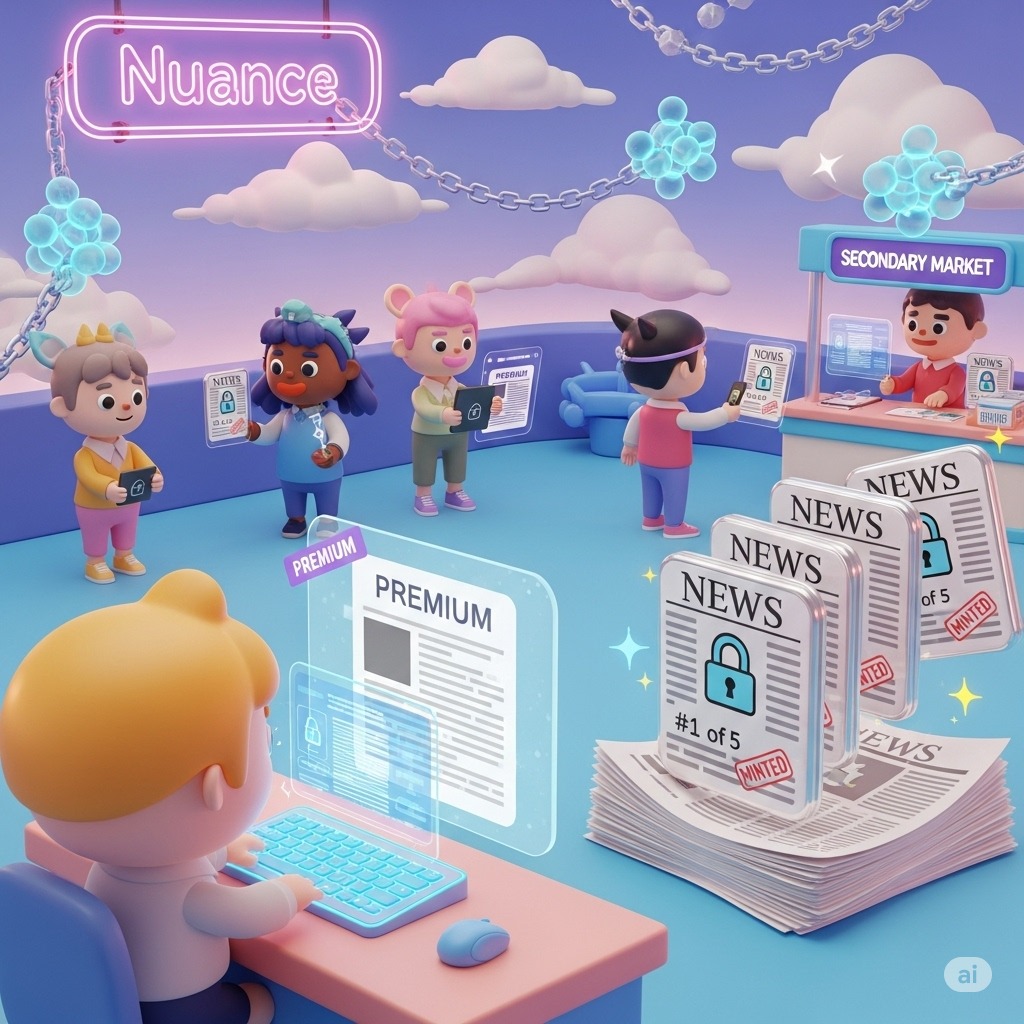
Nuance is giving online publishing a twist, offering writers a way to mint their articles as NFTs—creating fixed, tradable versions of their work that can’t be edited or taken down. It’s an experiment in combining crypto ownership models with digital journalism, and early users are starting to explore what it means to own and sell pieces of news.

At the heart of it is a simple idea: if someone writes an article that captures a key moment—whether it’s a major announcement, a breakthrough insight, or a personal story—it can be minted and sold in limited editions. Readers who care enough can support that piece by buying it, and in doing so, they gain access while holding a permanent digital copy.

Writers publishing on Nuance can choose to mark certain posts as “Premium Articles.” This label signals that the piece is being sold as an NFT. The writer sets both the number of copies and the price. Once it’s published, the article can’t be edited and becomes accessible only to those who own the NFT. These NFTs can then be traded on secondary markets, making the ownership more flexible than traditional paywalls.

From a reader’s perspective, the paywall is simple. If they want to read the article, they buy the NFT. The wallet holding it unlocks access. No subscriptions, no login forms, just a single crypto transaction that acts as both payment and proof of ownership.

This approach differs from subscription or membership models, where readers pay to unlock a broad set of content. Instead, it’s targeted—support this story, this moment, this voice. For crypto-native communities and Web3 projects that value onchain expression and scarcity, it’s a natural fit. Writers can choose to keep their work freely available or experiment with monetising select posts.

The platform has made it clear that it’s willing to go further if writers want more control. A more traditional paywall option could be added down the line, depending on demand. For now, the NFT-based Premium Article is the core tool, aimed at early adopters curious about Web3 publishing.

There are some legal points to keep in mind. Nuance includes a disclaimer reminding writers and readers alike that local regulations on digital assets apply. As with any crypto product, the platform advises users to understand the laws in their own region before taking part.

What’s being tested here is whether readers are willing to pay directly for individual pieces of writing, not as subscribers or donors, but as owners. It’s also a test of whether blockchain tools can support new kinds of writer-reader relationships—ones that favour scarcity, permanence and decentralised access over clicks and ads.

Whether this approach finds a wider audience will depend on how it’s used. For now, it offers a clean use case for NFTs in media, focused more on preserving and supporting stories than trading headlines for tokens.


Dear Reader,

Ledger Life is an independent platform dedicated to covering the Internet Computer (ICP) ecosystem and beyond. We focus on real stories, builder updates, project launches, and the quiet innovations that often get missed.

We’re not backed by sponsors. We rely on readers like you.

If you find value in what we publish—whether it’s deep dives into dApps, explainers on decentralised tech, or just keeping track of what’s moving in Web3—please consider making a donation. It helps us cover costs, stay consistent, and remain truly independent.

Your support goes a long way.

🧠 ICP Principal: ins6i-d53ug-zxmgh-qvum3-r3pvl-ufcvu-bdyon-ovzdy-d26k3-lgq2v-3qe

🧾 ICP Address: f8deb966878f8b83204b251d5d799e0345ea72b8e62e8cf9da8d8830e1b3b05f

🪙 BTC Wallet: bc1pp5kuez9r2atdmrp4jmu6fxersny4uhnaxyrxau4dg7365je8sy2q9zff6p

Every contribution helps keep the lights on, the stories flowing, and the crypto clutter out.

Thank you for reading, sharing, and being part of this experiment in decentralised media.
—Team Ledger Life

LEAVE A REPLY

Please enter your comment!
Please enter your name here

More like this

Traders Watch ICP Open Interest and Short Positions Climb...

Internet Computer (ICP) is seeing a sharp rise in derivatives activity on Binance, with both open interest...

$MENES Token Launch Goes Live on ICP With Staking-Led...

The $MENES token launch is now live on the Internet Computer blockchain, with the sale scheduled to...

ODIN•FUN frames fair token launches as part of Bitcoin’s...

ODIN•FUN is positioning itself as a platform built around one straightforward idea: token launches on Bitcoin should...

Nuance is giving online publishing a twist, offering writers a way to mint their articles as NFTs—creating fixed, tradable versions of their work that can’t be edited or taken down. It’s an experiment in combining crypto ownership models with digital journalism, and early users are starting to explore what it means to own and sell pieces of news.

At the heart of it is a simple idea: if someone writes an article that captures a key moment—whether it’s a major announcement, a breakthrough insight, or a personal story—it can be minted and sold in limited editions. Readers who care enough can support that piece by buying it, and in doing so, they gain access while holding a permanent digital copy.

Writers publishing on Nuance can choose to mark certain posts as “Premium Articles.” This label signals that the piece is being sold as an NFT. The writer sets both the number of copies and the price. Once it’s published, the article can’t be edited and becomes accessible only to those who own the NFT. These NFTs can then be traded on secondary markets, making the ownership more flexible than traditional paywalls.

From a reader’s perspective, the paywall is simple. If they want to read the article, they buy the NFT. The wallet holding it unlocks access. No subscriptions, no login forms, just a single crypto transaction that acts as both payment and proof of ownership.

This approach differs from subscription or membership models, where readers pay to unlock a broad set of content. Instead, it’s targeted—support this story, this moment, this voice. For crypto-native communities and Web3 projects that value onchain expression and scarcity, it’s a natural fit. Writers can choose to keep their work freely available or experiment with monetising select posts.

The platform has made it clear that it’s willing to go further if writers want more control. A more traditional paywall option could be added down the line, depending on demand. For now, the NFT-based Premium Article is the core tool, aimed at early adopters curious about Web3 publishing.

There are some legal points to keep in mind. Nuance includes a disclaimer reminding writers and readers alike that local regulations on digital assets apply. As with any crypto product, the platform advises users to understand the laws in their own region before taking part.

What’s being tested here is whether readers are willing to pay directly for individual pieces of writing, not as subscribers or donors, but as owners. It’s also a test of whether blockchain tools can support new kinds of writer-reader relationships—ones that favour scarcity, permanence and decentralised access over clicks and ads.

Whether this approach finds a wider audience will depend on how it’s used. For now, it offers a clean use case for NFTs in media, focused more on preserving and supporting stories than trading headlines for tokens.


Dear Reader,

Ledger Life is an independent platform dedicated to covering the Internet Computer (ICP) ecosystem and beyond. We focus on real stories, builder updates, project launches, and the quiet innovations that often get missed.

We’re not backed by sponsors. We rely on readers like you.

If you find value in what we publish—whether it’s deep dives into dApps, explainers on decentralised tech, or just keeping track of what’s moving in Web3—please consider making a donation. It helps us cover costs, stay consistent, and remain truly independent.

Your support goes a long way.

🧠 ICP Principal: ins6i-d53ug-zxmgh-qvum3-r3pvl-ufcvu-bdyon-ovzdy-d26k3-lgq2v-3qe

🧾 ICP Address: f8deb966878f8b83204b251d5d799e0345ea72b8e62e8cf9da8d8830e1b3b05f

🪙 BTC Wallet: bc1pp5kuez9r2atdmrp4jmu6fxersny4uhnaxyrxau4dg7365je8sy2q9zff6p

Every contribution helps keep the lights on, the stories flowing, and the crypto clutter out.

Thank you for reading, sharing, and being part of this experiment in decentralised media.
—Team Ledger Life

LEAVE A REPLY

Please enter your comment!
Please enter your name here

More like this

Traders Watch ICP Open Interest and Short Positions Climb...

Internet Computer (ICP) is seeing a sharp rise in derivatives activity on Binance, with both open interest...

$MENES Token Launch Goes Live on ICP With Staking-Led...

The $MENES token launch is now live on the Internet Computer blockchain, with the sale scheduled to...

ODIN•FUN frames fair token launches as part of Bitcoin’s...

ODIN•FUN is positioning itself as a platform built around one straightforward idea: token launches on Bitcoin should...

Nuance is giving online publishing a twist, offering writers a way to mint their articles as NFTs—creating fixed, tradable versions of their work that can’t be edited or taken down. It’s an experiment in combining crypto ownership models with digital journalism, and early users are starting to explore what it means to own and sell pieces of news.

At the heart of it is a simple idea: if someone writes an article that captures a key moment—whether it’s a major announcement, a breakthrough insight, or a personal story—it can be minted and sold in limited editions. Readers who care enough can support that piece by buying it, and in doing so, they gain access while holding a permanent digital copy.

Writers publishing on Nuance can choose to mark certain posts as “Premium Articles.” This label signals that the piece is being sold as an NFT. The writer sets both the number of copies and the price. Once it’s published, the article can’t be edited and becomes accessible only to those who own the NFT. These NFTs can then be traded on secondary markets, making the ownership more flexible than traditional paywalls.

From a reader’s perspective, the paywall is simple. If they want to read the article, they buy the NFT. The wallet holding it unlocks access. No subscriptions, no login forms, just a single crypto transaction that acts as both payment and proof of ownership.

This approach differs from subscription or membership models, where readers pay to unlock a broad set of content. Instead, it’s targeted—support this story, this moment, this voice. For crypto-native communities and Web3 projects that value onchain expression and scarcity, it’s a natural fit. Writers can choose to keep their work freely available or experiment with monetising select posts.

The platform has made it clear that it’s willing to go further if writers want more control. A more traditional paywall option could be added down the line, depending on demand. For now, the NFT-based Premium Article is the core tool, aimed at early adopters curious about Web3 publishing.

There are some legal points to keep in mind. Nuance includes a disclaimer reminding writers and readers alike that local regulations on digital assets apply. As with any crypto product, the platform advises users to understand the laws in their own region before taking part.

What’s being tested here is whether readers are willing to pay directly for individual pieces of writing, not as subscribers or donors, but as owners. It’s also a test of whether blockchain tools can support new kinds of writer-reader relationships—ones that favour scarcity, permanence and decentralised access over clicks and ads.

Whether this approach finds a wider audience will depend on how it’s used. For now, it offers a clean use case for NFTs in media, focused more on preserving and supporting stories than trading headlines for tokens.


Dear Reader,

Ledger Life is an independent platform dedicated to covering the Internet Computer (ICP) ecosystem and beyond. We focus on real stories, builder updates, project launches, and the quiet innovations that often get missed.

We’re not backed by sponsors. We rely on readers like you.

If you find value in what we publish—whether it’s deep dives into dApps, explainers on decentralised tech, or just keeping track of what’s moving in Web3—please consider making a donation. It helps us cover costs, stay consistent, and remain truly independent.

Your support goes a long way.

🧠 ICP Principal: ins6i-d53ug-zxmgh-qvum3-r3pvl-ufcvu-bdyon-ovzdy-d26k3-lgq2v-3qe

🧾 ICP Address: f8deb966878f8b83204b251d5d799e0345ea72b8e62e8cf9da8d8830e1b3b05f

🪙 BTC Wallet: bc1pp5kuez9r2atdmrp4jmu6fxersny4uhnaxyrxau4dg7365je8sy2q9zff6p

Every contribution helps keep the lights on, the stories flowing, and the crypto clutter out.

Thank you for reading, sharing, and being part of this experiment in decentralised media.
—Team Ledger Life

LEAVE A REPLY

Please enter your comment!
Please enter your name here

More like this

Traders Watch ICP Open Interest and Short Positions Climb...

Internet Computer (ICP) is seeing a sharp rise in derivatives activity on Binance, with both open interest...

$MENES Token Launch Goes Live on ICP With Staking-Led...

The $MENES token launch is now live on the Internet Computer blockchain, with the sale scheduled to...

ODIN•FUN frames fair token launches as part of Bitcoin’s...

ODIN•FUN is positioning itself as a platform built around one straightforward idea: token launches on Bitcoin should...

Nuance is giving online publishing a twist, offering writers a way to mint their articles as NFTs—creating fixed, tradable versions of their work that can’t be edited or taken down. It’s an experiment in combining crypto ownership models with digital journalism, and early users are starting to explore what it means to own and sell pieces of news.

At the heart of it is a simple idea: if someone writes an article that captures a key moment—whether it’s a major announcement, a breakthrough insight, or a personal story—it can be minted and sold in limited editions. Readers who care enough can support that piece by buying it, and in doing so, they gain access while holding a permanent digital copy.

Writers publishing on Nuance can choose to mark certain posts as “Premium Articles.” This label signals that the piece is being sold as an NFT. The writer sets both the number of copies and the price. Once it’s published, the article can’t be edited and becomes accessible only to those who own the NFT. These NFTs can then be traded on secondary markets, making the ownership more flexible than traditional paywalls.

From a reader’s perspective, the paywall is simple. If they want to read the article, they buy the NFT. The wallet holding it unlocks access. No subscriptions, no login forms, just a single crypto transaction that acts as both payment and proof of ownership.

This approach differs from subscription or membership models, where readers pay to unlock a broad set of content. Instead, it’s targeted—support this story, this moment, this voice. For crypto-native communities and Web3 projects that value onchain expression and scarcity, it’s a natural fit. Writers can choose to keep their work freely available or experiment with monetising select posts.

The platform has made it clear that it’s willing to go further if writers want more control. A more traditional paywall option could be added down the line, depending on demand. For now, the NFT-based Premium Article is the core tool, aimed at early adopters curious about Web3 publishing.

There are some legal points to keep in mind. Nuance includes a disclaimer reminding writers and readers alike that local regulations on digital assets apply. As with any crypto product, the platform advises users to understand the laws in their own region before taking part.

What’s being tested here is whether readers are willing to pay directly for individual pieces of writing, not as subscribers or donors, but as owners. It’s also a test of whether blockchain tools can support new kinds of writer-reader relationships—ones that favour scarcity, permanence and decentralised access over clicks and ads.

Whether this approach finds a wider audience will depend on how it’s used. For now, it offers a clean use case for NFTs in media, focused more on preserving and supporting stories than trading headlines for tokens.


Dear Reader,

Ledger Life is an independent platform dedicated to covering the Internet Computer (ICP) ecosystem and beyond. We focus on real stories, builder updates, project launches, and the quiet innovations that often get missed.

We’re not backed by sponsors. We rely on readers like you.

If you find value in what we publish—whether it’s deep dives into dApps, explainers on decentralised tech, or just keeping track of what’s moving in Web3—please consider making a donation. It helps us cover costs, stay consistent, and remain truly independent.

Your support goes a long way.

🧠 ICP Principal: ins6i-d53ug-zxmgh-qvum3-r3pvl-ufcvu-bdyon-ovzdy-d26k3-lgq2v-3qe

🧾 ICP Address: f8deb966878f8b83204b251d5d799e0345ea72b8e62e8cf9da8d8830e1b3b05f

🪙 BTC Wallet: bc1pp5kuez9r2atdmrp4jmu6fxersny4uhnaxyrxau4dg7365je8sy2q9zff6p

Every contribution helps keep the lights on, the stories flowing, and the crypto clutter out.

Thank you for reading, sharing, and being part of this experiment in decentralised media.
—Team Ledger Life

LEAVE A REPLY

Please enter your comment!
Please enter your name here

More like this

Traders Watch ICP Open Interest and Short Positions Climb...

Internet Computer (ICP) is seeing a sharp rise in derivatives activity on Binance, with both open interest...

$MENES Token Launch Goes Live on ICP With Staking-Led...

The $MENES token launch is now live on the Internet Computer blockchain, with the sale scheduled to...

ODIN•FUN frames fair token launches as part of Bitcoin’s...

ODIN•FUN is positioning itself as a platform built around one straightforward idea: token launches on Bitcoin should...