AI Will Be a Million Times Smarter in Four Years”—But Who’s Ready for That?
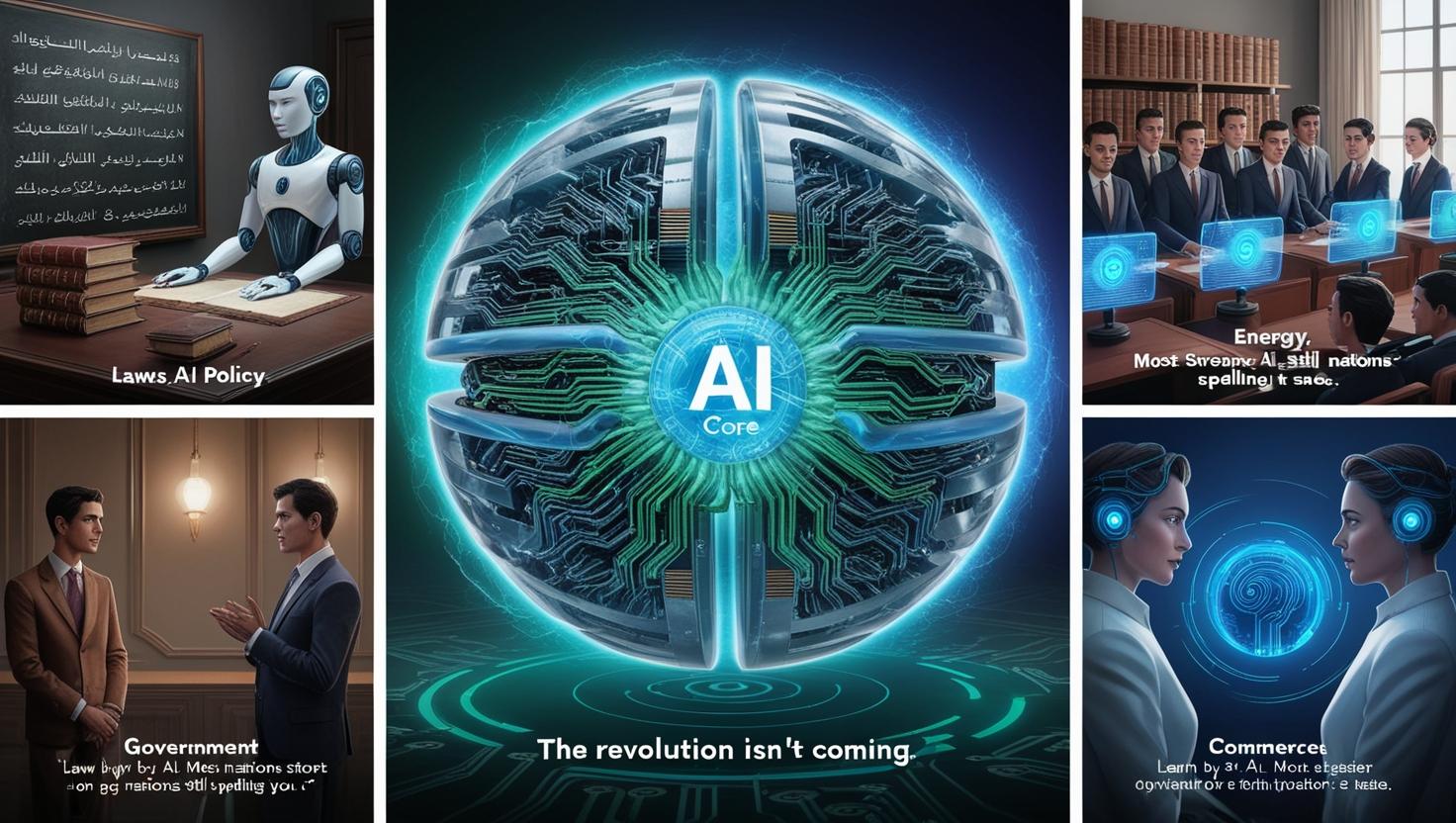
The AI revolution is not just coming fast—it’s already lapped us. That’s the consensus from Salim Ismail, Peter Diamandis and Dave Blundin, who returned for another charged episode of the Moonshots podcast, unpacking everything from education and energy to Bitcoin and bureaucracy. Their central argument? AI is being radically underestimated, both in scale and speed.

“It’s the fastest moving technology we’ve ever seen,” said Salim, recounting a week that included stops in India, São Paulo and what he jokingly described as the middle of the Atlantic. “We’re at a point where you can’t predict what’s going to happen next week. That’s the real singularity.”

Peter, who runs the show with the energy of someone trying to keep pace with the future, observed that AI’s trajectory has outstripped even the pace of human comprehension. “We’ve gone from idea-bound to compute-bound,” he said. “We’re no longer constrained by imagination—we’re constrained by GPU availability.”

That bottleneck, noted Dave, who runs a portfolio of 24 AI-native startups out of Cambridge, is temporary. “We’re seeing models generate three million lines of code in a night. The challenge used to be debugging it all. Now the code is so good, even that problem is going away.”

Salim, CEO of OpenExO and a familiar name at the intersection of governance and innovation, took the conversation beyond startups. “UAE is already using AI to write its laws. Most countries are still trying to spell AI,” he quipped. “This isn’t just policy support. It’s full-on legislative co-piloting.” He added that the expected cost reductions from such deployments are likely underestimated. “You could cut the cost of government by a factor of ten in ten years. But only if you let AI drive.”

The three returned to education more than once. China and Estonia are racing ahead, mandating AI education in schools. The United States, they said, is lagging. “Using AI to learn is two to four times more effective,” Salim explained. “So why are schools blocking it?”

Dave put it bluntly: “If a student can learn 3x faster using AI, what are we doing with a twelve-year curriculum? We’re just slowing them down for tradition’s sake.”

Their critique extended to universities, some of which, they noted, have embraced AI as a learning tool while others try to prohibit its use entirely. “That’s not just shortsighted,” Peter said, “it’s sabotage.”

On corporate inertia, Salim didn’t mince words: “I was at a global accounting firm’s leadership summit. I asked how many partners understood the Byzantine Generals Problem—the core of Bitcoin. One hand went up. You’re selling trust and don’t understand how it’s being reinvented under your nose.”

The trio agreed that the real breakthroughs aren’t just in what AI can replace—but what it can now imagine. Peter called the next few years “a failure of imagination waiting to happen.” His conversations with leading researchers confirm that the only thing slowing progress is access to computing power—not ideas.

Even Eric Schmidt, former Google CEO, chimed in during the episode: “AI is underhyped,” he said, predicting an energy demand surge so massive it will upend existing infrastructure. He pegged the coming energy requirement for data centres at an additional 67 gigawatts by 2030.

“That’s the stat he chooses to share publicly,” said Dave. “Because it’s the one lawmakers might grasp. But the real issue is fabs, not just power.”

On the changing face of advertising, Peter painted a near-future where speaking a product into existence becomes normal. “I say I like your shirt, your AI hears it, asks their AI where it’s from, and it just shows up on my doorstep.” Dave expanded the point: “Revenue per session on AI chat is a tenth of search. Google’s model is in trouble.”

The group sees credit card giants like Mastercard scrambling to stay relevant in this new agent-driven economy. “Your agent picks your payment method. If Mastercard doesn’t win that layer, it’s out.”

Bitcoin, too, came up late in the show, with Brian Armstrong’s comments on its potential as a sovereign reserve asset setting off a spirited exchange. “Every Treasury secretary not holding Bitcoin is being financially irresponsible,” said Salim. “It’s baffling.”

Peter added, “I’ve authorised two CEOs to move treasury reserves into Bitcoin. Neither has done it. Even now. Even after MicroStrategy’s playbook.”

The episode ended with a glimpse into quantum teleportation, synthetic data, and a generational leap in game design and engagement. But the thread running through every segment was urgency. “Three months,” said Dave, predicting how long until emotionally engaging trillion-parameter agents go mainstream. “Once that hits, there’s no going back.”

This isn’t hype, they argue. It’s happening—just not where you’re looking.

LEAVE A REPLY

Please enter your comment!
Please enter your name here

More like this

odin-bots v0.4.0 Launches as Open-Source Trading Bot Toolkit for...

onicai has released odin-bots, a new open-source Python CLI and SDK that allows users to run automated...

Liquidium Expands Instant Bitcoin Ordinals Loan Support With New...

Liquidium has announced an update to its instant loans offering, adding support for several new Bitcoin Ordinals...

ICRC Rosetta v1.2.9 Released With Support for New Fee...

ICRC Rosetta users have been advised to upgrade urgently following the release of version 1.2.9, which introduces...

The AI revolution is not just coming fast—it’s already lapped us. That’s the consensus from Salim Ismail, Peter Diamandis and Dave Blundin, who returned for another charged episode of the Moonshots podcast, unpacking everything from education and energy to Bitcoin and bureaucracy. Their central argument? AI is being radically underestimated, both in scale and speed.

“It’s the fastest moving technology we’ve ever seen,” said Salim, recounting a week that included stops in India, São Paulo and what he jokingly described as the middle of the Atlantic. “We’re at a point where you can’t predict what’s going to happen next week. That’s the real singularity.”

Peter, who runs the show with the energy of someone trying to keep pace with the future, observed that AI’s trajectory has outstripped even the pace of human comprehension. “We’ve gone from idea-bound to compute-bound,” he said. “We’re no longer constrained by imagination—we’re constrained by GPU availability.”

That bottleneck, noted Dave, who runs a portfolio of 24 AI-native startups out of Cambridge, is temporary. “We’re seeing models generate three million lines of code in a night. The challenge used to be debugging it all. Now the code is so good, even that problem is going away.”

Salim, CEO of OpenExO and a familiar name at the intersection of governance and innovation, took the conversation beyond startups. “UAE is already using AI to write its laws. Most countries are still trying to spell AI,” he quipped. “This isn’t just policy support. It’s full-on legislative co-piloting.” He added that the expected cost reductions from such deployments are likely underestimated. “You could cut the cost of government by a factor of ten in ten years. But only if you let AI drive.”

The three returned to education more than once. China and Estonia are racing ahead, mandating AI education in schools. The United States, they said, is lagging. “Using AI to learn is two to four times more effective,” Salim explained. “So why are schools blocking it?”

Dave put it bluntly: “If a student can learn 3x faster using AI, what are we doing with a twelve-year curriculum? We’re just slowing them down for tradition’s sake.”

Their critique extended to universities, some of which, they noted, have embraced AI as a learning tool while others try to prohibit its use entirely. “That’s not just shortsighted,” Peter said, “it’s sabotage.”

On corporate inertia, Salim didn’t mince words: “I was at a global accounting firm’s leadership summit. I asked how many partners understood the Byzantine Generals Problem—the core of Bitcoin. One hand went up. You’re selling trust and don’t understand how it’s being reinvented under your nose.”

The trio agreed that the real breakthroughs aren’t just in what AI can replace—but what it can now imagine. Peter called the next few years “a failure of imagination waiting to happen.” His conversations with leading researchers confirm that the only thing slowing progress is access to computing power—not ideas.

Even Eric Schmidt, former Google CEO, chimed in during the episode: “AI is underhyped,” he said, predicting an energy demand surge so massive it will upend existing infrastructure. He pegged the coming energy requirement for data centres at an additional 67 gigawatts by 2030.

“That’s the stat he chooses to share publicly,” said Dave. “Because it’s the one lawmakers might grasp. But the real issue is fabs, not just power.”

On the changing face of advertising, Peter painted a near-future where speaking a product into existence becomes normal. “I say I like your shirt, your AI hears it, asks their AI where it’s from, and it just shows up on my doorstep.” Dave expanded the point: “Revenue per session on AI chat is a tenth of search. Google’s model is in trouble.”

The group sees credit card giants like Mastercard scrambling to stay relevant in this new agent-driven economy. “Your agent picks your payment method. If Mastercard doesn’t win that layer, it’s out.”

Bitcoin, too, came up late in the show, with Brian Armstrong’s comments on its potential as a sovereign reserve asset setting off a spirited exchange. “Every Treasury secretary not holding Bitcoin is being financially irresponsible,” said Salim. “It’s baffling.”

Peter added, “I’ve authorised two CEOs to move treasury reserves into Bitcoin. Neither has done it. Even now. Even after MicroStrategy’s playbook.”

The episode ended with a glimpse into quantum teleportation, synthetic data, and a generational leap in game design and engagement. But the thread running through every segment was urgency. “Three months,” said Dave, predicting how long until emotionally engaging trillion-parameter agents go mainstream. “Once that hits, there’s no going back.”

This isn’t hype, they argue. It’s happening—just not where you’re looking.

LEAVE A REPLY

Please enter your comment!
Please enter your name here

More like this

odin-bots v0.4.0 Launches as Open-Source Trading Bot Toolkit for...

onicai has released odin-bots, a new open-source Python CLI and SDK that allows users to run automated...

Liquidium Expands Instant Bitcoin Ordinals Loan Support With New...

Liquidium has announced an update to its instant loans offering, adding support for several new Bitcoin Ordinals...

ICRC Rosetta v1.2.9 Released With Support for New Fee...

ICRC Rosetta users have been advised to upgrade urgently following the release of version 1.2.9, which introduces...

The AI revolution is not just coming fast—it’s already lapped us. That’s the consensus from Salim Ismail, Peter Diamandis and Dave Blundin, who returned for another charged episode of the Moonshots podcast, unpacking everything from education and energy to Bitcoin and bureaucracy. Their central argument? AI is being radically underestimated, both in scale and speed.

“It’s the fastest moving technology we’ve ever seen,” said Salim, recounting a week that included stops in India, São Paulo and what he jokingly described as the middle of the Atlantic. “We’re at a point where you can’t predict what’s going to happen next week. That’s the real singularity.”

Peter, who runs the show with the energy of someone trying to keep pace with the future, observed that AI’s trajectory has outstripped even the pace of human comprehension. “We’ve gone from idea-bound to compute-bound,” he said. “We’re no longer constrained by imagination—we’re constrained by GPU availability.”

That bottleneck, noted Dave, who runs a portfolio of 24 AI-native startups out of Cambridge, is temporary. “We’re seeing models generate three million lines of code in a night. The challenge used to be debugging it all. Now the code is so good, even that problem is going away.”

Salim, CEO of OpenExO and a familiar name at the intersection of governance and innovation, took the conversation beyond startups. “UAE is already using AI to write its laws. Most countries are still trying to spell AI,” he quipped. “This isn’t just policy support. It’s full-on legislative co-piloting.” He added that the expected cost reductions from such deployments are likely underestimated. “You could cut the cost of government by a factor of ten in ten years. But only if you let AI drive.”

The three returned to education more than once. China and Estonia are racing ahead, mandating AI education in schools. The United States, they said, is lagging. “Using AI to learn is two to four times more effective,” Salim explained. “So why are schools blocking it?”

Dave put it bluntly: “If a student can learn 3x faster using AI, what are we doing with a twelve-year curriculum? We’re just slowing them down for tradition’s sake.”

Their critique extended to universities, some of which, they noted, have embraced AI as a learning tool while others try to prohibit its use entirely. “That’s not just shortsighted,” Peter said, “it’s sabotage.”

On corporate inertia, Salim didn’t mince words: “I was at a global accounting firm’s leadership summit. I asked how many partners understood the Byzantine Generals Problem—the core of Bitcoin. One hand went up. You’re selling trust and don’t understand how it’s being reinvented under your nose.”

The trio agreed that the real breakthroughs aren’t just in what AI can replace—but what it can now imagine. Peter called the next few years “a failure of imagination waiting to happen.” His conversations with leading researchers confirm that the only thing slowing progress is access to computing power—not ideas.

Even Eric Schmidt, former Google CEO, chimed in during the episode: “AI is underhyped,” he said, predicting an energy demand surge so massive it will upend existing infrastructure. He pegged the coming energy requirement for data centres at an additional 67 gigawatts by 2030.

“That’s the stat he chooses to share publicly,” said Dave. “Because it’s the one lawmakers might grasp. But the real issue is fabs, not just power.”

On the changing face of advertising, Peter painted a near-future where speaking a product into existence becomes normal. “I say I like your shirt, your AI hears it, asks their AI where it’s from, and it just shows up on my doorstep.” Dave expanded the point: “Revenue per session on AI chat is a tenth of search. Google’s model is in trouble.”

The group sees credit card giants like Mastercard scrambling to stay relevant in this new agent-driven economy. “Your agent picks your payment method. If Mastercard doesn’t win that layer, it’s out.”

Bitcoin, too, came up late in the show, with Brian Armstrong’s comments on its potential as a sovereign reserve asset setting off a spirited exchange. “Every Treasury secretary not holding Bitcoin is being financially irresponsible,” said Salim. “It’s baffling.”

Peter added, “I’ve authorised two CEOs to move treasury reserves into Bitcoin. Neither has done it. Even now. Even after MicroStrategy’s playbook.”

The episode ended with a glimpse into quantum teleportation, synthetic data, and a generational leap in game design and engagement. But the thread running through every segment was urgency. “Three months,” said Dave, predicting how long until emotionally engaging trillion-parameter agents go mainstream. “Once that hits, there’s no going back.”

This isn’t hype, they argue. It’s happening—just not where you’re looking.

LEAVE A REPLY

Please enter your comment!
Please enter your name here

More like this

odin-bots v0.4.0 Launches as Open-Source Trading Bot Toolkit for...

onicai has released odin-bots, a new open-source Python CLI and SDK that allows users to run automated...

Liquidium Expands Instant Bitcoin Ordinals Loan Support With New...

Liquidium has announced an update to its instant loans offering, adding support for several new Bitcoin Ordinals...

ICRC Rosetta v1.2.9 Released With Support for New Fee...

ICRC Rosetta users have been advised to upgrade urgently following the release of version 1.2.9, which introduces...

The AI revolution is not just coming fast—it’s already lapped us. That’s the consensus from Salim Ismail, Peter Diamandis and Dave Blundin, who returned for another charged episode of the Moonshots podcast, unpacking everything from education and energy to Bitcoin and bureaucracy. Their central argument? AI is being radically underestimated, both in scale and speed.

“It’s the fastest moving technology we’ve ever seen,” said Salim, recounting a week that included stops in India, São Paulo and what he jokingly described as the middle of the Atlantic. “We’re at a point where you can’t predict what’s going to happen next week. That’s the real singularity.”

Peter, who runs the show with the energy of someone trying to keep pace with the future, observed that AI’s trajectory has outstripped even the pace of human comprehension. “We’ve gone from idea-bound to compute-bound,” he said. “We’re no longer constrained by imagination—we’re constrained by GPU availability.”

That bottleneck, noted Dave, who runs a portfolio of 24 AI-native startups out of Cambridge, is temporary. “We’re seeing models generate three million lines of code in a night. The challenge used to be debugging it all. Now the code is so good, even that problem is going away.”

Salim, CEO of OpenExO and a familiar name at the intersection of governance and innovation, took the conversation beyond startups. “UAE is already using AI to write its laws. Most countries are still trying to spell AI,” he quipped. “This isn’t just policy support. It’s full-on legislative co-piloting.” He added that the expected cost reductions from such deployments are likely underestimated. “You could cut the cost of government by a factor of ten in ten years. But only if you let AI drive.”

The three returned to education more than once. China and Estonia are racing ahead, mandating AI education in schools. The United States, they said, is lagging. “Using AI to learn is two to four times more effective,” Salim explained. “So why are schools blocking it?”

Dave put it bluntly: “If a student can learn 3x faster using AI, what are we doing with a twelve-year curriculum? We’re just slowing them down for tradition’s sake.”

Their critique extended to universities, some of which, they noted, have embraced AI as a learning tool while others try to prohibit its use entirely. “That’s not just shortsighted,” Peter said, “it’s sabotage.”

On corporate inertia, Salim didn’t mince words: “I was at a global accounting firm’s leadership summit. I asked how many partners understood the Byzantine Generals Problem—the core of Bitcoin. One hand went up. You’re selling trust and don’t understand how it’s being reinvented under your nose.”

The trio agreed that the real breakthroughs aren’t just in what AI can replace—but what it can now imagine. Peter called the next few years “a failure of imagination waiting to happen.” His conversations with leading researchers confirm that the only thing slowing progress is access to computing power—not ideas.

Even Eric Schmidt, former Google CEO, chimed in during the episode: “AI is underhyped,” he said, predicting an energy demand surge so massive it will upend existing infrastructure. He pegged the coming energy requirement for data centres at an additional 67 gigawatts by 2030.

“That’s the stat he chooses to share publicly,” said Dave. “Because it’s the one lawmakers might grasp. But the real issue is fabs, not just power.”

On the changing face of advertising, Peter painted a near-future where speaking a product into existence becomes normal. “I say I like your shirt, your AI hears it, asks their AI where it’s from, and it just shows up on my doorstep.” Dave expanded the point: “Revenue per session on AI chat is a tenth of search. Google’s model is in trouble.”

The group sees credit card giants like Mastercard scrambling to stay relevant in this new agent-driven economy. “Your agent picks your payment method. If Mastercard doesn’t win that layer, it’s out.”

Bitcoin, too, came up late in the show, with Brian Armstrong’s comments on its potential as a sovereign reserve asset setting off a spirited exchange. “Every Treasury secretary not holding Bitcoin is being financially irresponsible,” said Salim. “It’s baffling.”

Peter added, “I’ve authorised two CEOs to move treasury reserves into Bitcoin. Neither has done it. Even now. Even after MicroStrategy’s playbook.”

The episode ended with a glimpse into quantum teleportation, synthetic data, and a generational leap in game design and engagement. But the thread running through every segment was urgency. “Three months,” said Dave, predicting how long until emotionally engaging trillion-parameter agents go mainstream. “Once that hits, there’s no going back.”

This isn’t hype, they argue. It’s happening—just not where you’re looking.

LEAVE A REPLY

Please enter your comment!
Please enter your name here

More like this

odin-bots v0.4.0 Launches as Open-Source Trading Bot Toolkit for...

onicai has released odin-bots, a new open-source Python CLI and SDK that allows users to run automated...

Liquidium Expands Instant Bitcoin Ordinals Loan Support With New...

Liquidium has announced an update to its instant loans offering, adding support for several new Bitcoin Ordinals...

ICRC Rosetta v1.2.9 Released With Support for New Fee...

ICRC Rosetta users have been advised to upgrade urgently following the release of version 1.2.9, which introduces...