Menese Protocol Accelerates Cross-Chain Swaps Ahead of April Launch
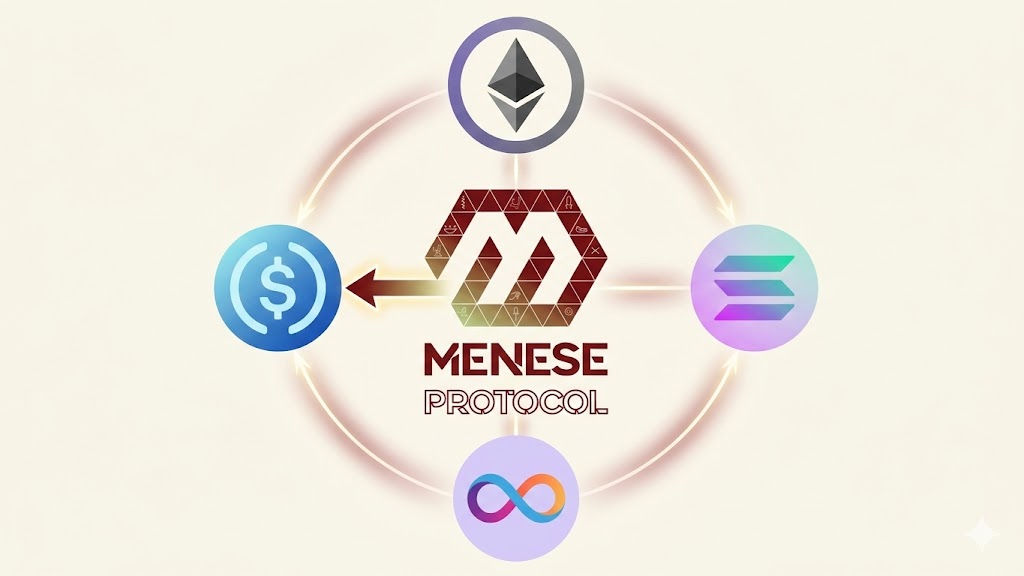
Menese Protocol is moving quickly towards a wider release expected in April, with developers introducing new cross-chain capabilities and automation tools designed to connect multiple blockchain networks.
The team says the upcoming rollout will focus on faster performance and tools that allow users and developers to operate across chains without switching between platforms. Planned features include cross-chain swaps and liquidity pools, customised wallets, multichain token launchers, and launchpads designed to support projects deploying assets on several blockchains at once.
At the centre of the system is what the developers call Chain Key Master Contracts. These are intended to maintain stable supply and coordinate the movement of messages and assets between networks. The goal is to simplify how decentralised applications interact with multiple chains, a process that currently requires separate infrastructure for each network.
Some features are already starting to appear. The team confirmed that Ethereum to USDC cross-chain swaps have gone live and are currently being stress tested. Community testers are working with the developers to identify edge cases and performance issues before the broader launch.
The developers say the testing phase is important because cross-chain infrastructure carries technical risks. Asset transfers between networks can expose systems to vulnerabilities if messaging layers or bridge mechanisms fail. By opening early functionality to community testing, the project hopes to address these issues before more users begin relying on the system.
Further integrations are moving quickly. According to the project’s latest update, swaps involving Internet Computer Protocol tokens and other networks have begun rolling out. ICP to Solana, ICP to Ethereum and ICP to USDC swaps were activated within a short development window, with additional chain connections expected in the coming weeks.
The speed of the rollout reflects growing demand for tools that allow assets to move freely across blockchains. Many decentralised finance platforms remain tied to a single network, which can fragment liquidity and complicate trading strategies. Cross-chain swaps aim to reduce that friction by enabling direct transfers between ecosystems.
Menese Protocol’s developers say their approach is designed to make the process more seamless for users. One example is a feature currently being prepared that allows wallets to hide chains where a user holds no balance. The update is expected within days and is intended to reduce clutter for people managing assets across multiple networks.
The broader roadmap focuses on building automation across chains. The platform aims to allow decentralised applications and AI agents to interact with several blockchains through a single interface, rather than requiring separate integrations for each one.
Supporters of multichain systems argue that this kind of infrastructure will play an important role as the blockchain industry expands. With dozens of networks competing for users and developers, tools that simplify cross-chain interaction could help unify fragmented ecosystems.
Still, the sector remains competitive. Several projects are racing to provide similar services, including cross-chain bridges and interoperability layers. Security remains a major concern, particularly after high-profile bridge exploits in recent years that resulted in large losses.
Menese Protocol’s upcoming April release will likely be watched closely by developers exploring ways to deploy applications across multiple blockchains. For now, the project appears to be focusing on testing, community feedback and incremental rollouts before opening the platform to wider use.
Dear Reader,
Ledger Life is an independent platform dedicated to covering the Internet Computer (ICP) ecosystem and beyond. We focus on real stories, builder updates, project launches, and the quiet innovations that often get missed.
We’re not backed by sponsors. We rely on readers like you.
If you find value in what we publish—whether it’s deep dives into dApps, explainers on decentralised tech, or just keeping track of what’s moving in Web3—please consider making a donation. It helps us cover costs, stay consistent, and remain truly independent.
Your support goes a long way.
🧠 ICP Principal: ins6i-d53ug-zxmgh-qvum3-r3pvl-ufcvu-bdyon-ovzdy-d26k3-lgq2v-3qe
🧾 ICP Address: f8deb966878f8b83204b251d5d799e0345ea72b8e62e8cf9da8d8830e1b3b05f
Every contribution helps keep the lights on, the stories flowing, and the crypto clutter out.
Thank you for reading, sharing, and being part of this experiment in decentralised media.
—Team Ledger Life