Musk Predicts AI Could Achieve Digital Human Emulation Within a Year
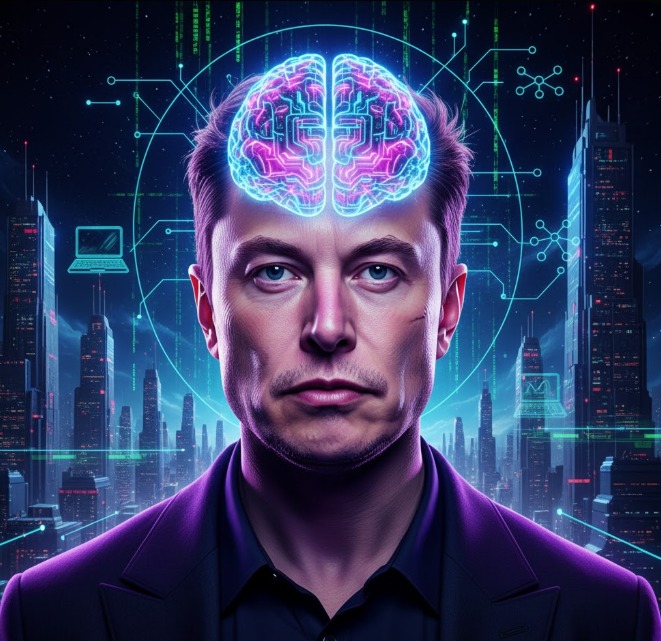
Elon Musk has suggested that artificial intelligence could reach a major turning point by the end of this year, claiming it may be capable of solving what he calls “digital human emulation”.
Speaking about the direction of AI development, Musk described a future where software-based systems could effectively act as “digital remote workers”, able to perform almost any task that involves moving information, processing data, or improving productivity.
The concept points to AI models operating at a level where they can replicate a wide range of knowledge work currently done by humans. That could include writing, analysis, coding, research, design, customer support, and other digital-first roles.
Musk framed this as a kind of ceiling for purely digital labour, arguing that once AI reaches that stage, the next frontier becomes physical automation. In his view, robots represent the step beyond digital emulation, because they bring AI into the real world.
“Once you have physical robots,” Musk said, “the limit is physics itself,” suggesting that the constraints shift from software capability to material and energy limits in the physical environment.
His comments arrive at a time when AI systems are already reshaping workplace expectations. Tools built on large language models are being adopted across industries, and companies are exploring how automation might reduce costs or expand output. Still, many researchers caution that current AI remains far from a complete substitute for human reasoning, particularly in complex or high-stakes settings.
Challenges such as reliability, accountability, and real understanding remain open questions. Even advanced systems can produce errors, struggle with nuance, or require strong oversight.
Musk’s prediction is consistent with his long-standing view that AI progress is accelerating rapidly, though timelines for breakthroughs often vary widely between industry leaders and academic experts.
Whether “digital human emulation” is achievable within months or remains further out, the broader trajectory is clear: AI is moving quickly from experimental tool to a core layer of modern productivity, and the conversation is shifting from possibility to impact.
For businesses, workers, and policymakers, the question may not be whether AI will transform digital labour, but how societies adapt as that transformation gathers speed.