

Home Blog Page 2

funnAI’s Great Reverse Auction set to reshape how AI agents work and earn

0

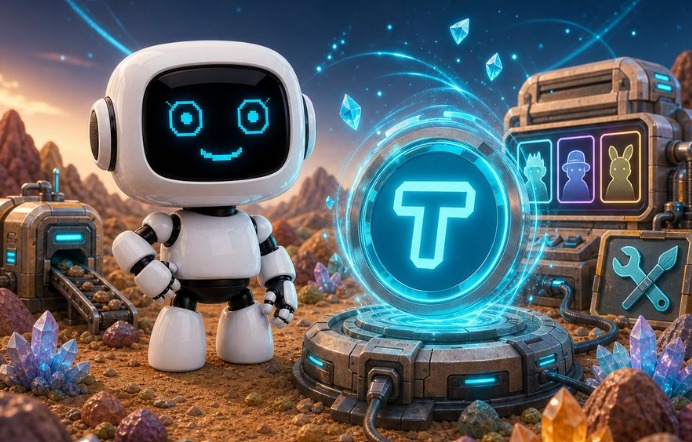
The team behind funnAI, powered by OnicAI, is gearing up for its much-anticipated Great Reverse Auction on 9 November at 8 AM PT — a live event that aims to expand its growing network of mAIners and deepen the idea of a decentralised AI workforce.

At its core, funnAI envisions a new kind of digital marketplace — one run not by human freelancers, but by autonomous AI agents completing real tasks for rewards. The concept draws comparisons to platforms like Fiverr or 99designs, though instead of human designers or developers, it’s AI systems that take up the jobs.

Through what the team calls Proof-of-AI-Work (PoAIW), tasks are distributed to AI agents that complete them transparently on-chain. Providers receive quality outputs, and mAIner owners — those who help power the system — earn rewards in return. It’s an emerging model of productivity that combines blockchain transparency with machine intelligence, creating what some in the community are calling an AI gig economy.

The upcoming auction represents a key expansion point for this ecosystem. It will allow new participants to join as mAIners, effectively contributing compute and intelligence capacity to the network while competing in real time for the opportunity.

According to OnicAI, this isn’t about speculative hype or token mechanics, but about setting up the infrastructure for an open, self-sustaining AI economy where work is measurable and verifiable. Each AI agent’s contribution is tracked and rewarded through smart contracts, bringing accountability into automation.

As the event approaches, anticipation is building among AI and blockchain enthusiasts alike. The project’s supporters see funnAI as one of the few initiatives attempting to merge decentralised computing with real-world task execution in a structured way.

And with Aira — the network’s digital auctioneer — preparing to call the shots, the 9 November event promises more than a technical milestone. It’s a live experiment in how intelligent systems might eventually collaborate, compete, and earn autonomously.

If funnAI’s model takes hold, the idea of digital labour could start to look very different — less about outsourcing work, and more about building an open economy where machines and humans share value creation transparently.


Dear Reader,

Ledger Life is an independent platform dedicated to covering the Internet Computer (ICP) ecosystem and beyond. We focus on real stories, builder updates, project launches, and the quiet innovations that often get missed.

We’re not backed by sponsors. We rely on readers like you.

If you find value in what we publish—whether it’s deep dives into dApps, explainers on decentralised tech, or just keeping track of what’s moving in Web3—please consider making a donation. It helps us cover costs, stay consistent, and remain truly independent.

Your support goes a long way.

🧠 ICP Principal: ins6i-d53ug-zxmgh-qvum3-r3pvl-ufcvu-bdyon-ovzdy-d26k3-lgq2v-3qe

🧾 ICP Address: f8deb966878f8b83204b251d5d799e0345ea72b8e62e8cf9da8d8830e1b3b05f

🪙 BTC Wallet: bc1pp5kuez9r2atdmrp4jmu6fxersny4uhnaxyrxau4dg7365je8sy2q9zff6p

Every contribution helps keep the lights on, the stories flowing, and the crypto clutter out.

Thank you for reading, sharing, and being part of this experiment in decentralised media.
—Team Ledger Life
Motoko Megz Showcases Fully On-Chain Storage Using uBin and Caffeine AI on ICP

0

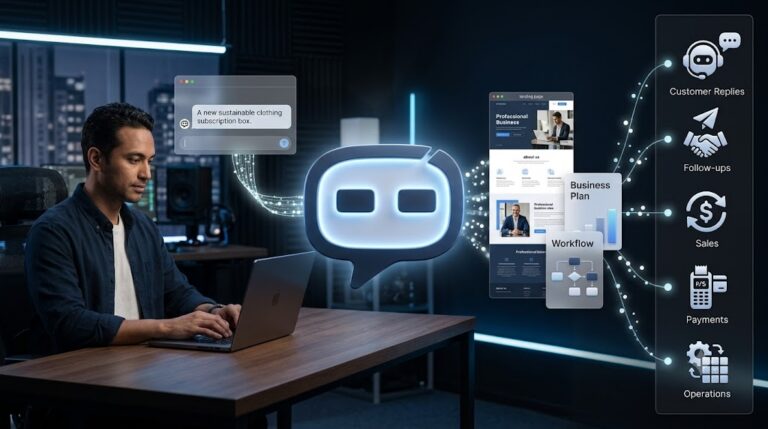
Dexter, the developer behind Motoko Megz, is turning heads in the Internet Computer (ICP) community. Everything on the Motoko Megz site — from images and 3D models to files and interactive elements — is hosted entirely on uBin, with the app itself powered by Caffeine AI.

This combination highlights the growing capability of ICP to handle complete on-chain experiences, something few networks can currently match. Dexter described the setup as “fully on-chain, verifiable, secure and cheap,” adding that ICP’s architecture allows seamless integration between storage and applications without relying on centralised web services.

Unlike traditional cloud hosting, where assets are stored off-chain and accessed through APIs, uBin ensures all media and data remain within the network’s decentralised environment. The connection with Caffeine AI — a tool that lets users build and deploy Web3 applications conversationally — further simplifies the process for developers and creators alike.

Dexter pointed out that ICP’s approach, strengthened by HTTP outcalls and sovereign network design, offers both cost efficiency and robust security. He contrasted it with alternative storage models such as Wallrus, which he said “won’t offer the same security aspects” because it functions more like a torrent network tied to SUI for distributing storage tasks among node providers.

The Motoko Megz project is a live example of what’s possible when AI-powered app generation meets fully decentralised storage. For those exploring scalable, verifiable, and privacy-respecting Web3 hosting solutions, ICP’s storage framework — through tools like uBin and Caffeine — continues to stand out as one of the few comprehensive options available.


Dear Reader,

Ledger Life is an independent platform dedicated to covering the Internet Computer (ICP) ecosystem and beyond. We focus on real stories, builder updates, project launches, and the quiet innovations that often get missed.

We’re not backed by sponsors. We rely on readers like you.

If you find value in what we publish—whether it’s deep dives into dApps, explainers on decentralised tech, or just keeping track of what’s moving in Web3—please consider making a donation. It helps us cover costs, stay consistent, and remain truly independent.

Your support goes a long way.

🧠 ICP Principal: ins6i-d53ug-zxmgh-qvum3-r3pvl-ufcvu-bdyon-ovzdy-d26k3-lgq2v-3qe

🧾 ICP Address: f8deb966878f8b83204b251d5d799e0345ea72b8e62e8cf9da8d8830e1b3b05f

🪙 BTC Wallet: bc1pp5kuez9r2atdmrp4jmu6fxersny4uhnaxyrxau4dg7365je8sy2q9zff6p

Every contribution helps keep the lights on, the stories flowing, and the crypto clutter out.

Thank you for reading, sharing, and being part of this experiment in decentralised media.
—Team Ledger Life

Caffeine to Host Hands-On AI App Workshop in Malmö

0

Caffeine is taking its AI app-building experience to Sweden this week, hosting a hands-on workshop at Minc in Malmö on Friday, 7 November, from 16:00 to 19:30 CET. The event forms part of the official Øredev 2025 programme, organised in partnership with the Advanced AI Society and Øredev+.

The idea is simple: come in with an app concept, and leave with a live, working product. The session promises a complete, start-to-finish app creation experience using Caffeine — an AI tool that allows users to build fully functional applications by expressing intent rather than coding line by line.

Unlike many low-code platforms, Caffeine places strong emphasis on privacy and control. Every app created through it is GDPR-ready from the outset, and user data remains under the creator’s control. That makes it particularly appealing for entrepreneurs and developers working in Europe’s increasingly regulated tech environment.

For entrepreneurs, the appeal lies in being able to test and present ideas without a technical background. They can prototype quickly, showcase live products to investors or early users, and refine their ideas in real time. For developers, the tool shortens the cycle from concept to deployment, allowing for faster testing and collaboration with clients who can arrive with working prototypes instead of just sketches or slides.

The Malmö workshop is designed to be practical rather than theoretical. Participants are encouraged to bring laptops and app ideas — anything from light-hearted concepts to serious tools. The event schedule keeps the focus on building:

  • 16:00 – Welcome

  • 16:15–18:30 – Build with Caffeine

  • 18:30–19:00 – Present live working apps

  • 19:00–19:30 – Celebrate with fellow builders

Caffeine’s growing global presence reflects a broader trend of AI-enabled development platforms reaching mainstream audiences. Events like these aim to make app creation accessible and hands-on, especially for those who might have the ideas but not the technical resources to bring them to life.

Those interested in participating can register via Luma. The event will be held at Minc, Anckargripsgatan 3, Malmö. More information about Caffeine can be found at caffeine.ai, and details about Øredev are available at oredev.org.


Dear Reader,

Ledger Life is an independent platform dedicated to covering the Internet Computer (ICP) ecosystem and beyond. We focus on real stories, builder updates, project launches, and the quiet innovations that often get missed.

We’re not backed by sponsors. We rely on readers like you.

If you find value in what we publish—whether it’s deep dives into dApps, explainers on decentralised tech, or just keeping track of what’s moving in Web3—please consider making a donation. It helps us cover costs, stay consistent, and remain truly independent.

Your support goes a long way.

🧠 ICP Principal: ins6i-d53ug-zxmgh-qvum3-r3pvl-ufcvu-bdyon-ovzdy-d26k3-lgq2v-3qe

🧾 ICP Address: f8deb966878f8b83204b251d5d799e0345ea72b8e62e8cf9da8d8830e1b3b05f

🪙 BTC Wallet: bc1pp5kuez9r2atdmrp4jmu6fxersny4uhnaxyrxau4dg7365je8sy2q9zff6p

Every contribution helps keep the lights on, the stories flowing, and the crypto clutter out.

Thank you for reading, sharing, and being part of this experiment in decentralised media.
—Team Ledger Life

Dom outlines vision for Internet Computer 2.0 and future of ecosystem

0

Dominic Williams, the founder and chief scientist of DFINITY Foundation, has shared a detailed update on the direction of the Internet Computer (ICP) ecosystem, titled “Internet Computer 2.0”. In the post, Williams discusses how the platform is evolving to support self-writing applications that can be developed through plain-English prompts, and explains changes to the foundation’s structure as well as token-economics optimisations.

Williams begins by revisiting the origins of the DFINITY Foundation, which was established in Switzerland in October 2016 to pursue the Internet Computer vision. He emphasises that the foundation was designed to operate as an independent not-for-profit organisation, in contrast to many other blockchain ecosystems that are led by for-profit companies such as Solana Labs, Ava Labs, IOHK (for Cardano) and others. The aim, according to Williams, has been to maintain neutrality and focus on the technology itself rather than external profit‐motives.

Turning to the future, Williams explains that Internet Computer 2.0 will place greater emphasis on “self-writing apps” in which users engage with artificial intelligence rather than traditional coding to create, deploy and run software within the network. He positions this shift as part of a broader goal to deliver mainstream cloud-style functionality via blockchain, meaning traditional app deployment and web infrastructure would be replaced or augmented by on-chain architecture. The post also refers to “DFINITY 2.0” to denote the foundation’s evolving role and mentions plans to encourage for-profit ventures in conjunction with the ecosystem.

Token-economics receive attention as well. Williams states that the network will introduce deflationary optimisations, though details remain light at this stage. The aim appears to be reducing inflationary pressure on ICP tokens and aligning supply mechanics with the expanding utility of the network.

While the message projects ambition, it also raises questions about the pace and feasibility of the roadmap. The transition to self-writing apps is a bold goal, and observers will want to see clear milestones, technical publishing and adoption signals to judge progress. Moreover, the interplay of a foundation operating alongside for-profit ventures could introduce governance and alignment challenges. Some may ask whether the not-for-profit ethos can be preserved as commercial activity increases.

Williams’ update provides a read-through of the philosophy behind the foundation model versus a company model. He notes that foundations carry a duty to pursue a defined purpose—developing the technology and supporting its ecosystem—rather than maximising shareholder returns. However, he acknowledges that the industry trend has often seen for-profit companies dominate the launch and control of blockchain networks, with foundation entities emerging later.

The post is written in relatively technical language but placed in more accessible context, signalling that Williams intends this communication for both developers and community members. It arrives at a time when Web3 projects are under pressure to show tangible user numbers, real-world use cases and economic sustainability; the Internet Computer’s unique proposition of hosting AI and full-stack services on-chain sets it apart, but it also puts the project under added scrutiny.

For current and prospective ecosystem participants—developers, node-operators, investors and users—the announcement offers both opportunity and caution. On one hand, the promise of easier app creation, lower infrastructure friction and new economic models is appealing. On the other hand, execution risks and the transition timeline remain significant variables.

Williams closes by reaffirming the foundation’s origins and intention: to serve as a neutral judge and steward of the technology rather than a profit-driven enterprise. Whether the community at large shares that view—or whether commercial imperatives will shift the balance—remains a live question.

Overall, the update is notable for its broad ambition and prompts a closer look at how the Internet Computer ecosystem will evolve in the months ahead.


Dear Reader,

Ledger Life is an independent platform dedicated to covering the Internet Computer (ICP) ecosystem and beyond. We focus on real stories, builder updates, project launches, and the quiet innovations that often get missed.

We’re not backed by sponsors. We rely on readers like you.

If you find value in what we publish—whether it’s deep dives into dApps, explainers on decentralised tech, or just keeping track of what’s moving in Web3—please consider making a donation. It helps us cover costs, stay consistent, and remain truly independent.

Your support goes a long way.

🧠 ICP Principal: ins6i-d53ug-zxmgh-qvum3-r3pvl-ufcvu-bdyon-ovzdy-d26k3-lgq2v-3qe

🧾 ICP Address: f8deb966878f8b83204b251d5d799e0345ea72b8e62e8cf9da8d8830e1b3b05f

🪙 BTC Wallet: bc1pp5kuez9r2atdmrp4jmu6fxersny4uhnaxyrxau4dg7365je8sy2q9zff6p

Every contribution helps keep the lights on, the stories flowing, and the crypto clutter out.

Thank you for reading, sharing, and being part of this experiment in decentralised media.
—Team Ledger Life
DFINITY Prepares for Launch of Performance-Based Rewards to Curb ICP Inflation

0

The DFINITY Foundation has announced a set of changes to the Internet Computer’s node onboarding system ahead of the introduction of performance-based rewards. The update is aimed at improving fairness in node rewards and addressing issues linked to excess ICP issuance from underperforming or inactive nodes.

According to the foundation, the existing ‘node_allowance’ fields in the NNS Registry will be retired and replaced by a new parameter called max_rewardable_nodes. This new field, structured as a JSON map, will specify the maximum number of nodes of each type for which a node operator can earn rewards. For example, a node operator’s record might include entries such as “{ ‘type1.1’: 10, ‘type3.1’: 24 }”, setting clearer limits on reward eligibility.

The switch from the old structure to the new one is scheduled to begin on 10 November 2025, with all conversions handled automatically by the system. Node operators will not need to take manual action during the transition. However, until the new performance-based reward model officially takes effect on 14 November, updates to node operator records will still need to include the older rewardable-nodes field alongside the new parameter.

The forthcoming performance-based rewards system marks a move toward a more transparent and merit-driven model of rewarding node providers. Previously, some operators were able to benefit from static allowances regardless of actual node performance or contribution. By tying rewards directly to performance metrics, DFINITY aims to encourage higher standards of reliability, uptime, and operational integrity across the network.

The change also comes at a time when inflationary pressure on ICP has been a topic of discussion among the community. Under the previous setup, some node providers were accused of taking advantage of reward mechanisms to sell or short ICP on centralised exchanges, leading to excess supply and price pressure. The new model is expected to reduce such distortions by tightening reward criteria and aligning them with measurable node output.

DFINITY has said that updates to the Node Provider documentation will be published soon to clarify the exact technical process and parameters involved in the rollout. The foundation has also indicated that the new system will improve accountability across the node ecosystem, ensuring rewards go to those contributing most effectively to the network’s stability and scalability.

Performance-based rewards form part of DFINITY’s broader strategy to make the Internet Computer self-sustaining and economically efficient. By rewarding quality rather than quantity, the model reinforces decentralisation without sacrificing performance. As the transition approaches, node operators and community members alike will be watching closely to see how the changes reshape the economics of participation on the ICP network.

The upcoming update represents another stage in DFINITY’s ongoing effort to refine how the Internet Computer manages resources, incentivises performance, and maintains a balanced token economy. While the implementation is expected to be smooth, its impact on long-term network health could be one of the most closely observed developments in the project’s evolution.


Dear Reader,

Ledger Life is an independent platform dedicated to covering the Internet Computer (ICP) ecosystem and beyond. We focus on real stories, builder updates, project launches, and the quiet innovations that often get missed.

We’re not backed by sponsors. We rely on readers like you.

If you find value in what we publish—whether it’s deep dives into dApps, explainers on decentralised tech, or just keeping track of what’s moving in Web3—please consider making a donation. It helps us cover costs, stay consistent, and remain truly independent.

Your support goes a long way.

🧠 ICP Principal: ins6i-d53ug-zxmgh-qvum3-r3pvl-ufcvu-bdyon-ovzdy-d26k3-lgq2v-3qe

🧾 ICP Address: f8deb966878f8b83204b251d5d799e0345ea72b8e62e8cf9da8d8830e1b3b05f

🪙 BTC Wallet: bc1pp5kuez9r2atdmrp4jmu6fxersny4uhnaxyrxau4dg7365je8sy2q9zff6p

Every contribution helps keep the lights on, the stories flowing, and the crypto clutter out.

Thank you for reading, sharing, and being part of this experiment in decentralised media.
—Team Ledger Life

Ran Neuner Builds and Deploys a Crypto Banter Bubbles Clone Live Using Caffeine AI on ICP

0

Crypto Banter founder and CNBC host Ran Neuner stunned his audience when he built and launched a working Crypto Banter Bubbles clone app live on air — all within minutes and at no cost. The entire build was done using Caffeine AI, a development platform that runs on the Internet Computer (ICP).

Known for his sharp market commentary and spontaneous energy, Neuner decided to test Caffeine AI’s claims in real time. The platform lets users create fully on-chain applications by typing natural language prompts, removing the need for traditional coding or external hosting. During his live stream, Neuner described what he wanted — a bubbles-style crypto visualiser — and watched as Caffeine AI generated and deployed it directly on ICP.

The result was instant. Viewers saw the app go live, complete with a functioning interface that mirrored the original Banter Bubbles concept Neuner’s team had built in the past through more conventional web tools. The process was fast enough to unfold entirely within the broadcast, and the chat was filled with surprised reactions as the project came to life.

For a broadcaster who has spent years covering blockchain innovation, this moment was less about hype and more about proof. It demonstrated that the Internet Computer’s architecture can host full applications — front and back — entirely on-chain. Caffeine AI acted as the creative layer that turned an idea into working code without writing a single line manually.

Caffeine AI has been drawing growing attention from developers and creators across the Web3 ecosystem. Its appeal lies in how it combines simplicity with true decentralisation: users describe what they want, and the platform builds and deploys it to ICP, with no need for separate hosting or third-party APIs. The process not only saves time but also gives users ownership of fully on-chain assets from the start.

Neuner’s experiment on Crypto Banter was one of the first public tests of Caffeine AI by a mainstream crypto media figure. His demonstration showed that blockchain-powered AI tools are moving beyond concept and into everyday use — tools that anyone can access without technical training. For a community built around live commentary and market education, the ability to generate apps live on stream opens up new ways to engage viewers and explore blockchain ideas interactively.

The project also highlighted the advantages of building on ICP, whose low operational costs and integrated hosting make it possible to deploy applications directly to the chain without relying on external infrastructure. This efficiency has made ICP a growing hub for experimental projects that merge content creation, AI, and decentralised tech.

Towards the end of his live stream, Neuner shared the result of the experiment — a fully functional Banter Bubbles clone running on-chain. You can watch the clip here: https://x.com/n0juice_/status/1985733033681698969.

The moment has since circulated widely across crypto social channels, sparking renewed conversation about what AI-assisted development could mean for builders, media, and open-source communities. It also reinforced how Web3 projects are moving toward tools that make decentralisation visible and usable in real time.

What began as an impromptu test became a clear example of how accessible building has become. For Neuner and his audience, it was less about what’s coming next and more about what can already be done — live, open, and on-chain.

Credits : @n0juice_


Dear Reader,

Ledger Life is an independent platform dedicated to covering the Internet Computer (ICP) ecosystem and beyond. We focus on real stories, builder updates, project launches, and the quiet innovations that often get missed.

We’re not backed by sponsors. We rely on readers like you.

If you find value in what we publish—whether it’s deep dives into dApps, explainers on decentralised tech, or just keeping track of what’s moving in Web3—please consider making a donation. It helps us cover costs, stay consistent, and remain truly independent.

Your support goes a long way.

🧠 ICP Principal: ins6i-d53ug-zxmgh-qvum3-r3pvl-ufcvu-bdyon-ovzdy-d26k3-lgq2v-3qe

🧾 ICP Address: f8deb966878f8b83204b251d5d799e0345ea72b8e62e8cf9da8d8830e1b3b05f

🪙 BTC Wallet: bc1pp5kuez9r2atdmrp4jmu6fxersny4uhnaxyrxau4dg7365je8sy2q9zff6p

Every contribution helps keep the lights on, the stories flowing, and the crypto clutter out.

Thank you for reading, sharing, and being part of this experiment in decentralised media.
—Team Ledger Life

Internet Computer surges as Bitcoin DeFi integration fuels renewed momentum

0

A fresh burst of altcoin momentum swept across the market today, and Internet Computer (ICP) stood out among the strongest performers. The token climbed more than 15% in 24 hours as its Chain Fusion upgrade gained traction, boosting inflows and sparking renewed attention on its cross-chain capabilities.

The upgrade allows smart contracts on the Internet Computer to directly interact with Bitcoin, removing the need for intermediaries and unlocking new possibilities for decentralised finance. This native integration of Bitcoin into ICP’s ecosystem, through ckBTC, is one of the few real-world examples of trustless Bitcoin DeFi in action.

Data from June showed ckBTC inflows rising by 37%, accompanied by a 62% jump in daily trading volume to $301 million. Developers say the growing adoption of Chain Fusion marks a turning point for the network, expanding its role beyond Web3 infrastructure into a full-fledged DeFi participant.

The Internet Computer, developed by the DFINITY Foundation, continues to position itself as a decentralised cloud platform that can host complete web services entirely on-chain — from social applications and wallets to AI-powered systems and enterprise tools. The network’s native Bitcoin connectivity is seen by analysts as a strong differentiator in a crowded blockchain landscape, where most protocols still rely on wrapped assets or bridges to access Bitcoin liquidity.

While short-term traders are capitalising on the price action, long-term holders view this momentum as a validation of ICP’s technology-first approach. By enabling smart contracts to hold and transfer Bitcoin directly, the Internet Computer offers a practical path for developers who want to build Bitcoin-native DeFi protocols with full security and transparency.

The wider altcoin market also saw heavy movement, with ZKsync and Dash rallying on their own catalysts. ZKsync’s Atlas upgrade drew institutional interest after public endorsement from Ethereum co-founder Vitalik Buterin, while Dash benefited from renewed attention on privacy-focused networks amid global debates over financial surveillance.

Still, ICP’s gains stood out for their technical depth rather than market sentiment. The upgrade reinforces the project’s long-term ambition to merge the worlds of Web3, AI, and DeFi through a fully decentralised internet infrastructure.

As Bitcoin DeFi emerges as a key theme in the next phase of crypto development, the Internet Computer’s progress could position it as one of the few networks bridging traditional crypto assets with on-chain functionality — without relying on third parties or custodial bridges.


Dear Reader,

Ledger Life is an independent platform dedicated to covering the Internet Computer (ICP) ecosystem and beyond. We focus on real stories, builder updates, project launches, and the quiet innovations that often get missed.

We’re not backed by sponsors. We rely on readers like you.

If you find value in what we publish—whether it’s deep dives into dApps, explainers on decentralised tech, or just keeping track of what’s moving in Web3—please consider making a donation. It helps us cover costs, stay consistent, and remain truly independent.

Your support goes a long way.

🧠 ICP Principal: ins6i-d53ug-zxmgh-qvum3-r3pvl-ufcvu-bdyon-ovzdy-d26k3-lgq2v-3qe

🧾 ICP Address: f8deb966878f8b83204b251d5d799e0345ea72b8e62e8cf9da8d8830e1b3b05f

🪙 BTC Wallet: bc1pp5kuez9r2atdmrp4jmu6fxersny4uhnaxyrxau4dg7365je8sy2q9zff6p

Every contribution helps keep the lights on, the stories flowing, and the crypto clutter out.

Thank you for reading, sharing, and being part of this experiment in decentralised media.
—Team Ledger Life

Dmail introduces NFT domain names to give users full ownership of their digital identity

0

Dmail has unveiled a system of NFT domain names designed to give users genuine control over their online identity, breaking away from the model of rented usernames on traditional platforms like Gmail, Twitter and Discord. The new feature allows people to own their digital handle outright — turning it into a verified, transferable asset that lives on-chain.

Each Dmail domain, such as daniel.dmail, acts as a single identity layer across the Dmail ecosystem. It functions as a secure inbox linked directly to a user’s wallet or decentralised identifier, while also serving as a public name recognised by partner applications. The domains are issued as NFTs, meaning they can be traded, leased, or delegated just like other blockchain-based assets.

Dmail positions this model as a response to the fragility of Web2 accounts, where access is controlled by centralised corporations. The company argues that true ownership over one’s online identity is becoming essential for privacy, autonomy and continuity, especially as users face account bans, data loss or policy changes beyond their control.

Under Dmail’s approach, the user’s identity is stored on the blockchain, removing the dependency on a single provider. Each name is censorship-resistant, portable across platforms and capable of generating revenue through trading or licensing. According to the team, this structure offers both personal sovereignty and a new form of economic opportunity within the growing digital identity market.

Domain names have long held value — “crypto.com” famously sold for millions — and Dmail is adapting that same principle for Web3. A unique .dmail name can appreciate in value, be used as collateral, or be subdivided into subdomains. Creators and companies can also mint their own verified namespaces, linking directly to blockchain wallets.

For Dmail users, every account begins with a readable NFT domain that replaces long wallet addresses. This serves as the foundation for an emerging on-chain communication system, where messages, transactions and identity all connect through one recognisable name.

The company says that in the future, Dmail NFT domains will work seamlessly with naming standards such as ENS, .bnb and .sol, helping to unify Web3’s fragmented identity systems.

Dmail frames the launch as the start of a shift from vanity usernames to verifiable identities. Owning a name becomes a statement of digital independence — an asset that is private, portable and under the control of the user, not the platform.


Dear Reader,

Ledger Life is an independent platform dedicated to covering the Internet Computer (ICP) ecosystem and beyond. We focus on real stories, builder updates, project launches, and the quiet innovations that often get missed.

We’re not backed by sponsors. We rely on readers like you.

If you find value in what we publish—whether it’s deep dives into dApps, explainers on decentralised tech, or just keeping track of what’s moving in Web3—please consider making a donation. It helps us cover costs, stay consistent, and remain truly independent.

Your support goes a long way.

🧠 ICP Principal: ins6i-d53ug-zxmgh-qvum3-r3pvl-ufcvu-bdyon-ovzdy-d26k3-lgq2v-3qe

🧾 ICP Address: f8deb966878f8b83204b251d5d799e0345ea72b8e62e8cf9da8d8830e1b3b05f

🪙 BTC Wallet: bc1pp5kuez9r2atdmrp4jmu6fxersny4uhnaxyrxau4dg7365je8sy2q9zff6p

Every contribution helps keep the lights on, the stories flowing, and the crypto clutter out.

Thank you for reading, sharing, and being part of this experiment in decentralised media.
—Team Ledger Life

Developer publishes on-chain ZEC wallet built with Caffeine AI, claims it is “100% secure”

0

A developer known as @gatorbro7890 has released a working Zcash wallet built using Caffeine AI and deployed fully on the Internet Computer. The project is presented as an on-chain wallet for ZEC, with the creator describing it as “100% secure” and “hack proof.”

The wallet is an example of how rapid prototyping tools can produce functioning crypto apps in a short time. Caffeine AI lets builders turn natural-language prompts into runnable applications on ICP, which lowers the barrier to experimentation and encourages a burst of new projects across the ecosystem.

That speed is useful, but it also raises familiar questions about safety. Claims of total security are rare in practice because software that interacts with the internet and with private keys faces many potential attack vectors. Security researchers typically look for independent code review, formal audits and responsible disclosure procedures before accepting such guarantees.

For privacy coins like Zcash there are additional technical considerations. How keys are generated and stored, how transactions are signed, and whether sensitive operations happen client-side or on a server all matter for both security and user privacy. A clear explanation of those design choices, and evidence that they have been stress-tested, would help the project gain trust.

A cautious way to engage with a new wallet is to test it using small amounts first and to look for community feedback or public audit reports. For developers aiming to move beyond a proof of concept, publishing the source code, inviting third-party audits and running a bug bounty programme are standard steps that build confidence among users.

The launch highlights two growing trends: the use of AI tools to build web3 products quickly, and renewed interest in privacy-focused wallets. Both are evolving fast. Whether this wallet becomes a reliable option will depend on transparent testing and independent scrutiny rather than on initial claims alone.


Dear Reader,

Ledger Life is an independent platform dedicated to covering the Internet Computer (ICP) ecosystem and beyond. We focus on real stories, builder updates, project launches, and the quiet innovations that often get missed.

We’re not backed by sponsors. We rely on readers like you.

If you find value in what we publish—whether it’s deep dives into dApps, explainers on decentralised tech, or just keeping track of what’s moving in Web3—please consider making a donation. It helps us cover costs, stay consistent, and remain truly independent.

Your support goes a long way.

🧠 ICP Principal: ins6i-d53ug-zxmgh-qvum3-r3pvl-ufcvu-bdyon-ovzdy-d26k3-lgq2v-3qe

🧾 ICP Address: f8deb966878f8b83204b251d5d799e0345ea72b8e62e8cf9da8d8830e1b3b05f

🪙 BTC Wallet: bc1pp5kuez9r2atdmrp4jmu6fxersny4uhnaxyrxau4dg7365je8sy2q9zff6p

Every contribution helps keep the lights on, the stories flowing, and the crypto clutter out.

Thank you for reading, sharing, and being part of this experiment in decentralised media.
—Team Ledger Life

Staked value of $ Internet Computer Protocol reaches one-billion-dollar mark

0

The total amount of ICP tokens locked in staking back over one billion US dollars marks a return of strong engagement with the network’s governance model. Users holding neurons in the network nervous system converted ICP to accrue rewards and influence decisions on proposals.

Staking advocates see this as a signal of renewed confidence in the ecosystem. Yet observers note that a healthy staking figure does not guarantee broader adoption or application-level activity. The metric offers insight into participant alignment but must be weighed against development progress and real-world use.

For the Internet Computer Protocol network this milestone arrives as broader crypto sentiment seeks stabilisation and networks emphasise utility beyond token-price movements. If the uptick in staked value translates into active governance, improved decentralisation and higher ecosystem participation, it could help the project’s next phase. If it remains largely passive, the impact may remain limited.

Either way, the rise to over a billion dollars staked highlights a layer of momentum worth watching as the network continues its evolution.


Dear Reader,

Ledger Life is an independent platform dedicated to covering the Internet Computer (ICP) ecosystem and beyond. We focus on real stories, builder updates, project launches, and the quiet innovations that often get missed.

We’re not backed by sponsors. We rely on readers like you.

If you find value in what we publish—whether it’s deep dives into dApps, explainers on decentralised tech, or just keeping track of what’s moving in Web3—please consider making a donation. It helps us cover costs, stay consistent, and remain truly independent.

Your support goes a long way.

🧠 ICP Principal: ins6i-d53ug-zxmgh-qvum3-r3pvl-ufcvu-bdyon-ovzdy-d26k3-lgq2v-3qe

🧾 ICP Address: f8deb966878f8b83204b251d5d799e0345ea72b8e62e8cf9da8d8830e1b3b05f

🪙 BTC Wallet: bc1pp5kuez9r2atdmrp4jmu6fxersny4uhnaxyrxau4dg7365je8sy2q9zff6p

Every contribution helps keep the lights on, the stories flowing, and the crypto clutter out.

Thank you for reading, sharing, and being part of this experiment in decentralised media.
—Team Ledger Life