Nvidia Highlights Inference-Focused AI Hardware as Industry Rethinks GPU Strategy
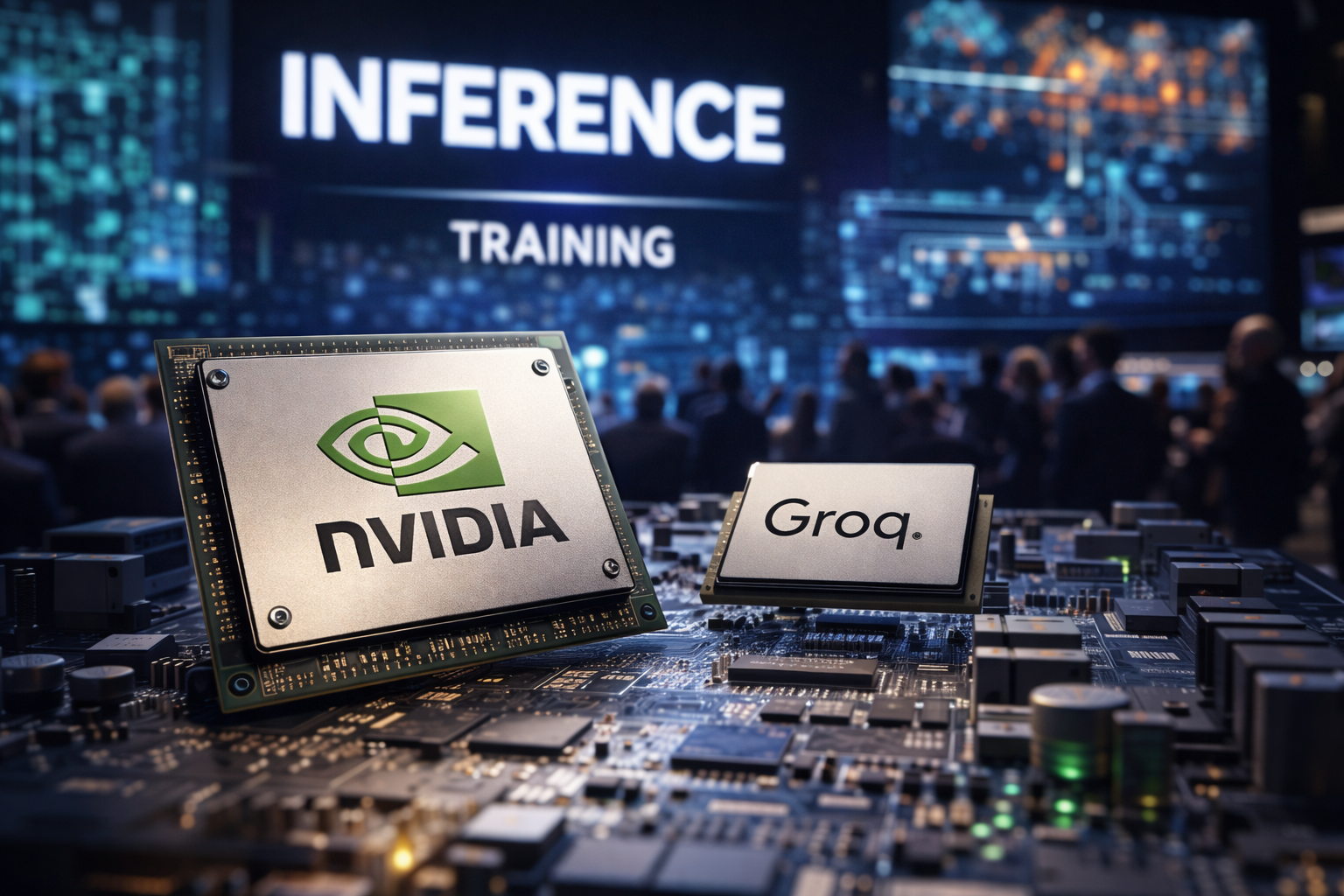
Nvidia is preparing to present new developments in what some observers describe as inference focused artificial intelligence hardware during the upcoming Nvidia GTC conference.
The announcement is expected to build on work related to inference optimisation and specialised computing chips designed for running trained models rather than training them from scratch. Analysts following the sector say the direction reflects a growing shift in how artificial intelligence systems are being deployed.
For years, the AI race has been dominated by large scale training runs carried out on graphics processing units, widely known as GPUs. These chips have powered the rapid expansion of large language models and other machine learning systems. Companies and cloud providers have invested heavily in data centres built around this type of hardware.
However, some researchers and engineers believe the next phase of AI development may place more emphasis on inference. Inference refers to the process where trained models generate responses, analyse information or perform tasks for users. It is the stage where AI systems are actively used rather than trained.
Supporters of the inference focused approach argue that this phase could become central to the way models continue improving. One reason often cited is the growing scarcity of new high quality training data available on the internet. Much of the easily accessible text, code and media has already been incorporated into training datasets.
To address this limitation, developers are experimenting with systems that generate new knowledge through structured reasoning processes. Techniques such as chain of thought reasoning are being explored within so called agentic frameworks. These systems allow AI agents to perform research tasks, test assumptions and evaluate conclusions through iterative reasoning.
Within such frameworks, models could produce new insights or synthetic knowledge that may later be used as additional training data. Advocates say these methods may help extend the capabilities of large language models by producing material that expands what the models know and how they reason.
This approach requires extensive inference computing power. Each reasoning process can involve multiple stages of model output, verification and refinement before reaching a final result. The volume of computation involved may be large, particularly when systems run continuously to generate research level insights.
That computing demand has prompted discussion about specialised hardware built specifically for inference tasks. These chips are often referred to as application specific integrated circuits, or ASICs. Unlike general purpose GPUs, ASICs can be designed to perform a smaller set of operations with high efficiency.
Supporters of inference focused chips argue they may deliver far faster response times and lower energy usage for tasks such as chat based interaction or code generation. In scenarios where latency matters, faster inference speeds can make AI systems more responsive for users.
Competition in this area is already emerging. Companies such as Cerebras Systems have developed unusually large processors designed to accelerate machine learning workloads. Cerebras chips are notable for their wafer scale design, which spreads computing components across a surface roughly the size of a dinner plate.
Meanwhile, specialised inference processors have also been associated with technology developed by Groq, whose hardware architecture focuses heavily on deterministic performance and fast execution of neural network workloads.
Industry observers say the balance between training and inference hardware could shape how AI infrastructure evolves over the next decade. Many technology firms have built data centres around GPU clusters intended to support large scale training runs. If inference workloads grow faster than expected, some of those investments may need to adapt to new computing patterns.
Developers working with agent based systems say recent experiments suggest that AI models can already perform limited forms of autonomous research. These systems can gather information, test hypotheses and generate written analysis across multiple steps.
Scaling those capabilities into large automated knowledge generation systems remains a technical challenge. Researchers still face issues related to reliability, model hallucination and validation of generated results. Ensuring that machine produced insights are accurate enough to be used as training material is an area of ongoing work.
Even so, interest in agentic frameworks has grown across technology companies and research labs. Many engineers believe such systems may eventually allow AI models to produce new data that feeds back into future training cycles.
If that approach gains traction, the computing infrastructure required to support it could look different from today’s model training environment. Continuous inference workloads would demand hardware optimised for speed, efficiency and predictable performance.
With Nvidia preparing new announcements at GTC, attention across the industry is turning toward how major chip designers plan to respond to these emerging requirements. Whether inference dedicated processors become widely adopted will likely depend on how quickly AI systems move toward large scale automated reasoning and data generation.