Retro games, image sliders and Reddit clones: Day 6 of Caffeine AI pushes boundaries
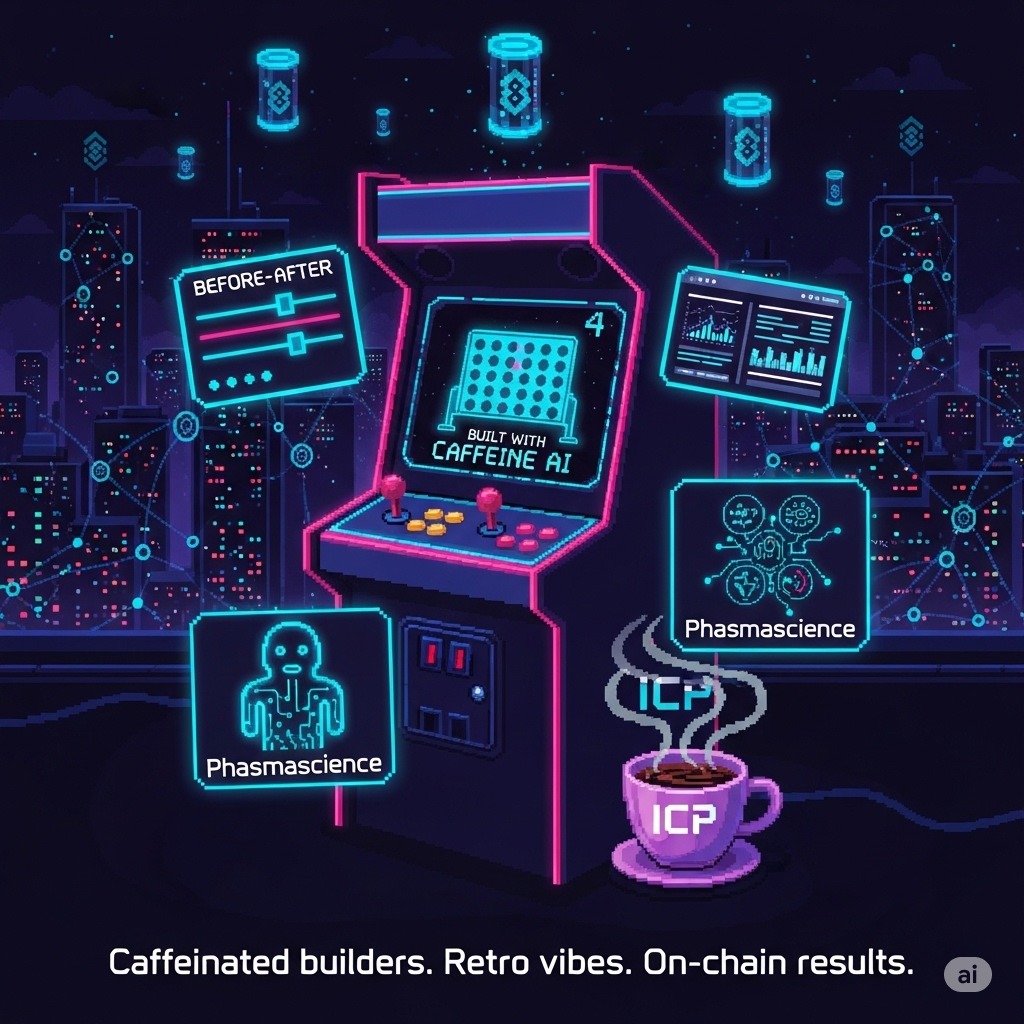
Things are moving fast on the Caffeine AI front. Just six days since launch, developers are spinning up projects at an accelerating pace, ranging from quick experiments to surprisingly polished tools. From retro-style arcade games to dashboards and AI-powered sliders, the outputs speak for themselves.
Take Danz, for example. He posted a short update on X showing off a Connect Four-style game he built using just one prompt on Caffeine AI. But he didn’t stop at the basics. The result is a reimagined version styled like an 80s arcade cabinet, complete with pixelated graphics and classic vibes. He then pushed it directly to its own canister on the Internet Computer blockchain. All this was done in a matter of minutes, and he made it clear the real motivation was just to “test it out for fun”.
This playful approach is becoming a hallmark of how people are using Caffeine. The barrier to entry is so low that anyone with an idea can try something out without needing to line up developers or wrestle with hosting. For many, the real delight comes not from shipping full products but from seeing how fast an idea can go from sentence to screen.
That said, not everything is a toy. Prabhat Chhirolya unveiled what he says is his first proper project using Caffeine AI, and it’s built to solve a practical problem. Called ReVizIt, the tool helps users transform any image into a side-by-side “Before and After” slider. It’s designed to help designers, marketers and creators quickly highlight visual improvements or changes. The app lets users export results into PowerPoint, embed on a website, share links directly, and even manage everything from a clean dashboard.
Prabhat was quick to clarify that it’s not a mock-up or placeholder. The app works, and it’s live. He built the first version using Caffeine and added that it took just a few clicks to get things going. It’s another early signal that this tool is finding a sweet spot among those who want fast, no-fuss results.
Meanwhile, Quantum Leaps Labs took a different approach. Instead of showcasing a visual app, they used Caffeine to build a stack of features that combine community and performance metrics. In one go, they created a user dashboard, a leaderboard, and a Reddit-style forum—all without writing code manually.
They described it as a “self-writing internet”, and while that’s a bold phrase, it fits the tone of the week. The energy around Caffeine isn’t just about building. It’s about building fast, often with a layer of creative chaos. Quantum Leaps say they’re now turning this into a freelancer platform, one that’s gamified and open. “Gatekeeping is over,” they said in a follow-up.
Then there’s Phasmascience, a quirky new project positioning itself as “the first app built with Caffeine AI” and leaning into the NFT space. The team behind it hinted at their desire to move past the usual tropes. Instead of sitting on dormant digital assets, they’re looking to experiment with interactive, on-chain experiences.
The app’s premise is vague for now, but it’s already live and functioning. They’re calling it caffeinated and ghostly—maybe tongue-in-cheek, maybe not—but it’s another sign that the tools here are being used in ways that wouldn’t have been easy a fortnight ago.
What makes this more than just a burst of tech novelty is the underlying infrastructure. All these apps—games, sliders, dashboards—are being deployed directly to the Internet Computer blockchain, not to centralised cloud platforms. That means they’re hosted on-chain from the start, with no need to move between staging environments or spin up external servers. This has always been one of ICP’s main propositions, but Caffeine now puts it within reach of non-developers too.
The core idea behind Caffeine is to act like a co-pilot for web app creation. Users describe what they want using natural language, and the system responds by generating not only code, but structure, UI elements, and sometimes full deployment steps. It’s still in alpha, so results can vary, but the range of working projects from the past six days suggests it’s already crossing a usability threshold.
And yet, for all the polish, a lot of what’s emerging still has the feeling of a workshop floor. Some apps are half-baked, some are concept demos, others are clearly trying to become something more lasting. That’s part of the appeal. It’s rare to see this level of transparency in a product-building cycle, especially one involving blockchain infrastructure.
Of course, there are limits. Caffeine isn’t open access yet, and it’s being closely monitored while the developers refine how prompts are interpreted and how resources are allocated. There’s also no monetisation system built in so far, although some users are already wondering how apps will handle payments or user authentication down the line.
But these are questions for later. Right now, the spotlight is on what people can build, not what they can charge for. The early Caffeine users seem more focused on exploring the boundaries of what’s possible and seeing where it might break. It’s a kind of curiosity that usually signals a good foundation, even if the polish takes time to catch up.
Another subtle factor worth noting is the tone of the community updates. There’s very little hype in the way developers are talking about their projects. Instead, they’re sharing screenshots, quick demos, or brief explanations of what worked and what didn’t. This low-key honesty feels refreshing in a space that often gets crowded with jargon and inflated claims.
It also helps that the people building aren’t all from the usual Web3 echo chambers. Some come from design, others from academia or marketing. A few are long-time blockchain users; many are not. The tool itself appears to be drawing attention from those who just want to get an idea on the screen and aren’t fussed about smart contract jargon or decentralisation theory.
For now, the question isn’t whether Caffeine will disrupt traditional development workflows. It’s whether it will create a new kind of builder—one who doesn’t have to start with GitHub, who doesn’t need a team, and who can push an idea to a live canister in one go. That shift might feel small on the surface, but it changes who gets to make things in the first place.
So far, Day 6 is showing that people are willing to experiment, whether it’s a quick game, a working tool, or a ghost-themed NFT app. Whether these projects stick around is anyone’s guess. What’s more certain is that Caffeine AI is quickly becoming one of the more curious and productive spots on the Internet Computer.
Dear Reader,
Ledger Life is an independent platform dedicated to covering the Internet Computer (ICP) ecosystem and beyond. We focus on real stories, builder updates, project launches, and the quiet innovations that often get missed.
We’re not backed by sponsors. We rely on readers like you.
If you find value in what we publish—whether it’s deep dives into dApps, explainers on decentralised tech, or just keeping track of what’s moving in Web3—please consider making a donation. It helps us cover costs, stay consistent, and remain truly independent.
Your support goes a long way.
🧠 ICP Principal: ins6i-d53ug-zxmgh-qvum3-r3pvl-ufcvu-bdyon-ovzdy-d26k3-lgq2v-3qe
🧾 ICP Address: f8deb966878f8b83204b251d5d799e0345ea72b8e62e8cf9da8d8830e1b3b05f
🪙 BTC Wallet: bc1pp5kuez9r2atdmrp4jmu6fxersny4uhnaxyrxau4dg7365je8sy2q9zff6p
Every contribution helps keep the lights on, the stories flowing, and the crypto clutter out.
Thank you for reading, sharing, and being part of this experiment in decentralised media.
—Team Ledger Life