Energy Finds a Passport: How Bitcoin Mining Reframes a Long-Running Debate
Humanity has lived with a basic constraint since the beginning: if energy is produced and not used instantly, it disappears. Power stations throttle output, wind turbines idle and solar farms shed excess because grids can’t always take what nature provides.
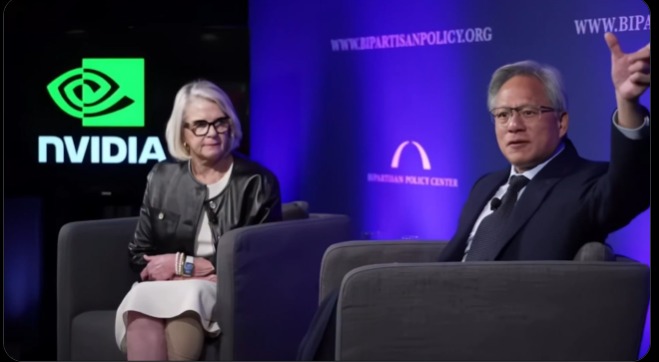
That long-held limitation is now being challenged by an idea gaining renewed attention after comments from Jensen Huang, the CEO of Nvidia. Speaking about Bitcoin’s role in global energy systems, he said the cryptocurrency offers a way to take unused energy and preserve it as currency, allowing it to move freely around the world. It’s a bold remark, delivered by one of the most influential figures in modern technology, and it has stirred interest across both the crypto sector and the wider energy industry.
There is some context to why this idea resonates. Curtailment of clean energy has become a common headache for grid operators. Texas shed around 8 terawatt hours of wind and solar power last year due to congestion and limited storage. Brazil lost even more in a shorter period, and analysts estimate over 20 billion dollars’ worth of renewable power goes to waste globally each year. These aren’t small scraps; they are real losses born from timing mismatches and infrastructure bottlenecks.
Bitcoin mining has increasingly appeared at these pinch points. Miners co-locate with stranded or remote generation sites, buying power that otherwise has no takers. The Bitcoin network now uses more than 200 terawatt hours annually, and industry groups say just over half of that comes from renewable and nuclear sources. While exact figures remain debated, it’s clear that a material share of mining activity sits where power is cheapest and hardest to export.
Supporters argue that this makes Bitcoin a kind of energy sink, turning unused electricity into something that can cross borders instantly. They frame it as an emergent market mechanism helping renewables become more viable in places where grid upgrades lag behind new installations. Huang’s comments fit neatly into this view, giving it a high-profile boost.
Critics, however, remain unconvinced. Environmental organisations stress that total consumption still matters, regardless of where miners set up. They warn that linking financial incentives to energy production could complicate climate planning and may encourage over-building in some regions. Economists note that calling Bitcoin a form of storage stretches the definition, since the energy itself doesn’t return to the grid; it becomes digital value rather than usable electricity.
Yet even sceptics recognise the broader conversation is shifting. The growth of intermittent renewables, paired with slow-moving infrastructure investment, has left many countries looking for flexible demand that can operate in remote areas. Bitcoin miners happen to meet those criteria, though they’re far from the only option. Data centres, hydrogen production and industrial heat pumps are also competing to absorb cheap or stranded power.
The broader idea at stake here is whether electricity, once locked to a specific time and place, can now be monetised in ways that make geography less relevant. Some see this as a new outlet for surplus capacity that might otherwise remain unproductive. Others see it as a distraction from more direct solutions like grid expansion, long-duration storage and smarter demand management.
Still, the way Huang framed the issue has prompted many to revisit long-running assumptions. Converting surplus energy into a digital asset that can be moved globally is an unusual concept, and not everyone buys the physics analogy. But the economic logic behind using flexible loads to stabilise renewable-heavy systems is something energy planners have considered for years.
If anything, the debate reflects a world grappling with rapid growth in clean generation and the messy steps required to integrate it. Bitcoin’s role in that picture remains contentious, yet it is now part of conversations in places where it once had little relevance.
Energy producers are experimenting. Policymakers are watching. Critics are still vocal. And technologists like Huang are injecting fresh arguments into a topic that shows no signs of fading.
Whether Bitcoin becomes a long-term tool for managing surplus energy or simply a temporary by-product of current market conditions is still up for discussion. What’s clear is that the flow of wasted electricity has opened a door to ideas that challenge long-held assumptions about how power is valued, used and moved.
Dear Reader,
Ledger Life is an independent platform dedicated to covering the Internet Computer (ICP) ecosystem and beyond. We focus on real stories, builder updates, project launches, and the quiet innovations that often get missed.
We’re not backed by sponsors. We rely on readers like you.
If you find value in what we publish—whether it’s deep dives into dApps, explainers on decentralised tech, or just keeping track of what’s moving in Web3—please consider making a donation. It helps us cover costs, stay consistent, and remain truly independent.
Your support goes a long way.
🧠 ICP Principal: ins6i-d53ug-zxmgh-qvum3-r3pvl-ufcvu-bdyon-ovzdy-d26k3-lgq2v-3qe
🧾 ICP Address: f8deb966878f8b83204b251d5d799e0345ea72b8e62e8cf9da8d8830e1b3b05f
🪙 BTC Wallet: bc1pp5kuez9r2atdmrp4jmu6fxersny4uhnaxyrxau4dg7365je8sy2q9zff6p
Every contribution helps keep the lights on, the stories flowing, and the crypto clutter out.
Thank you for reading, sharing, and being part of this experiment in decentralised media.
—Team Ledger Life