Liquidium Gets a Payback Plan—Literally
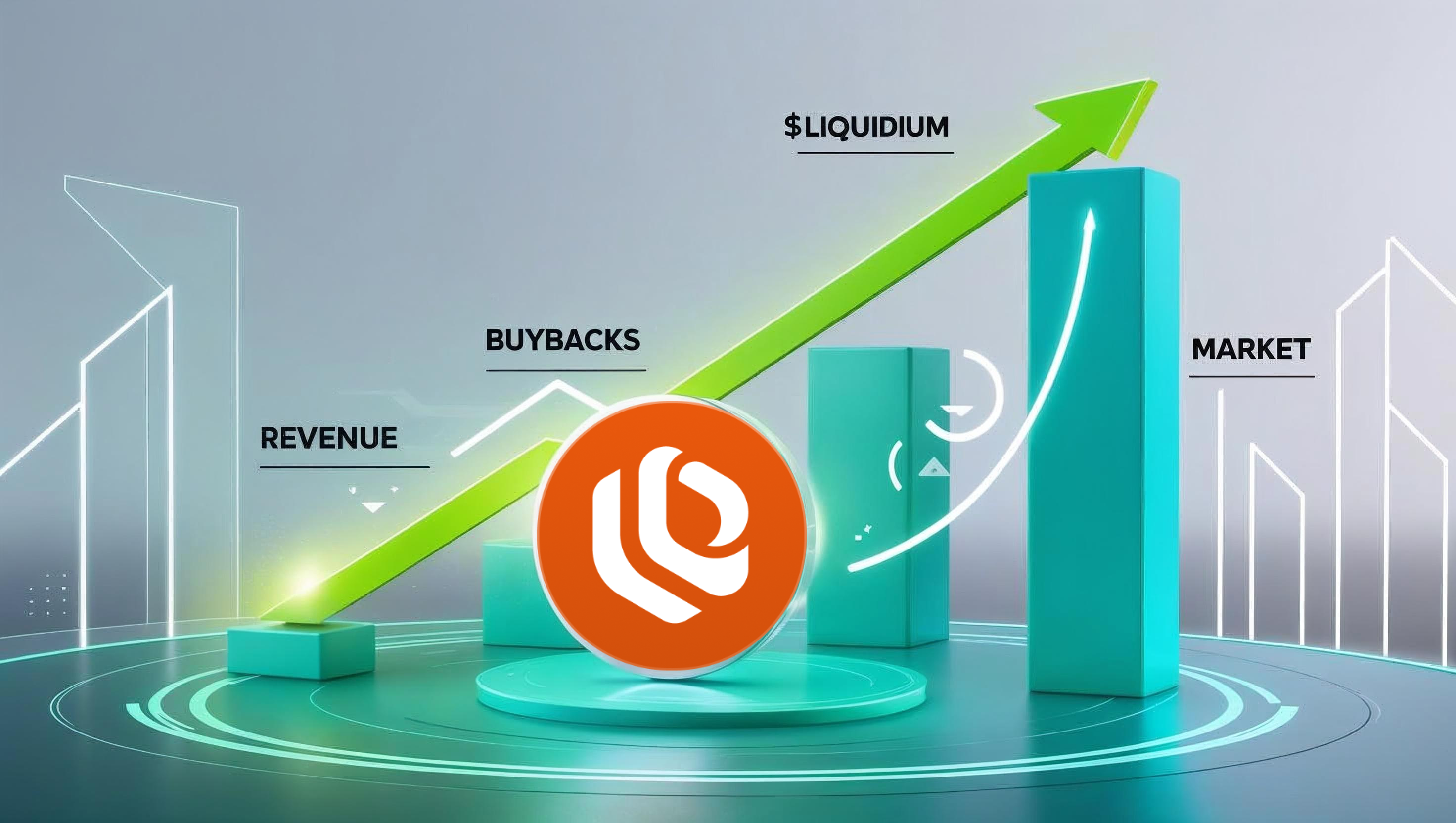
The latest Liquidium community vote has wrapped up with a strong yes to LIP-12, a proposal that rewires how the protocol shares its revenue. With clear support from voters, Liquidium is now moving to allocate 30% of its revenue to buy back its native $LIQUIDIUM token directly from the open market. This marks a shift towards what many in DeFi circles refer to as real yield—a model where actual earnings, not just token inflation, benefit participants.
For those watching closely, this moment feels like a turning point in how decentralised protocols reward their communities. The idea behind LIP-12 was simple but direct: put the protocol’s real revenue to work for token holders. Rather than relying on the promise of future utility or speculation, the proposal links protocol success directly to demand for the token. It’s a classic buyback mechanism, but in DeFi style—executed on-chain, transparent, and publicly governed.
This move comes at a time when users are demanding more from the projects they support. It’s no longer enough to distribute tokens or announce partnerships. Communities are increasingly voting with their wallets and attention spans. Liquidium’s vote signals that those backing the protocol are ready to reward actual value creation.
The buyback model that will now be implemented works through a recurring loop: revenue earned by the protocol is partially directed to purchase $LIQUIDIUM on the open market. By doing so, the circulating supply is reduced, and token demand gets a regular boost—without needing to mint more tokens or dilute current holders. It’s a structure some compare to share repurchase programmes in traditional finance, but it’s been shaped for the open-source, transparent world of DeFi.
The 30% figure wasn’t just plucked out of the air. It reflects a balance between sustainability and impact. Enough to make the buybacks meaningful, but not so high that it compromises operational flexibility or development budgets. According to the team, the allocation ensures that other vital components of the protocol—such as growth, security and maintenance—still receive the funding they need. It’s a sign that the move wasn’t only symbolic but operationally considered.
There’s been much talk recently about “real yield” across the wider crypto space, especially after years of unsustainable incentives and token emissions that bloated supply without delivering value. Liquidium’s community appears to have absorbed these lessons. Rather than over-promising future returns, this vote locks in a feedback loop where protocol usage drives rewards for those holding the token.
This might also shift how projects think about token utility. When governance votes start translating into economic mechanisms with immediate and visible effects, interest builds—not just from speculators but from those who want to be part of systems that reward patience and belief in the project. Liquidium isn’t the first to try something like this, but the clean approval of LIP-12 could encourage others to explore revenue-based tokenomics.
It’s not hard to imagine future votes fine-tuning how much revenue is allocated or adjusting how the buybacks are executed. The key takeaway from this vote, though, is that the protocol’s direction remains in the hands of those who use it. That’s how decentralised governance is supposed to work.
Another aspect of the vote that drew attention is its timing. With crypto markets moving unevenly and many DeFi platforms still recovering from past overextensions, Liquidium’s choice to commit real funds to token buybacks is more than a cosmetic upgrade. It’s a signal that the protocol is earning, and that those earnings are now programmed to flow directly to those who helped build and hold the ecosystem together.
There’s also a subtle but important difference between passive rewards and deliberate buybacks. Where staking programmes might distribute fresh tokens or other incentives, buybacks show active purchasing behaviour. This introduces a degree of demand pressure that staking alone cannot match. It’s also a more visible sign of confidence: the protocol is effectively reinvesting in itself.
There will, of course, be challenges to navigate. Managing liquidity around buybacks, deciding on timing strategies, and ensuring transparency in execution are all critical steps. And although the vote passed with strong support, no mechanism is completely free of trade-offs. The team behind Liquidium will need to demonstrate that this model not only distributes value but does so consistently, and without introducing risks to other parts of the protocol’s operation.
There are open questions too. Will this model affect how users interact with Liquidium’s lending and borrowing products? Could it reshape behaviours, perhaps incentivising longer-term holding or more active governance participation? Will other protocols follow suit, now that this approach has received such a visible stamp of approval from the community?
Regardless of the answers, one thing is clear: Liquidium has made its direction public. Revenue is no longer just something the team collects in the background—it’s now hardwired into the protocol’s token strategy. Every unit of revenue generated has the potential to strengthen the value of the $LIQUIDIUM token in circulation. That alignment might seem obvious in hindsight, but it took deliberate design and a community vote to make it happen.
As the buyback mechanism rolls out, observers will be watching how it influences market behaviour. If successful, the model could serve as a working template for revenue sharing in DeFi—especially for projects that have moved past the early growth phase and into operational maturity. While not every protocol has the revenue to support such mechanisms, those that do may start seeing them as essential rather than optional.
It’s worth noting that decentralised governance doesn’t always get credit for functioning well. Heated votes, stalled proposals, or unclear communication often dominate headlines. In this case, however, the vote on LIP-12 went through cleanly, with outcomes clearly communicated and expectations set. That kind of structure helps build trust, which can be more valuable than any single mechanism.
For Liquidium, the next phase is execution. The buybacks will need to start and be monitored. The cycle of revenue in, token purchases out, and the resulting effect on price and community sentiment will likely form the core of the protocol’s story over the coming months. If it plays out as planned, Liquidium might demonstrate that good tokenomics don’t need to be complex—they just need to connect effort with reward in a way people can see and understand.
The crypto space has no shortage of bold ideas, but sometimes the smartest shifts are the simplest. LIP-12 ties together use, reward and governance in a closed loop. By giving revenue a role beyond funding, Liquidium has turned protocol growth into something token holders can feel—perhaps even count on.