KongLocker Launches to Secure Liquidity for ICRC1 Tokens
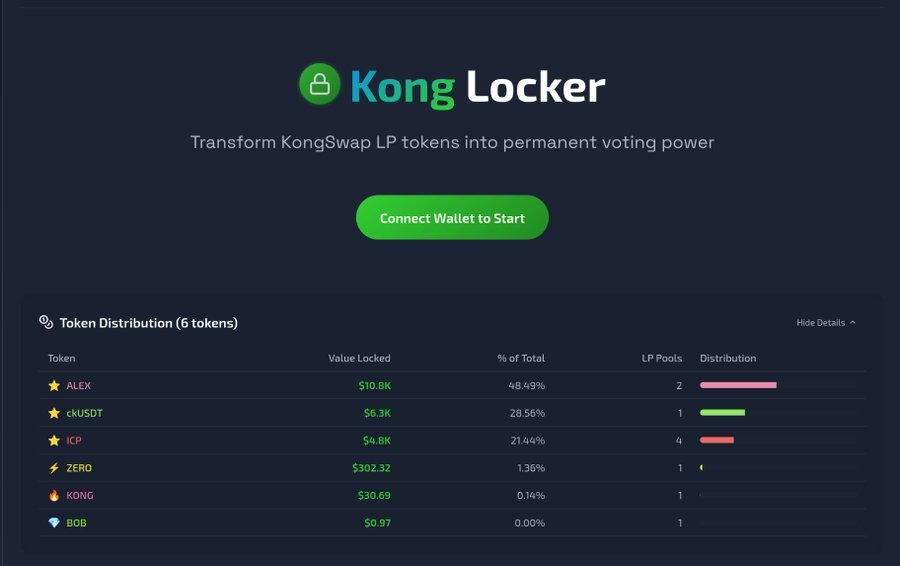
A new tool called KongLocker has gone live, offering token projects on the Internet Computer a way to lock liquidity permanently while giving communities a transparent method to verify it. The idea behind KongLocker is straightforward: once a project locks liquidity through the platform, it cannot be altered or accessed by developers, building long-term confidence among users and stakers.
To register, a project needs to spend 2 ICP. One ICP is directed to the blackholed canister that confirms registration with KongSwap, while the other is distributed to ALEX stakers as a fee. Once set up, the token is automatically added to KongSwap through its transfer feature, ensuring that the liquidity is locked in and visible to anyone. The system is designed so that the registering canister does very little beyond confirming ownership and registering with KongSwap. It cannot transfer liquidity or be changed, even if cycles run out, and it continues operating without developer interference.
Supporters argue that this approach reduces risks for communities, particularly in projects where concerns about liquidity removal or manipulation have historically damaged trust. By blackholing the canister, KongLocker ensures that the rules governing locked liquidity are fixed and cannot be rewritten by rogue developers. The backend stores no sensitive information beyond canister IDs, meaning that even if the API were altered or deleted, anyone could independently verify locked liquidity.
The launch is already attracting attention because it challenges project teams to prove their commitment by locking liquidity permanently, rather than relying on promises. For token holders and community members, this is being framed as a shift towards verifiable transparency rather than blind trust. Critics, however, are likely to question whether the model will gain traction across the broader ecosystem, especially given the cost of entry and the reliance on projects to adopt it voluntarily.
By tying in a fee structure that rewards ALEX stakers, the platform also links liquidity security with token utility, giving an incentive for both project teams and individual investors to engage. How widely KongLocker is taken up will depend on whether teams see locked liquidity as a meaningful show of strength or an unnecessary constraint. For now, its arrival marks an attempt to set a new standard in how projects demonstrate reliability on the Internet Computer.
Dear Reader,
Ledger Life is an independent platform dedicated to covering the Internet Computer (ICP) ecosystem and beyond. We focus on real stories, builder updates, project launches, and the quiet innovations that often get missed.
We’re not backed by sponsors. We rely on readers like you.
If you find value in what we publish—whether it’s deep dives into dApps, explainers on decentralised tech, or just keeping track of what’s moving in Web3—please consider making a donation. It helps us cover costs, stay consistent, and remain truly independent.
Your support goes a long way.
🧠 ICP Principal: ins6i-d53ug-zxmgh-qvum3-r3pvl-ufcvu-bdyon-ovzdy-d26k3-lgq2v-3qe
🧾 ICP Address: f8deb966878f8b83204b251d5d799e0345ea72b8e62e8cf9da8d8830e1b3b05f
🪙 BTC Wallet: bc1pp5kuez9r2atdmrp4jmu6fxersny4uhnaxyrxau4dg7365je8sy2q9zff6p
Every contribution helps keep the lights on, the stories flowing, and the crypto clutter out.
Thank you for reading, sharing, and being part of this experiment in decentralised media.
—Team Ledger Life